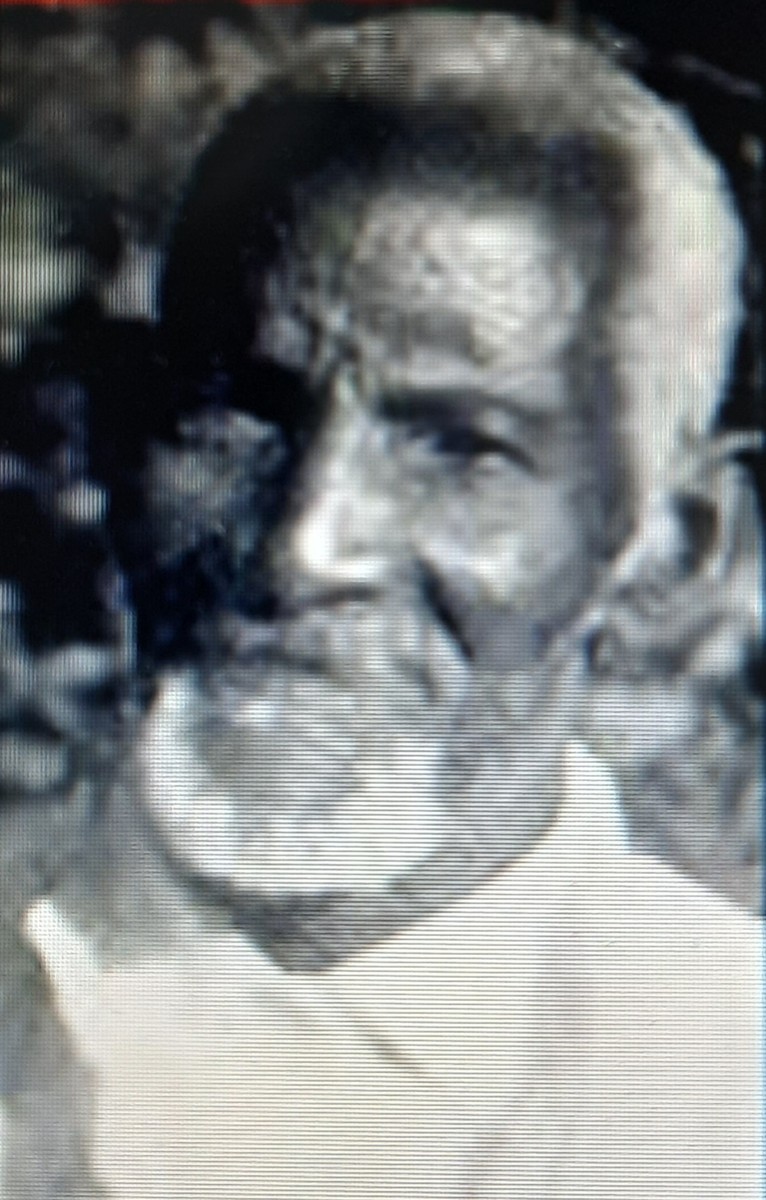
Richard Moko.
Photo courtesy of Ellen G. White Research Centre Archives at Helderberg College, South Africa.
Moko, Richard (1850–1932)
By Mxolisi Michael Sokupa
Mxolisi Michael Sokupa, Ph.D. (Adventist Institute of Advanced Studies, Cavite Silang, Philippines); D.Th. (Stellenbosch University, Cape Town, South Africa), currently serves as associate director of the Ellen G. White Estate, Inc., situated at the General Conference of the Seventh-day Adventist Church headquarters in Silver Springs, Maryland, U.S.A.
First Published: May 5, 2022
Richard Moko worked as an interpreter and colporteur. He became the first Black African ordained minister in the Seventh-day Adventist church in South Africa.
Early Life
Richard Moko was born in the district of Grahamstown in the eastern part of the Cape in 1850. As a descendent from a long line of AmaXhosa chiefs, he was exposed to a good level of education from his early life. He married Emily and they had six children: Boyce, Grace, Elizabeth, Paul, Richard (junior), and Ellen.1 Moko could read and write English and Dutch.2 He owned a store in Port Elizabeth, which he sold to look for better business opportunities outside of South Africa. His trip to Rhodesia (now Zimbabwe) was a turning point in his life.
Conversion and Early Christian Experience
In 1893, on his way to Rhodesia, Moko heard a voice that insisted that he turned around and went to Cape Town. He obeyed this voice. Upon arriving in Cape Town, he met Adventist missionaries and received Bible studies, and was baptized in 1895. The same year the Jemison Raid3 started. The raid threatened the peace that was espoused beyond the borders of the South African Republic. There were several threats that were looming on the horizon: a revolution in the Transvaal, the overthrow of Paul Kruger, Afrikaner Republicanism, and Colonialism vs. Krugerism.4 This would have serious implications for the development of the Seventh-day Adventist Church in South Africa in the coming years.
Soon after his conversion experience, Moko was given an offer by Lord Roberts to be his interpreter, because of his proficiency in languages. He turned down the offer in fear that he would be required to say something that his conscience would not permit.5 Instead, he supported himself by selling Adventist literature. A former businessman, now he used his skills and education in God’s work. It was around this time that he translated the book Steps to Christ by Ellen G. White into isiXhosa. The book was used to reach many people with the Adventist message.
Adventist Mission Work
The Cape Conference, which at the time was a racially mixed conference, received Moko as one of its workers. Moko joined George Shone and I. B. Burton in mission work among the Xhosa people. In 1908, they went searching for a mission site in the Eastern Cape. They were traveling on a wagon called the “Gospel Wagon”. Charles Sparrow heard of their search and offered 520 acres of his farmland for what would later be called Maranatha Mission.6 These men continued to travel together and establish churches.7
When Moko, came to East London, South Africa, in 1903, he settled in an East Bank location. In his preaching he included an unpopular message about the seventh-day Sabbath. The people of this community rejected his message. The mobs connived against him, and he found himself in a court of law where he had to defend his actions. He was charged for preaching heresy, “making believers accept that Saturday was the Sabbath day instead of Sunday which, the petitioners pointed out, was a Jewish custom. He was persuading the ‘younger sex’ to stay away from work on Saturdays, which the petitioners claimed was causing discontent among their families.”8 Moko was warned and later expelled from the city on the grounds that he had violated section 13 of Act 11 of 1895 in the South African law. This section in the South African law dealt with people found living in a community unlawfully. Moko was a law-abiding resident of the city, but because of his preaching of the Sabbath doctrine, a false accusation was placed against him. Some political matters intercepted with Moko’s mission work in the West Bank location:
…the seriousness in which Moko’s preaching was viewed can be seen from the testimony which Superintendent Lloyd delivered before the Lagden Commission earlier that very year. He had testified that he believed the locations existed purely to supply labour and that wages to the Black people should be held at such levels as to force them to work. East Londoners, he said[,] tended to pay ‘extravagant wages’ which enable a man to work only a few days a week and ‘to lie idle at home’ for the rest of the time. He personally put a stop to that, he boasted, never allowing a man to absent himself from work for more than one or two days a week without serving an eviction order on him. His ‘general view’, he told the Commission was that it was ‘not reasonable for an African to rest every Saturday.’9
This was one of the many experiences Moko had in his missionary endeavors. One time he was attacked while preaching by an intruder and had a few of his teeth knocked out. His humorous response to that ordeal was, that if losing teeth that way meant that a church would be established, he was willing to lose more. He was the first African in South Africa to be ordained into the gospel ministry by the Seventh-day Adventist church in 1915.
Moko’s Missionary Reports10
Richard Moko gave mission update reports. In 1914, a year before his ordination, he reported about a gathering in a church building that he had erected in his home in Debe Nek, near King Williamstown, South Africa. The students from Maranatha Mission School who were on their winter holiday attended the meeting. Moko played an important role in the development of the Maranatha Mission School. He had a deep-seated burden for the young people he met from that school.
Moko faced racial tensions, even though apartheid was not legally enforced in South Africa at that time. However, Moko gave an encouraging report. On one of his mission trips to Lady Grey, a rural village in the north of Eastern Cape, he fell terribly ill. He was helped by Brother Cloete whom he called “my good white brother”. Moko admitted that he did not expect such kindness and thanked God that he had such a kind “white brother”.
In 1914, Moko worked among the natives and sold several copies of Steps to Christ book and pamphlets about the Sabbath and the Second Coming. Among the first to accept the Adventist message was one lady. Unfortunately, her decision was met with disapproval and violence from her husband. Her parents intervened and she was allowed to keep the Sabbath and practice her newfound faith. Soon, four other people decided to accept the Adventist message.
Richard Moko died in 1932. Although he was the only Adventist in his family, Moko left a legacy with his family that any rituals that had to do with the dead should be avoided. Most of the family members have kept the legacy faithfully. Moko’s grave is unidentified due to the forced removals in East London, South Africa, where he was buried.11
Sources
Graham Bower, Deryck Schreuder and Jeffrey Butler. Sir Graham Bower’s Secret History of the Jameson Raid. Cape Town: Van Riebeeck Society, 1895-1902.
Helderberg College, Heritage Materials, File HR 4, Moko Collection.
Mafani, Hlanga. From Genesis to Germination. Self-published by Hlanga Mafani, 2011.
Nhlapo, Clifford. Tears of the Black Pulpit: A celebration of the Legacy of Black Ministers in the North Bantu Mission Field from 1925-1965. Wandsbeck: Reach Publishers, 2012.
Sokupa, Michael M. “Documented Memories of Richard Moko’s Life and Contribution: A Seventh-day Adventist Heritage Reflection.” Studia Historiae Ecclesiasticae, volume 41, number 3, 2015, pp. 171-183.
Tankard, Kieth. “Preaching the Word of God: The Very Strange Case of the Reverend Moko.” Coelacanth. [n.d.].
Notes
-
H. Mafani, From Genesis to Germination (self-published by Hlanga Mafani, 2011), 107.↩
-
Helderberg College, Heritage Materials, file HR 4, Moko Collection.↩
-
See, for example, “Jameson Raid,” Encyclopedia Britannica, https://www.britannica.com/event/Jameson-Raid.↩
-
Graham Bower, Deryck Schreuder and Jeffrey Butler, Sir Graham Bower’s Secret History of the Jameson Raid (Cape Town: Van Riebeeck Society, 1895-1902), xlvi and xlvii.↩
-
Ibid.↩
-
M. Sokupa, “Documented Memories of Richard Moko’s Life and Contribution: A Seventh-day Adventist Heritage Reflection,” Studia Historiae Ecclesiasticae, volume 41, number 3, 2015, 174, file:///C:/Users/drago/Downloads/Documented_memories_of_Richard_Mokos_life_and_con.pdf.↩
-
C. Nhlapo, Tears of the Black Pulpit: A celebration of the Legacy of Black Ministers in the North Bantu Mission Field from 1925-1965 (Wandsbeck: Reach Publishers, 2012).↩
-
Kieth Tankard, “Preaching the Word of God: The Very Strange Case of the Reverend Moko,” Coelacanth, 32(2).↩
-
Ibid.↩
-
Sokupa, 181.↩
-
Ibid., 181-182.↩