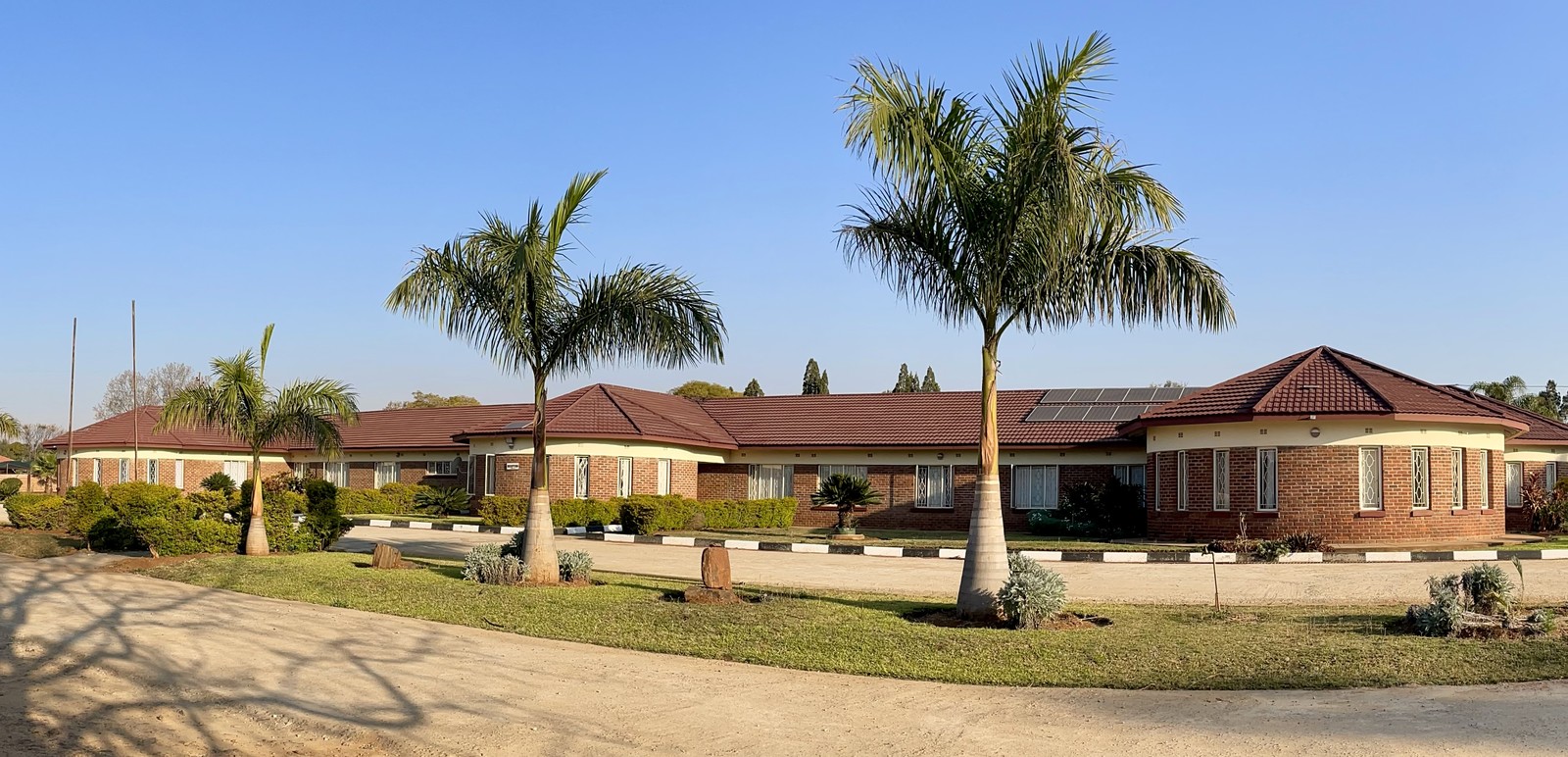
Central Zimbabwe Conference
Photo courtesy of Charles Dalton Madembo.
Central Zimbabwe Conference
By Charles Dalton Madembo
Charles D. Madembo, D.Min. (Adventist University of Africa, Ongata Rongai, Kenya), who also held a Master of Arts in Pastoral Theology from the same university, was an ordained minister serving in the Central Zimbabwe Conference since 1992. Prior to that he served in the Airforce of Zimbabwe from 1989-1992. From December 1992 he served as District Pastor, Institutional Chaplaincy, Youth/Chaplaincy/Campus Ministries, Ministerial/ ZAAM Director in the Central Zimbabwe Conference. Pastor Madembo also held other qualifications.
First Published: March 26, 2025
The Central Zimbabwe Conference is a church administrative unit under the Zimbabwe Central Union Conference of Seventh-day Adventists in the Southern Africa-Indian Ocean Division. Its headquarters is in Gweru, Zimbabwe.
Territory: Central Zimbabwe.
Statistics (June 30, 2024): Churches, 531; membership, 69,226; population, 3,010,943
Central Zimbabwe Conference (CZC) comprises of 48 districts divided into eleven zones. The zones are grouped into two regions, Gweru and Masvingo Regions. The CZC territory spans across Masvingo province, the Southern half of Midlands Province, and a small portion of Matabeleland South Province.1
Origin of the Adventist Work in the Territory of CZC
The pioneers of Adventism in CZC fall into three categories: western missionaries appointed by the General Conference, White African settlers, and local black African evangelists who were early converts.2 The leading American pioneer who introduced Adventism in the CZC territory was Frank B. Armitage. Frank Armitage and his wife, Anna Mary “Annie,” left the United States of America and arrived at Solusi Mission on September 1, 1897, taking longer than expected due to hardships they faced on their way. George B. Tripp, the mission director, and William H. Anderson, his counterpart, eventually found them at Figtree and brought them safely to Solusi.
The arrival of the Armitages at Solusi was timely in aiding the construction efforts at the mission. Frank's building skills led to constructing three permanent homes and digging the first well. Tragically, both Frank and Annie contracted malaria. While Frank recovered, Annie’s condition worsened, and she died en route to Claremont Sanitarium. Frank later married Mary Caroline Mortensen Tripp, who was also widowed when her husband, George B. Tripp, died on March 7, 1898. Frank and Mary’s wedding was held on February 22, 1899, in Bulawayo.3
In 1901, the Armitages and Frederick L. Mead, who had arrived at the mission to replace George Tripp, embarked on a journey to the east of Solusi Mission to establish the Somabula Mission (later named Lower Gwelo Mission), bringing eight students from Solusi. There, they baptized the first group of students and additional converts from the local area, increasing the school enrolment to 40. Due to the failing health of the Armitages, Elder and Mrs. W. C. Walston arrived at Somabula Mission in 1906 to replace them. Frank was nicknamed “Matandabantu” (one who loves people), reflecting his rapport with the local community. When the Armitages departed the mission, the local people walked 20 miles to Gwelo railway station to bid them farewell, weeping as they returned under the moonlight.4 The Armitages continued their mission work in South Africa at the Maranatha Mission and other projects.5
Jim Mayinza and Other Indigenous Leaders
One of those who accompanied the Armitages when establishing the Somabula Mission was Jim Mayinza6, the first baptized indigenous African convert in Solusi and pioneer of the Adventist message to the CZC territory.7 Several other notable African Adventists played key roles in spreading the Adventist message in Central Zimbabwe, including Harry Sibagobe Tshuma, one of the pioneer students at Solusi in 1896, Register Ndlovu, a convert of Jim Mayinza from Gweru, and Peter Fayi Mpofu, Mayinza’s friend.8
From the efforts and sacrifices of the early missionaries, such as Frank and Mary Armitage, and native converts, like Jim Mayinza, to the current well-organized church administrative structure of CZC, and its mission focus today, the Seventh-day Adventist Church has established a substantial and enduring legacy through its vast presence. The first church in the CZC territory was the Lower Gwelo Adventist Church with 19 members in 1905. This church played a significant role in spreading the Adventist message in the Midlands area.
Significance of the Lower Gwelo Mission
In 1923, the Somabula Mission was relocated to a new area, and its name changed to Lower Gwelo Mission. The chief of the Moyo Clan is credited for allowing missionaries to establish the mission in the area. Initially, the mission operated as a farm with a primary school until in 1929, when the government approved a teacher-training institute. The institute was opened to meet the demand for supplying teachers to church schools. The first outschools (study groups that met on Sabbath and taught reading, writing, and basic math) were taught by the Lower Gwelo College graduates, including Sogwala, Sikhombingo, Vunku Sheamer, Makhulambila, Jonkola, Mkoba, Shagari, Mafuba, and Esenbee.
The secondary-school level was introduced in 1948. In 1952, the teacher-training college at Solusi Mission was closed and merge with the school at Lower Gwelo. However, Lower Gwelo College closed in the 1970s due to stringent government requirements. Subsequently, the teacher-training program was reopened at Solusi College as a part of its education department. Plans are currently in place to open the Adventist College of Education about 12.5 miles (20 kilometers) Southwest of the city of Gweru.9 Lower Gwelo Mission currently houses the Lower Gwelo Adventist Primary School (a large day school), Lower Gwelo Adventist High School (a co-educational boarding school), and Lower Gwelo Adventist Clinic.
Expansion of Missions and Educational Work
From Lower Gwelo, the Adventist work spread to Selukwe (now Shurugwi). The Selukwe Mission, which is now known as Hanke Mission, was established in 1905. Plans for establishing Selukwe Mission (now Hanke) began in 1905 when A. H. White, the acting principal of Lower Gwelo Mission, was conducting canvassing work in the area. He had arrived at Lower Gwelo to relieve Elder Armitage, who was on leave. The plans gained momentum in 1910 when Chief Mudzengi was approached by a team that included T. J. Gibson, J. Ngono, and Paul Mbono, the chief’s son.10
According to oral tradition, the local chief of the Sipambi clan at Mafuba favored Adventist missionary R. F. Stockil’s proposal more than the other denominations’ plans. The chief’s sons often quarrelled after drinking alcohol, and the chief was seeking a solution to this issue. Adventists seemed to have the needed doctrinal solution.11 By 1912, negotiations for establishing Selukwe Mission were finalized.12 This mission was essential in spreading the gospel to the eastern Midlands and Masvingo areas. Early outschools established included Sogwala, Sikhombingo, Vunku Sheamer, Makhulambila, Jonkola, Mkoba, Shagari, and Mafuba.13
Growth of Adventism in Fort Victoria (Masvingo) and Mberengwa
In Fort Victoria (now Masvingo), the church acquired land in 1913, and Adventist missionaries Mr. and Mrs. T. J. Gibson established Glendale Mission Farm located about ten to twelve miles (16-20 kilometers) south of Fort Victoria (Masvingo), in Southern Rhodesia. The mission farm consisted of 1900 acres and was staffed with helpers from Solusi Mission.14 One of the initial difficulties that the Adventist mission outschools faced was the lack of workers who could speak the local dialect. The first indigenous teachers spoke Ndebele in a community that spoke the Karanga dialect of Shona. However, in time, talented students were sent to the main mission station school at Glendale Mission, where they were introduced to the English language. 15
By 1915, the Glendale Mission school numbered from 35-40 students. By 1917, due to the sparse local population and other factors, church membership numbered only twenty-two. The Gibsons returned to South Africa and were replaced by Laurie Sparrow as mission superintendent with I. E. Evenson. Notwithstanding their efforts, around 1919-1920, Glendale Mission reverted to the status of an outstation under Hanke Mission. At last, Glendale mission outstation was sold for 1,200 pounds, and the mission center was moved to Fort Victoria (Masvingo) in 1921.16 The sale’s proceeds were placed in a trust fund to assist new frontiers.
The mission in Fort Victoria helped to spread Adventism to Mafuba in 1915, and then to Gutu, Zaka, Chivi, Chiredzi, and Mwenezi.17 Glendale Mission also served to disseminate the gospel in the Masvingo area. Masvingo urban’s first Indigenous church congregation held its services at Mucheke Government School. In 1974, the church applied for and was allocated land to build its own building.18
Further westwards of Masvingo, Erita Midzi brought the Adventist message to a place called Chivi. Midzi, her young sister, and their children began to conduct worship services under a tree. As new members came from among their neighbors, the congregation grew. In 1960, a grass-thatched church was built, accommodating about fifty congregants. Similar stories of Adventists, who relocated to new areas and started worship services that attracted their curious neighbors, happened in other places, including Zaka and Jichidza.19
Adventism reached Mberengwa and Nyamhondo areas southeast of the Midlands in the 1920s20 through the Mkhwananzi (Ngungumbane) royal family, who came from Malungwane, in Esigodini area, in 1919. They opened Ngungumbane Adventist School, which helped spread the Adventist message in Mberengwa and the western parts of Masvingo.21
Political and Social Influences
The Rhodesian Mission Field was established in 1902, encompassing areas beyond the borders of present-day Zimbabwe. By the 1920s, Adventism reached Matabeleland, Midlands, and Masvingo. In 1921, the Southern Rhodesian Mission Field was established to focus on work with the indigenous people of Southern Rhodesia (now Zimbabwe). In 1929, the Rhodesian Conference was created exclusively for people of European descent, reflecting the prevailing racial segregation practices in Rhodesia at the time. Additionally, Black workers were neither appointed to leadership positions at mission stations nor granted ministerial licenses.
People Migrations
The passing of the Land Apportionment Act in 1930 led to the allocation of fertile land to settlers of European descent, resulting in the displacement of Black people to “reserves.”22 The displacement of Black people from their land in places such as Rhodesdale, in Chiwundura near Kwekwe, and Mukonde near Mafuba in Masvingo, where there was a concentration of Adventists, forced the Adventist communities to relocate to different areas, such as Nyajena, Gutu, Chivi, Chiredzi South, Zaka, and the urban regions.
Despite these challenging circumstances, the gospel was still spread through divine providence. One of these displaced families was the Chiwawas, who moved to Nyajena and shared the Adventist message with local Jenya families, including the Mashapas. The Chiwawas’ work led to establishing the Mashapa Adventist Primary School. When Renco Mine was opened in Masvingo Province, the Chiwawas moved a second time and helped establishing another school, now known as Chiwawa Adventist School. Another group relocated to Gutu, where Mundondo Adventist Mission was established. Yet another group moved to Chivi South, leading to establishing Gwitima Adventist School. 23
These movements of people were supported by the deployment of missionary teachers to various outlying schools. Likewise, both indigenous and settler farmers who relocated to small and large farms in areas like Nyahunda in Bikita, Gutu, Vhungu, and Chiredzi, established new Adventist congregations in their new communities.
Gweru City
Evangelist William D. Eva planted a church in Gwelo (now known as Gweru) in 1941. He used contemporary and sensational war topics such as, “World Supremacy! Will Hitler Grasp It?”24 In 1956, the Mtapa congregation became the first indigenous Adventist church in Gweru and the catalyst for spreading Adventism in Gweru urban area. Soon, Adventism reached Senga, Mkoba, Ascot, Ivene, and other neighboring locations.25 Starting in the 1980s, international Adventist evangelists such as Delbert Baker, John Bradshaw, and others visited Gweru, baptizing many people from various parts of the town.26
Impact of Health Ministries
South African Adventist missionary Johannes N. De Beer was part of Frank Armitage’s team that started work at Somabula Mission (Lower Gwelo Mission) in 1901. De Beer served as the healthcare provider. The area chief became supportive of the Adventists when he saw De Beer’s work.27 Adventist health ministry led to establishing Lower Gwelo Mission Hospital in 1931. By 1949, Lower Gwelo Hospital had a 19-bed capacity and was the only one hospital led by a nurse when other Adventist hospitals were led by doctors.28
By 1953, the hospital bed capacity had reduced to 15 when the capacity of the Kanye Mission Hospital in Botswana had doubled to 60.29 The Zambesi Union Mission’s Executive Committee minutes from 1936 to 1941 reveal that a full-fledged hospital at Lower Gwelo Mission could not be sustained due to low funding in the face of the great depression.30
Adventist health institutions and ministries have highlighted the church’s continued relevance, particularly during the Influenza, HIV, and COVID epidemics and pandemics. Currently, the following Seventh-day Adventist healthcare institutions are operational within the Central Zimbabwe Conference: Lower Gweru Clinic, Gweru Adventist Health Practice (providing dental and medical services), Hanke Clinic, Masivamele Clinic, and Gatawa Clinic. Additionally, Gweru Adventist Hospital is under construction and yet to be completed.31
Contributions of Adventist Laymen
Adventist businesspeople in the CZC territory have made significant contributions to the church's mission. Many business owners have generously supported the gospel by providing free bus tickets for ministers traveling for missionary work. Others have contributed to the construction of churches, offices, schools, and clinics. Donations have also been made for improvements to the church’s Centres of Influence, farms, and institutional transportation. Lay members and artisans have volunteered their skills for outreach and church projects. The lay evangelism movement, known as Zunde, has been crucial in spreading the gospel through initiatives like door-to-door Bible studies, public evangelism, and the construction of temporary church buildings, school blocks, and clinics.32 Elder Mika Maponga, along with many others, played a key role in founding and advancing the Zunde movement.33
The Diaspora and Supportive Associations
Zimbabweans living abroad have made significant contributions by reinvesting their financial resources in support of the mission.34 Some have helped establish and develop Adventist campsites, pastors' residences, and church buildings. Others sponsored evangelistic meetings, acting both as sponsors and speakers. Supportive associations such as Adventist Laymen’s Services and Industries (ASI), Adventist Teacher’s Association, National Association for the Prevention of Starvation (NAPS), and Adventist Medical Professionals Association (APAS) have played a significant role in supporting the Adventist mission through their outreach programs in the CZC territory.35
The work among the indigenous people in Zimbabwe grew so much that it became necessary to reorganize the mission fields. Shortly after Zimbabwe gained independence, the Mashonaland and Matabeleland-Midlands Fields were reorganized into the East, Central, and West Zimbabwe Fields. When the General Conference mandated the South African and Southern Union Conferences in South Africa to merge their racially divided entities, the Eastern Africa Division wrote to the Zambesi Union Mission in June 1991 to also merge its racially split entities36
The proposal was to dissolve the Zambezi Conference, which served people of European descent and Coloured37 members in Zimbabwe, and merge its churches into the Central, East, and West Zimbabwe Fields. However, the members of the Zambezi Conference rejected this recommendation. During a special session, they voted to secede from the Zambezi Union Mission and establish an independent conference organization, completely separate from the Seventh-day Adventist Church. Since then, there have been ongoing efforts to reunite the members who were part of the Zambezi Conference, though these attempts have yielded mixed results.38
The Central Zimbabwe Field became the Central Zimbabwe Conference in 1993. As the church continued to grow in membership and finances, the three local conferences in Zimbabwe were reorganized in 2015, increasing the number of local conferences from three to six. As part of this realignment, the Central Zimbabwe Conference was divided into the Central Zimbabwe Conference and the North-West Zimbabwe Conference. These two conferences now form the constituency of the current Zimbabwe Central Union Conference (ZCUC).39
Growth of Education Work
In 1921, Lower Gwelo Mission had 24 outlying schools, with 1,470 students and a church membership of 300.40 Pastor J. N. de Beer served at Lower Gwelo for eleven years. Significant baptisms occurred at Lower Gwelo in 1930, when 68 individuals were baptized during a camp meeting,41 followed by 74 baptisms the next year. After World War II, Lower Gwelo Mission constructed a four-classroom block.
In 1950, the Zambesi Union Mission Executive Committee, led by W. R. Vail, recommended transferring the elementary teacher training course from Solusi Mission to Lower Gwelo. The transfer was carried out in 1952, starting with a 2-year Primary Teacher Lower (PTL) course for students who had completed Standard VI. Plans were also made to improve the mission’s facilities, including the expansion of dormitories, classrooms, and a church, at a cost of approximately 2,000 pounds. By 1955, total enrolment had reached 550. Later, the Primary Teacher Higher (PTH) course was introduced. Missionary teachers who graduated from Lower Gwelo Teacher Training School were sent across the CZC territory and beyond, where they taught academic subjects and shared the gospel.42
Rhobecon School (now Anderson School) near Gweru was established through the sacrifice of members of the Rhodesia Conference (the then smallest conference in the division) which achieved self-governance in 1945. Pledges of 700 pounds were raised at the first meeting discussing the project, and the higher organization then supported it with appropriations. J. Burns was the first principal of the school. Later, 1,500 pounds was raised at a camp meeting to support the school project.43 The school moved to a more desirable location on land donated by M. Hein.44
Other Adventist missions offering secondary education in the CZC territory include Lower Gwelo, Sikombingo, Hanke, Mundondo, Ntabamhlope, and Save. Of these seven, including Anderson, only Sikombingo does not have boarding facilities. Additionally, there are 19 Adventist primary schools in the CZC, with two serving as primary boarding schools. One of these schools has pupils who board at the nearby secondary school, while the other is an elementary school currently being upgraded. Lower Gwelo Primary and High Schools have specialized sections for visually impaired students, as part of their inclusive education programs. Mtapa SDA Church in Gweru has also launched a project to provide an educational foundation for hearing-impaired children.45
Voice of Prophecy
In 1943, Elmer L. Cardey helped establish the Voice of Prophecy Bible Correspondence School. Within a year, nearly 3,000 students enrolled to study the 24 Bible lessons. The Bible Correspondence program was advertised in the June 16, 1946 edition of the Advent Review and Sabbath Herald. Additionally, Radio Lourenco Marques (now Maputo) broadcasted a weekly 30-minute program to further promote the Bible Correspondence Course.46
The impact of this program reached even the remote areas of the Conference territory. For example, in the 1960s, a man named Mr. Chikati from Bikita studied the Bible Correspondence Course. After completing the course, he started a group of believers called “Voice of Prophecy.” It was only when a Seventh-day Adventist pastor followed up and baptized the group that they learned the name “Seventh-day Adventist.” The Chikati family then embraced the Adventist faith and went on to produce notable gospel preachers, literature evangelists, and medical missionaries.47
Youth Training and Evangelism
In 1957 and 1958, well-attended temperance rallies were held in several schools.48 Inter-school temperance contests became a tradition in the following years.49 An Adventist documentary film showing the link between smoking and cancer was circulated in the CZC. From the 1960s to 1970s, the church launched five-day clinics to help people quit smoking. The church opened the Nqamu Youth Training Centre near Makepesi Business Centre in Lower Gwelo to provide training and camps for young people. From 2008 to 2019, Adventist youth held evangelistic campaigns, called “Supermissions,” in Chizvinire, Mashate, Zvishavane, Nhema, Somabula, Hozvi, and other places. Additionally, university and college students have adopted and modified the Zunde50 concept, to spread the gospel to unentered areas during their semester breaks.51
Future Outlook
The history of Adventism in Zimbabwe, and particularly in the Central Zimbabwe Conference territory, reflects the determination and resilience of Adventist missionaries who faced wars, diseases, famines, and other hardships. Despite these challenges, the Adventist mission in Zimbabwe will continue to thrive. In Lower Gwelo, health ministries were identified as an effective means of reaching communities and supporting the spread of the gospel. Medical work continues to have the potential to drive the growth of the mission in the Central Zimbabwe Conference. Additionally, it has been noted that individuals who are deeply rooted in their faith can contribute positively to spreading the gospel. The importance of continued discipleship remains crucial.
Members from the CZC territory are relocating for various reasons, but in doing so, they also spread the good news through their exemplary lives and witness. To advance the preaching of the gospel, people of all races must work together, fostering both cognitive and spiritual growth. Media ministries, which have been successful in the CZC territory, should continue to grow and reach greater heights, especially with the advancements in communication technology. Additionally, the youth should be trained and given opportunities to actively participate in the mission.52 The CZC is planning a territorial realignment to establish two conferences, in response to the growth in membership and the increase in trust funds.53
Presidents
Zebron Ncube (1981-1985); Silas J. Mema (1986-1999); Jotham H. Manyakara (2000-2010); Victor Mashoko (2011); Etwell Tapera (2012-2014); Jotham H. Manyakara (2015-2017); Carlos Rukuni (2018-2023); Cenias Ndebele (2024-present)
Sources
“About us – Voice of Prophecy - vop.org.za.” Accessed July 20, 2024. https://vop.org.za/voice-of-prophecy/.
Benesi, Givemore. “Mainza, Jim (1881–1949).” Encyclopedia of Seventh-day Adventists, January 29, 2020. https://encyclopedia.adventist.org/article?id=AI7N.
Campbell, Michael W. “Armitage, Frank Benjamin (1864- 1952).” Encyclopedia of Seventh-day Adventists, January 1, 2022, https://encyclopedia.adventist.org/assets/pdf/article-9ikz.pdf.
Central Zimbabwe Conference of Seventh-day Adventists (Gweru, Zimbabwe), Constituency Meeting Report of 2011.
Central Zimbabwe Conference’s website. Accessed July 14, 2024. https://czc.adventist.org/?page_id725.
Grove, Stephen. “19th Century TEMPERANCE Movements: RISE & FALL.” Accessed July 20, 2024. https://19thcentury.us/19th-century-temperance/.
Hachalinga, Passmore. “Seventh-day Adventist Pioneers in Zimbabwe.” Adventist World, October 1, 2020. Accessed July 20, 2024. https://www.adventistworld.org/seventh-day-adventist-pioneers-in-zimbabwe/.
“History | Anderson Adventist High School.” Accessed July 20, 2024. http://www.andersonadventist.ac.zw/about-us/history.
Johansson, Nathalie. “Eva, William Duncan (1914–1997).” Encyclopedia of Seventh-day Adventists, May 17, 2022. https://encyclopedia.adventist.org/article?id=BFT4.
Loomis, Mark. “Seventh-Day Adventist Church: Lower Gwelo Mission.” Accessed July 20, 2024. https://www.rhodesianstudycircle.org.uk/seventh-day-adventist-church-lower-gwelo-mission/.
Machamire, Paminus. “Zambesi Conference.” Encyclopedia of Seventh-day Adventists, January 11, 2022. Accessed August 10, 2024. https://encyclopedia.adventist.org/article?id=6J99&highlight=Conference.
Mavaza, Masimba. “Mike Maponga Dies.” ZimEye: The Truth and The Future, October 11, 2023. Accessed August 10, 2024. https://www.zimeye.net/2023/10/11/mike-maponga-dies/.
Mokgano, Kgomotso. “Kanye Adventist Hospital.” Encyclopedia of Seventh-day Adventists, May 3, 2022. https://encyclopedia.adventist.org/article?id=3JHT&highlight=3.
Mpofu, Cremmar. “Zimbabwe Central Union Conference.” Encyclopedia of Seventh-day Adventists, May 12, 2022, https://encyclopedia.adventist.org/article?id=AHEB.
Msimanga, Nceku Moses. “Zimbabwe West Union Conference.” Encyclopedia of Seventh-day Adventists, May 9, 2022, https://encyclopedia.adventist.org/article?id=7HEF&highlight=zimbabwe.
Ncube, Linos. “Republic of Zimbabwe.” Encyclopedia of Seventh-day Adventists, July 15, 2022, https://encyclopedia.adventist.org/article?id=BCDB.
Robinson, Virgil. The Solusi Story: Times of Peace, Times of Peril. Washington, D.C.: Review and Herald, 1979.
Ruzvidzo, Victoria. “Zim diaspora: A vital force in driving national development.” November 26, 2023. Accessed August 14, 2024. https://www.sundaymail.co.zw/zim-diaspora-a-vital-force-in-driving-national-development.
Sang, Godfrey K. “de Beer, Johannes Nicholas (1881–1967).” Encyclopedia of Seventh-day Adventists, April 14, 2022, https://encyclopedia.adventist.org/article?id=GGX8.
Seventh-day Adventist Yearbook, various years. https://www.adventistyearbook.org/.
Zambesi Union Mission of Seventh-day Adventists (Bulawayo, Rhodesia), Minutes of meetings of the Zambesi Union Mission Executive Committee meetings of 1936 – 1941.
Zimbabwe Central Union Conference First Constituency Meeting 2022 Report.
“Zimbabwe Central Union Conference Report.” http://excom.zcuc.adventist.org/wp-content/uploads/2021/11/ExCom-2021-YearEnd-1.pdf, accessed July 20, 2024.
Zvandasara, Nkosiyabo. “Strategic church planting in the Central Zimbabwe Conference: towards a paradigm shift in church growth” (1998).
Notes
-
Central Zimbabwe Conference’s website, https://czc.adventist.org/?page_id725, accessed July 14, 2024.↩
-
Passmore Hachalinga, “Seventh-day Adventist Pioneers in Zimbabwe” Adventist World, October 1, 2020, https://www.adventistworld.org/seventh-day-adventist-pioneers-in-zimbabwe/, accessed July 20, 2024.↩
-
Michael W. Campbell, “Armitage, Frank Benjamin (1864-1952),” Encyclopedia of Seventh-day Adventists, January 1, 2022, https://encyclopedia.adventist.org/assets/pdf/article-9ikz.pdf, accessed July 20, 2024.↩
-
Hachalinga, “Seventh-day Adventist Pioneers in Zimbabwe.”↩
-
Nkosiyabo Zvandasara, “Strategic Church Planting in the Central Zimbabwe Conference: Towards a Paradigm Shift in Church Growth” (1998), Professional Dissertations D.Min., https://digitalcommons.andrews.edu/dmin/697/, accessed July 14, 2024.↩
-
Givemore Benesi, “Mainza, Jim (1881–1949),” Encyclopedia of Seventh-day Adventists, January 29, 2020, https://encyclopedia.adventist.org/article?id=AI7N , accessed July 14, 2024.↩
-
Virgil Robinson, The Solusi Story: Times of Peace, Times of Peril (Washington, D.C.: Review and Herald, 1979), 76.↩
-
Hachalinga, “Seventh-day Adventist Pioneers in Zimbabwe.”↩
-
Mark Loomis, “Seventh-Day Adventist Church: Glendale Mission,” https://www.rhodesianstudycircle.org.uk/seventh-day-adventist-church-glendale-mission/, accessed July 20, 2024.↩
-
Linos Ncube, “Republic of Zimbabwe,” Encyclopedia of Seventh-day Adventists, July 15, 2022, https://encyclopedia.adventist.org/article?id=BCDB, accessed July 8, 2024.↩
-
Lovemore Chirobe, interview by author.↩
-
Ncube, “Republic of Zimbabwe.”↩
-
Ibid.↩
-
Loomis, “Seventh-Day Adventist Church: Glendale Mission.”↩
-
Ibid.↩
-
Ibid.↩
-
Ibid.↩
-
Ncube, “Republic of Zimbabwe.” ↩
-
Ibid.↩
-
Ibid. ↩
-
Ibid.↩
-
Ibid.↩
-
Lovemore Chirobe, interview by author.↩
-
Nathalie Johansson, “Eva, William Duncan (1914–1997),” Encyclopedia of Seventh-day Adventists, May 17, 2022, https://encyclopedia.adventist.org/article?id=BFT4, accessed July 20, 2024.↩
-
Ncube, “Republic of Zimbabwe.”↩
-
Personal knowledge from serving as the secretary for the evangelistic committee during the It is Written campaigns.↩
-
Godfrey K. Sang, “de Beer, Johannes Nicholas (1881–1967),” Encyclopedia of Seventh-day Adventists, April 14, 2022, https://encyclopedia.adventist.org/article?id=GGX8, accessed July 20, 2024.↩
-
Loomis, “Seventh-Day Adventist Church: Lower Gwelo Mission.”↩
-
Kgomotso Mokgano, “Kanye Adventist Hospital,” Encyclopedia of Seventh-day Adventists, May 3, 2022, https://encyclopedia.adventist.org/article?id=3JHT&highlight=3.↩
-
Zambesi Union Mission of Seventh-day Adventists (Bulawayo, Rhodesia), Minutes of meetings of the Zambesi Union Mission Executive Committee meetings of 1936 – 1941.↩
-
Zimbabwe Central Union Conference First Constituency Meeting 2022 Report.↩
-
Author’s personal knowledge from serving as an employee of the Central Zimbabwe Conference from 1992 to 2025.↩
-
Masimba Mavaza, “Mike Maponga Dies,” ZimEye: The Truth and The Future, 11 October 2023 https://www.zimeye.net/2023/10/11/mike-maponga-dies/, accessed August 10, 2024.↩
-
Victoria Ruzvidzo, “Zim diaspora: A vital force in driving national development,” https://www.sundaymail.co.zw/zim-diaspora-a-vital-force-in-driving-national-development. November 26, 2023, accessed August 14, 2024.↩
-
Author’s personal knowledge as an employee of the Central Zimbabwe Conference from 1992 to 2025.↩
-
Nceku Moses Msimanga, “Zimbabwe West Union Conference,” Encyclopedia of Seventh-day Adventists, May 9, 2022, https://encyclopedia.adventist.org/article?id=7HEF&highlight=zimbabwe, accessed August 14, 2024.↩
-
The term “Coloured” reflected the acceptable practice in South Africa to refer to the South African people of mixed race as “Coloured people.” The depiction “Coloured people” is also preferred in South Africa today.↩
-
Paminus Machamire, “Zambesi Conference,” Encyclopedia of Seventh-day Adventists, January 11, 2022, https://encyclopedia.adventist.org/article?id=6J99&highlight=Conference, accessed August 14, 2024.↩
-
Cremmar Mpofu, “Zimbabwe Central Union Conference,” May 12, 2022, https://encyclopedia.adventist.org/article?id=AHEB, accessed August 14, 2024.↩
-
Zambesi Union Mission of Seventh-day Adventists (Bulawayo, Rhodesia), Minutes of meetings of the Zambesi Union Mission Executive Committee of [no date], 1921.↩
-
Sang, “de Beer, Johannes Nicholas (1881–1967).”↩
-
Hachalinga, “Seventh-day Adventist Pioneers in Zimbabwe.” Loomis, “Seventh-Day Adventist Church: Lower Gwelo Mission.”↩
-
“History | Anderson Adventist High School,” http://www.andersonadventist.ac.zw/about-us/history , accessed July 20, 2024.↩
-
Machamire, “Zambesi Conference.”↩
-
Junias Gwerete, interview by author.↩
-
“About us – Voice of Prophecy - vop.org.za,” https://vop.org.za/voice-of-prophecy/, accessed July 20, 2024.↩
-
Dalton Luke Madembo and Elder Chikati, interview by author.↩
-
Stephen Grove, “19th Century TEMPERANCE Movements: RISE & FALL,” https://19thcentury.us/19th-century-temperance/, accessed July 20, 2024.↩
-
Information on temperance contests was shared to author by several former students of Solusi and Lower Gwelo, including Dr. Richard Sithole and Dr. Zaccheus Mathema.↩
-
The Zunde initiative draws from the traditional African, particularly Zimbabwean, practice of communal work, where community members come together to assist one person at a time, especially in tasks like harvesting or plowing. By leveraging the strength of the community, members move from one person to another, offering help. This cooperative approach was adapted for evangelism. A target area, where the gospel has not yet been shared, is identified, and members are gathered from near and far to preach and witness (Tarisai Chikomo, “North-West Zimbabwe Conference,” Encyclopedia of Seventh-day Adventists, November 4, 2024, https://encyclopedia.adventist.org/article?id=GHEC&highlight=Zunde).↩
-
Central Zimbabwe Conference of Seventh-day Adventists (Gweru, Zimbabwe), Constituency Meeting Report of 2011.↩
-
Cenias Ndebele, interview by author.↩
-
“Zimbabwe Central Union Conference Report,” http://excom.zcuc.adventist.org/wp-content/uploads/2021/11/ExCom-2021-YearEnd-1.pdf, accessed July 20, 2024.↩