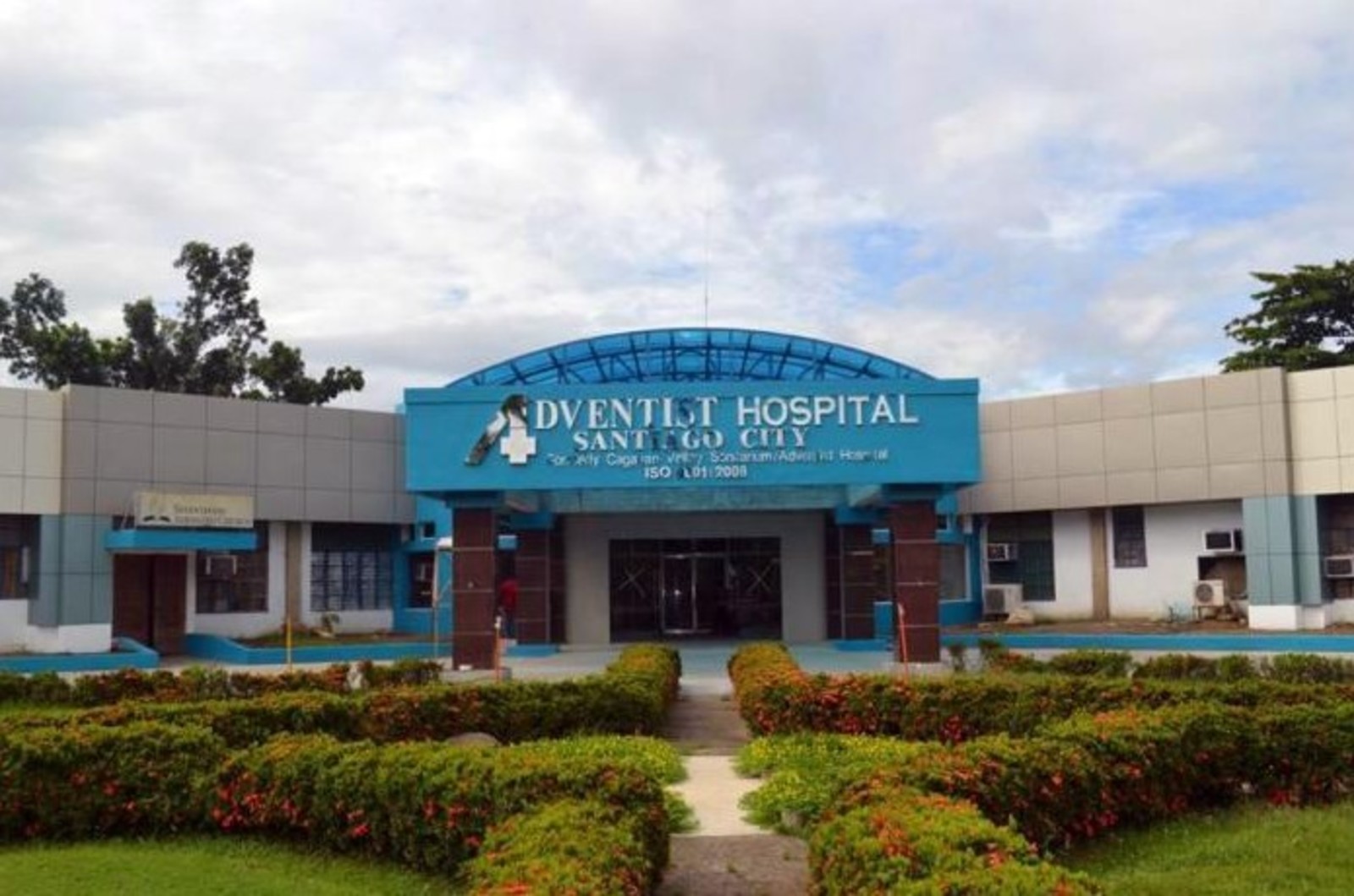
Adventist Hospital Santiago
Shared by the author.
Adventist Hospital Santiago
By Osée Kamgang Toho
Osée Kamgang Toho is a passionate scholar in historical theology from Cameroon. He completed his Bachelor of Theology (B.Th.) at Cosendai Adventist University in 2021, earned a Master of Divinity (M.Div.) from AIIAS in 2025, and is currently pursuing a Ph.D. in Religion at AIIAS. He is also an active writer and presenter in academic circles.
First Published: October 27, 2026
Adventist Hospital Santiago City, Inc. (AHSCI) stands as one of the oldest and most enduring Adventist medical institutions in the Philippines, bearing witness to more than six decades of Christ-centered healing ministry in the heart of the Cagayan Valley. Operated by the Seventh-day Adventist Church through the North Philippine Union Conference (NPUC), it is the sole Adventist medical facility in the Cagayan Valley region.1 Established on March 16, 1959, under the auspices of the North Philippine Union Mission of Seventh-day Adventists, the institution began its life as the Cagayan Valley Sanitarium and Hospital (CVSH), a modest 12-bed facility housed in a repurposed mission building in Dubinan East, Santiago, Isabela.2 From those spare beginnings, it grew into a purpose-built, 50-bed facility, recognized as the commercial and trading center of northeastern Luzon.3
Overview
The hospital’s history mirrors the broader trajectory of Seventh-day Adventist institutional life in the Philippines: a story of missionary vision translated into compassionate service for a predominantly rural and underserved population, and of an institution that grew in depth and complexity while maintaining its founding commitment to wholistic, faith-based care. Administratively connected to the North Philippine Union Conference4 (now Northern Luzon Philippine Union Mission) and networked nationally through the Adventist International Health System Philippines, Inc. (AIHSPI),5 AHSCI has served not only as a center of medical excellence in Region II (Cagayan Valley) but as a tangible expression of the Adventist conviction that the healing of the body and the proclamation of the gospel are inseparable dimensions of one redemptive mission.6
The institutional history of AHSCI traces its development from the organized medical ministry of the Northeast Luzon Mission in 1949, through the founding moment of 1959, the decisive relocation and expansion of 1968–1969, the consolidation years of the 1970s through the 1990s, the recovery and quality-certification era of the 2000s, and the contemporary period of AIHSPI integration and international benchmarking. It draws on the archival record of the institution itself, correspondence with the Far Eastern Division, internal strategic planning documents, accreditation survey reports, administrative committee and board of trustees minutes, institutional yearbooks, personnel handbooks, and outreach field reports, as well as the published periodical record of the Far Eastern Division, the institutional documentation of the Adventist world communion, and oral history interviews conducted with hospital personnel. Together these sources make possible a history that illuminates the relationship between a single provincial hospital and the larger structures of Adventist polity, global denominational mission, and Philippine civic life.
The Adventist Medical Ministry in Northeast Luzon
The Adventist presence in the Cagayan Valley, the long, fertile trough running along the Cagayan River through the province of Isabela and the surrounding region of northeastern Luzon, predates the founding of the hospital by several decades. The history of Seventh-day Adventist missionary outreach in this territory is inseparable from the broader story of the denomination’s expansion into the Philippines, which began in earnest following the establishment of American sovereignty over the archipelago after the Spanish-American War of 1898.7 Within a generation, Adventist colporteurs and evangelists had penetrated the Cagayan Valley, distributing literature, planting churches, and establishing beachheads of faith in a region dominated by a predominantly Roman Catholic population.
The Far Eastern Division Outlook reported as early as January 1932 that colporteurs in the valley were active and productive: Two families in a town in Isabela had been found keeping the Sabbath through reading The Great Controversy, and there were “definite and urgent calls from the Cagayan Valley enough to keep ten workers busy.”8 This single report encapsulates both the promise and the challenge of the region: The soil was fertile, but institutional resources were limited, and the geography of northeastern Luzon, bounded by the Caraballo and Cordillera ranges to the west and south and the Sierra Madre to the east, made sustained missionary penetration demanding work.
The organized medical ministry of the Church in northeastern Luzon began in 1949, when the newly organized Northeast Luzon Mission (NELM) appointed A. M. Arafiles as a field nurse and E. A. Pasamonte as a nurse at the dispensary of the Mission headquarters.9 In December 1952, Ms. Leonila Calaguian accepted a call to serve as a field nurse and continued these health programs of the Church, sustaining a modest but continuous Adventist medical presence in the valley through the early 1950s.10 Sabbath schools were organized, churches planted, and young people enrolled in Voice of Prophecy correspondence courses as part of the broader evangelistic revival of the period.11
The 1955 Cauayan Rally and the Recognition of Medical Need
The decisive catalyst for the founding of a permanent medical institution came in October 1955. NELM conducted combined medical and educational rallies at the church in Cauayan, Isabela, on October 28-29, 1955, as part of a revival series and departmental rallies program. Two physicians from the Manila Sanitarium and Hospital (MSH) joined the event, and several patients who required further treatment and surgery were subsequently brought to MSH in the capital.12 This event crystallized, for Mission leadership, the urgency of the medical need in the Cagayan Valley and led directly to the decision to establish a dedicated medical institution in the region. The North Philippine Union Mission (NPUM) accordingly invited Dr. Celedonio A. Fernando to spearhead the plan.13
Northern Luzon’s Cagayan Valley in the 1950s was a predominantly agricultural region, dependent on the tobacco, rice, and corn that flourished in Isabela’s broad alluvial plains. Santiago, then classified as a municipality and the commercial hub of Isabela, served as the administrative and trading center of a vast agricultural hinterland.14 Access to quality medical care was severely limited. The nearest Adventist medical facility was the Manila Sanitarium and Hospital, hundreds of kilometers to the south. For the rural poor and the growing Adventist community of the northeast, this distance was prohibitive. Tropical diseases, obstetric complications, and surgical emergencies went untreated or were managed under primitive conditions by local practitioners.
The institutional narrative produced by the hospital itself, a “Brief History” composed around 1975 and preserved in the institution’s own files, frames the medical need in starkly human terms: “Cagayan Valley for many years has been suffering from lack of adequate medical and surgical services. With its million of inhabitants from lowly farmers to professionals, from teachers to businessmen, the need of competent and complete medical care becomes more acute and demanding. For many years great emergency cases requiring immediate major attention have to be brought to Manila, but for the have-nots they must put up to whatever the local practitioners can offer.”15 This institutional self-description is not mere rhetoric; It reflects the genuine disparity between the medical resources available in Manila and those available to the rural poor of northeastern Luzon, a disparity that gave the Adventist hospital project both its urgency and its moral force.
Key Individuals and the Founding Vision
The decisive push for a hospital in Santiago came from a convergence of Mission leadership, medical personnel, and community advocacy, but the pivotal figure was unquestionably Dr. Celedonio A. Fernando, Fellow of the Philippine College of Surgeons and of the International College of Surgeons, who had completed postgraduate training in surgery in the United States.16 Dr. Fernando’s effort brought a small group of committed, capable, and motivated medical professionals to the Cagayan Valley to establish a medical facility open to people of all racial origins, religious beliefs, and socioeconomic statuses.17
The majority of the equipment and buildings for the new facility came from kind friends abroad, most notably from the Loma Linda University Medical Alumni Association, a Seventh-day Adventist sister institution, the very school where Dr. Fernando had received his postgraduate training in surgery.18 The “Brief History” records the same detail from the institution’s own perspective: Fernando came to Santiago, Isabela, looking for a place to establish a small hospital, bringing with him medical equipment procured with the help of Mrs. Esther Hansen, then president of the Loma Linda Alumnae Association.19
The convergence of these two accounts, the hospital’s own institutional memory, and the independently compiled record of the Northeast Luzon Mission is historically significant. It demonstrates that the founding of CVSH was not simply a product of local denominational infrastructure but was actively enabled by transnational Adventist networks of philanthropy and professional solidarity. Fernando’s ability to tap into this network gave the infant institution equipment that contemporary accounts described as the best of any hospital outside the Manila area.20
The Cagayan Valley Sanitarium and Hospital was formally established and inaugurated on March 16,1959, at Santiago, Isabela. The institution was founded under the auspices of the North Philippine Union Mission of Seventh-day Adventists in cooperation with the Manila Sanitarium and Hospital.21 In that same year, a 12-bed hospital was built and equipped by remodeling an old Mission building; The institution thus opened, in the words of its own historical record, as a facility “for people with illnesses of all racial origins, religious beliefs, and socioeconomic statuses.”22
The North Philippine Union Mission exercised direct governance through a Board of Directors whose constituency was the quadrennial session of the NPUM, as specified in the institution’s formal Operating Policy, a constitutional document preserved in the hospital’s own files that defines the object of the institution in explicitly theological terms: to advance through medical missionary work the cause and kingdom of Jesus Christ, the Great Physician; to further by all proper and legitimate means a better knowledge of the laws of life and true hygiene, the relief of suffering, and the prevention and cure of disease; to educate and train nurses and other medical personnel in benevolent, charitable, philanthropic, and Christian help work for the uplift of humanity.23
The inauguration on March 16, 1959, was attended by the Honorable Felix T. Caro, governor of the province of Isabela; the Honorable Delfin Albano, congressman of the province of Isabela; the mayor and vice-mayor of the municipality of Santiago; and prominent businessmen of the province.24 The breadth of civic participation in the inaugural ceremony testified, from the outset, to public recognition that the hospital was an institution of community significance, not merely a denominational project.
Original Location and Facilities
The hospital opened in existing Adventist Mission premises in Dubinan East, Santiago, Isabela, utilizing the old Northeast Luzon Mission building. This decision was pragmatic: It allowed the institution to open without awaiting new construction, and it placed the hospital within an existing Adventist community hub. The initial facility comprised 12 beds.25
Yet the institution’s performance in its opening weeks was remarkable. Writing in the June 1959 issue of the Far Eastern Division Outlook, Dr. Roy V. Jutzy, M.D., recorded that even before the formal inauguration ceremonies, patients had lined up seeking care.26 During the first two weeks of operation, the original facility, described in some institutional accounts as a nine-bed hospital, apparently reflecting the configuration of the converted Mission building, averaged 30 to 50 outpatients daily and accommodated 16 to 19 inpatients per day, with ten major surgical operations performed alongside numerous minor procedures.27 Demand grew so quickly that the hospital soon accommodated 24 inpatients at a time, a volume that itself warranted the construction of a larger facility.28 Alongside the medical service, the hospital rendered to the community came a marked increase in local Adventist church membership, from 45 to 200.29 By the close of its first year, President E. S. Robbins of the North Philippine Union Mission noted that the hospital’s reputation was “growing and creating goodwill in the entire area.”30
The demand was so overwhelming that patients who could not be accommodated in the rooms were placed in the lobby, the reception room, and sometimes in the church beside the hospital.31 This detail, preserved in the institutional “Brief History,” captures the physical reality of the institution’s earliest days: a facility intended for 12 patients pressed into service for far more, its walls strained by the pent-up medical need of a region that had never had access to anything approaching its level of care.
Founding Medical staff and Mission
Dr. Roy V. Jutzy, M.D., provided the founding medical narrative and initial clinical leadership, while Dr. Celedonio A. Fernando served as medical director from the institution’s opening.32 Fernando was assisted by Dr. Leonardo F. Rolle, an intern from the Manila Sanitarium and Hospital, and by Dr. Teofilo Sumawang, a dentist. A dedicated corps of nurses and ancillary workers, many transferred from the Manila Sanitarium, completed the founding staff and ensured continuity of Adventist medical culture from the institution’s first day.33
The founding mission of the Cagayan Valley Sanitarium and Hospital was explicitly dual: to provide Christ-centered medical care to the sick and suffering of the Cagayan Valley, and to advance the evangelistic mission of the Seventh-day Adventist Church in northeastern Luzon. Both aims were inseparable in the Adventist ecclesiology of the era, which understood the hospital as the “right arm of the message,” a tangible demonstration of the gospel’s healing power that would open doors for spiritual ministry.34 The hospital served all who came, regardless of religious affiliation, with particular concern for the rural poor, for members of indigenous communities in the surrounding mountain provinces, and for the Adventist believers of Isabela and its neighboring territories.
Early Growth (1959–1968)
The years following the 1959 founding were marked by steady growth in patient volume, community impact, and institutional profile. The Far Eastern Division Outlook of August 1961 captured the evangelistic dimension of the medical work: “the medical work is surely the opening wedge for our message,” a comment made explicitly in the context of the Cagayan Valley, where the hospital was consistently cited as a driver of Church growth.35 The February 1962 issue confirmed that the hospital was regularly serving more patients than its official capacity and that its influence on local Adventist church membership was measurable.36
Dr. Celedonio Fernando’s tenure as medical director (1959–1971) was the defining arc of the institution’s first phase.37 His commitment extended beyond clinical medicine to the civic life of the province: He was a member and eventually president of the Isabela Medical Association, a member of the Rotary Club, and a figure whose standing in the community amplified the hospital’s public relations far beyond what a purely denominational presence could have achieved.38 By 1963, the Dubinan East premises had been strained well beyond their capacity, and Dr. Fernando recognized that a purpose-built hospital was not merely desirable but essential. That year, a five-acre (2.023-hectare) lot on the edge of Mabini, Santiago, was purchased for ₱14,000, and plans were developed for a new hospital building.39
The fundraising campaign that followed spanned several years and engaged donors across the Philippines and in the United States. In 1966, Dr. Fernando attended the General Conference Session of Seventh-day Adventists in the United States as a delegate. Once there, he launched a campaign to raise money for the new hospital, a campaign that met with a generous and encouraging response.40 Dr. W. C. Richli assisted in the development of the hospital compound and in digging a well for the water supply.41 A solicitation team composed of Mrs. L. L. Quirante, Mrs. C. A. Fernando, Dr. H. W. Miller, and Pastor E. L. Langway raised ₱108,000 toward the ongoing construction, while a joint effort of the Far Eastern Division (FED) and the NPUM gathered an additional ₱400,000 for the hospital.42 At the 1969 inauguration, Dr. Richli received an appreciation award for his “outstanding contribution to the hospital, for laying the groundwork of the new hospital, for unselfish support both material and moral to the medical work in the Cagayan Valley.”43
Relocation to Mabini and the New Hospital (1968–1969)
The new 3⅓-hectare site on the outskirts of Santiago was formally opened on October 20, 1968, and construction began immediately, on October 31.44 A Technical Description preserved in the hospital’s institutional files provides a portrait of the new building: constructed with self-supporting structural steel frames, hollow block walls, GI roofing, insulated ceilings, and screened steel windows, it had a total floor area of 25,230 square feet, more than six times the floor area of the old building, and was shaped like the letter X, with a large covered patio in the middle section.45 Two additional wings of private and semi-private rooms could be added on opposite sides of the covered patio without altering any existing facilities, a foresight that anticipated decades of future growth.46
At opening, the new facility had three private rooms, six semi-private rooms, and 35 ward beds, with the structural design permitting expansion to accommodate 100 to 120 patients.47 It contained two nurses’ stations, three large operating rooms, a large outpatient department with dental and optical clinics, an emergency room, a laboratory, an X-ray room, a physiotherapy department, a pharmacy, and a large chapel and conference room that doubled as a worship space, together with kitchen, dining, and canteen facilities.48 The entire building was provided with hot and cold water lines, wall-type oxygen and suction outlets in all operating rooms, including the labor and recovery rooms, and wall-type oxygen outlets in all private and semi-private rooms and ward beds. An intercom and address-and-paging system connected the critical areas of the building, and the patients’ beds were linked to a central annunciator system at the nurses’ station.49 A dormitory for employees, especially nurses, a water tank, and a motor pool were constructed in the same period.50
The new Cagayan Valley Sanitarium and Hospital, valued at ₱800,000, was inaugurated on July 24, 1969, nine months after its groundbreaking.51 The formal ceremony was attended by some of the most prominent figures in Philippine public life. Senator Helena Z. Benitez cut the ceremonial ribbon, assisted by Mrs. C. A. Fernando, wife of the medical director; Mrs. Raymundo Miranda, wife of the town mayor; and Mrs. Melanio T. Singson, wife of the Isabela congressman.52 Other attendees included guests from Philippine Union College, the Manila Sanitarium and Hospital, the Philippine Publishing House, and the North Philippine Union Mission.53 In his welcome speech, Dr. Fernando expressed his thanks to God, the General Conference, the Far Eastern Division, the North Philippine Union Mission, the Manila Sanitarium and Hospital, and all the friends of CVSH for their help in making the occasion possible.54
The inauguration’s most memorable moment, as preserved in the hospital’s own institutional memory, came from the mayor of Santiago who, in a folksy remark, told of how he had been shot and brought to the hospital in a critical condition. “Here in this hospital, patients never die,” he testified.55 Pastor E. Longway, chairman of the Hongkong Adventist Sanitarium and Hospital Development Board, who had given much of his time soliciting funds for the hospital, declared that the greatest tribute a doctor could receive is to be called the beloved physician, like Luke.56 Dr. D. M. Hechanova, Jr., Union Medical Secretary, offered the dedicatory prayer.57
Accreditation and Institutional Recognition (1971)
In 1971, the hospital received its first formal hospital accreditation from the Far Eastern Division, becoming the third Adventist hospital in the Philippines to be so accredited, after the hospitals in Manila and Bacolod.58 The year brought a cluster of institutional milestones reported to the NPUC: the construction of an iron-and-concrete fence in front of the hospital; recognition as the cleanest hospital in the region; the baking of the institution’s first whole-wheat bread, using an oven donated by the Manila Sanitarium and Hospital; the donation of one hundred citrus seedlings to Northeast Luzon Academy; and an employees’ excursion to Magat Dam.59 An additional three-apartment building was constructed that same year to house hospital workers.60
Medical Leadership Transitions (1971–1972)
The early 1970s brought changes in medical leadership. Dr. Fernando was succeeded briefly by Dr. Oseas C. Pilar (1971–1972), who in turn was succeeded by Dr. Loreto R. Garcia, Jr., who assumed the position in 1972 and went on to serve as medical director and business manager for more than a quarter-century, until 1999, a tenure of institutional continuity matched by few other administrators in the hospital’s history.61 The March 1971 issue of the Far Eastern Division Outlook announced the appointment of Antonio Bulagsay as hospital chaplain, formalizing the chaplaincy as a distinct professional role within the institution.62 His wife, Florida Bulagsay (née Oania), a dental graduate of Manila Central University, was simultaneously appointed to head the dental department.63
The 1975 Far Eastern Division Reaccreditation
In January 1975, the Far Eastern Division Hospital Accrediting Board conducted a comprehensive reaccreditation survey of the Cagayan Valley Sanitarium and Hospital, providing the most detailed institutional snapshot of the hospital in its first two decades. The survey team, chaired by P. H. Eldridge and including G. C. Ekvall, M.D., W. L. Leazer, R.N., R. O. Heald, M.D., W. T. Clark, and O. C. Edwards, visited the hospital from January 25 to 28, 1975, and presented its findings to the FED Accrediting Board at its meeting of March 10, 1975, in Singapore.64 The board voted to approve continued accreditation, with the understanding that careful consideration would be given to the recommendations of the survey committee and that action would be taken on the noted deficiencies by the time of the next survey.65
At the time of the survey, the hospital was under the leadership of Dr. Loreto R. Garcia, Jr., M.D., who served concurrently as medical director and business manager. The chief of staff was Dr. N. G. Noval, M.D.; the director of Nursing Service was Carol Garcia; the chaplain was Pastor F. Natividad; the treasurer was Rudolfo C. Galera; and the chairman of the Board was Elder F. M. Arrogante.66
The survey found the institution in generally good condition, though with areas requiring improvement. The physical plant, then six years old, was described as clean and well organized, though in need of painting in some areas. Plans to add another wing to the building drew a commendation from the survey board.67 The bed complement was listed at 55, with an occupancy rate of 56 percent, a figure the survey noted was too low and indicated a need for increased staffing.68 Inpatient admissions had increased over recent years, but outpatient visits had dropped considerably since 1973, and there were few obstetrical deliveries. The survey recommended that statistics be centralized through the Medical Records department and noted a need for more private rooms and for more staff, particularly male physicians.69 Financially, the 1974 year-end statement showed an operating gain that had increased 117 percent over 1973. Personnel stood at 71 employees, with written job descriptions for business office and nursing staff, and in-service training programs for nurses’ aides and medical interns.70
The chaplaincy program received a commendation for ten baptisms in 1974; the survey noted that some health education was carried on through Five-Day Plans and medical rallies and called for the appointment of a full-time chaplain and Bible instructor, reflecting the denomination’s expectation that an Adventist hospital’s evangelistic function should be as institutionalized and resourced as its clinical services.71 Not all departments fared equally: The Physical Therapy department received the survey’s most critical assessment, with most of its donated equipment old and non-functioning, scoring only 15 of a possible 35 points,72 and the Radiology department drew serious concern, with X-ray equipment described as quite old and largely non-functional, and walls and doors unprotected against X-ray exposure hazards.73 These findings illuminate the constraints under which a provincial Adventist hospital operated in the mid-1970s: Clinical aspirations outpaced by the realities of equipment obsolescence, and the gap between institutional vision and material resource a constant management challenge.
Medical Outreach Beyond the Institution (1970–1978)
One of the most remarkable features of the hospital’s formative decades was its commitment to medical outreach beyond the institution’s walls. The December 1970 issue of the Far Eastern Division Outlook provided a vivid account of a medical team from CVSH visiting the remote barrio of Imugan in Santa Fe, Nueva Vizcaya, bringing with them an X-ray unit run by the ambulance engine, introduced in Imugan for the first time, and performing obstetric cases and an appendectomy under local anesthesia in the field.74
The hospital’s institutional files preserve three detailed medical outreach field reports from 1978 that offer an unparalleled ground-level view of missionary medicine in practice. The first describes a medical outreach conducted at Sto. Domingo, Alicia, Isabela, on February 26, 1978: Some 300 outpatients were treated, about 700 prescriptions dispensed, and ₱5,000 worth of free medicines distributed by a team of two doctors, a pharmacist, two graduate nurses, and eight student nurses.75 This medical rally served as an introduction to an evangelistic effort conducted by Pastor Fariñas one week later, a direct illustration of the hospital’s theology of medicine as an opening wedge for the gospel.76
The second outreach report chronicles a mission to Concepcion, Ilocos Sur, conducted from April 3 to 6, 1978, by a team that traveled by ambulance through the Caraballo passes and a winding mountain road, arriving after a ten-hour ride; patients came from places far and near, receiving consultations and minor surgeries over two consecutive days.77 The third report describes a mission to Botbot in Kalinga-Apayao on May 3, 1978, in which the team proceeded by foot from the ambulance staging point for two hours among mountains and rivers; the Botbot communities, described in the report as initially wary of the team, accepted the ministry once they understood its medical purpose, and some 300 patients were seen.78
The October 1975 issue of the Far Eastern Division Outlook had separately described the work of a physician associated with the hospital who conducted volunteer medical service among the poor, extending as far as Borongan in Eastern Samar, Tacloban City and Ormoc City on Leyte, and the island of Palawan.79 The May 1976 issue recorded the organizational meeting of the Philippine Hospital Chaplains’ Association, at which F. Natividad of the Cagayan Valley Sanitarium and Hospital was named secretary-treasurer, a reflection of both the quality of the institution’s chaplaincy ministry and its engagement with the broader Adventist healthcare community.80
Consolidation and Steady Development (1971–1989)
Between 1972 and 1975, the hospital undertook general renovations and built a children’s playground.81 The hospital's charity program during these years included regular visits by Dr. Roy Day, who performed cataract operations for the community.82 In 1976, 12 air-conditioned VIP rooms were added to the facility.83 In 1977, the hospital acquired a six-wheel truck that became a distinguishing mark of the institution, affectionately nicknamed “the weapon” for its service in many of the hospital’s medical missions.84 In 1978, a 1974-model Jeep Cherokee was acquired and converted into an ambulance, remaining in service until 1989.85 An ultrasound machine and a fully automated dry chemistry analyzer were purchased in 1988, expanding the hospital’s diagnostic capability.86
Integration into the Adventist Health Services/Asia Network (1982–1983)
The early 1980s marked a significant turning point in the hospital’s institutional positioning, as it was drawn into the newly forming structure of Adventist Health Services/Asia (AHSA). In August 1982, Harvey A. Rudisaile, president of AHSA, wrote to Dr. Loreto R. Garcia, Jr., president of the Cagayan Valley Sanitarium and Hospital, inviting him to a Presidents’ Council to be held at Taiwan Adventist Hospital on September 15-16, 1982.87 The agenda covered the initial organization of Adventist Health Services/Asia as well as topics important to the development of each health facility. Garcia’s inclusion on the invitation list confirms that CVSH was regarded as a full institutional partner in this regional network from its inception.88
The administrative challenges of the early 1980s are preserved with unusual candor in the hospital’s internal correspondence. A letter from Controller Paul G. Pineda to Bangkok Adventist Hospital in November 1983, responding to an inquiry about the new AHSA Accounting Manual, reveals that CVSH was still operating on a fully manual basis of recording transactions and had ordered, but could not yet obtain, an NCR posting machine.89 Pineda further noted that only four hospitals across Asia had been approved by the recent Presidents’ Council for computerization, and that CVSH was not among them.90 A separate letter from Pineda to the FED Treasurer in November 1983 addressed scholarship loan repayment for Dr. Lemuel U. Ursales, then serving as a senior resident physician at CVSH, confirming that the Division’s Medical-Dental scholarship program was actively channeling trained medical personnel to provincial institutions.91
The Adventist Health Philosophy as Institutional DNA
The hospital’s institution preserves a substantial document entitled “Philosophy and Objectives of the Adventist Health Ministry,” which served as the foundational statement of the institution’s theological self-understanding. The document opens with a declaration of the Seventh-day Adventist Church’s belief that the health ministry, in the relief of suffering and the treatment of disease, may contribute directly to the restoration of the whole man.92 Its objectives section cites Ellen White’s Testimonies at length: “I have been instructed that our medical institutions are to stand as witnesses for God. They are established to relieve the sick and afflicted, to awaken a spirit of inquiry, to disseminate light and to advance reform.”93
This theological document functioned as an operational framework shaping the hospital’s departmental priorities, its chaplaincy program, its outreach commitments, and its understanding of why health education, NEWSTART programs, and soul-winning were integral to the institution’s work.94 It is precisely this theological continuity between the global Adventist health philosophy and its local expression in Santiago that distinguishes the hospital’s history as an object of study: Here, ideas had institutional consequences.
Strategic Planning and the Ambitions of the 1990s
The most detailed window into the hospital’s institutional life in the period between the 1975 accreditation and the post-2000 era is provided by two strategic planning documents preserved in the hospital’s institutional files: the Strategic Plan 2000 and the 1998 Strategic Planning Document.95 Together, they reveal an institution of considerable organizational sophistication, one that had internalized the language of measurable goals, action plans, and budget accountability, and one with substantial ambitions for growth and expanded community service.
The Strategic Plan 2000’s statement of mission declares that “Cagayan Valley Sanitarium and Hospital exists to advance the health and well-being of all peoples, leading them to Jesus Christ, the Great Physician.”96 Goal I called for the improvement and beautification of the hospital’s physical plant by 1997–1998. Goal II aimed at attaining the status of a medical center in Region 2 by 1998, with measurable indicators including increasing bed capacity to 120 beds; completing specialty staff in pathology, neurology, plastic surgery, urology, gastroenterology, OB-gynecology, and pediatrics; establishing satellite clinics in Aurora/Roxas, Isabela, and in Cagayan; acquiring two dialysis machines by 1996; and acquiring mammography equipment by 1998.97
The evangelistic dimensions of the plan were equally precise. The Global Mission Outreach section of the 1998 Strategic Planning Document committed all 12 hospital departments to sponsoring one evangelistic effort each; 95 percent of nurses to participating in missionary programs; the Nursing Service department to conducting 40 singing bands and sending 400 birthday greetings to patients; 200 patients to being enrolled in Voice of Prophecy correspondence courses; the Health Education department to conducting four live-in NEWSTART programs; and the chaplaincy department to baptizing 100 souls by year-end 1998, making 2,000 bedside visits, and offering 2,000 prayers.98 The plan’s financial management goals included increasing the ingathering to ₱200,000 by September 1998, increasing patient count by 30 percent, and increasing liquidity to 50 percent and profitability to 25 percent by year-end.99
Indicative of the financial strain of the period, the hospital experienced a deepened financial condition around 1998, and a branch clinic established in Aurora, Isabela, to augment its services was discontinued after three years when the Department of Health did not approve the building plan.100 The goals for medical center status, satellite clinics, and bed expansion to 120 were ultimately not achieved in the targeted timeframe. The hospital’s current authorized capacity remains at 50 beds, but the process of articulating these goals and measuring performance against them represents a significant maturation of institutional governance.101
Name Changes
The hospital has operated under three official names reflecting its evolving institutional identity. From its founding in 1959 to 2009, it was known as the Cagayan Valley Sanitarium and Hospital (CVSH).102 The name reflected the Adventist tradition of calling its health institutions “sanitariums,” emphasizing the holistic, preventive character of Adventist health philosophy, and the geographic identity of the Cagayan Valley as the hospital’s primary service area. From 2009 to 2011, the institution was known as the Cagayan Valley Adventist Hospital (CVAH), and from 2012 to the present, as Adventist Hospital Santiago City, Inc. (AHSCI).103 The transition away from “sanitarium” nomenclature reflected changes in both the regulatory landscape of Philippine health care and an evolving understanding of Adventist health ministry, and the incorporation of “Santiago City” in the name reflected the political transformation of the municipality through Republic Act No. 7720, signed on May 5, 1994, by President Fidel V. Ramos, which converted the municipality of Santiago into an independent component city, the first municipality in the Cagayan Valley to attain this status.104
Expansion and Diversification (1990–1999)
The 1990s brought a further wave of physical expansion and specialized service development. In 1992–1993, 14 additional VIP rooms were constructed, transforming the original X-shaped building into what hospital staff came to call an “asterisk-shaped” structure.105 During the same period, the hospital partnered with visiting specialist Dr. Ravindranathan on a Harelip Operation Smile charity program, and with the Rotary Club of Santiago on an Operation Harelip and Thyroid Surgical Mission, extending free reconstructive and thyroid surgery to indigent patients across the region.106 In recognition of its blood-bank capabilities, the Department of Health designated the hospital as a regional blood depot, and the DOH Region 2 office accredited it as a Mother-Baby Friendly Hospital.107
In 1996, a Hemodialysis Unit with six machines was opened, extending the hospital’s services into renal care for the first time, and the dietary building was extended to accommodate a bakery operation.108 These investments, made in the years immediately preceding the financial difficulties of 1998,109 reflect an institution still expanding its clinical scope even as it approached a period of fiscal strain.
Recovery and Regrowth (2000–2008)
The hospital entered the new millennium in financial difficulty but recovered steadily. Beginning in 2000, CVSH moved from an average inpatient count of three to an average of 15, and from a negative 80 percent financial liquidity position to more than 100 percent; as a result, not one of the more than 90 workers on staff was retrenched.110 Donations supported the recovery, including ₱1,000,000 from the Southern Asia-Pacific Division.111 Renovations proceeded across the Emergency Room, Laboratory, Pharmacy, and Out-Patient Department, and extended to inpatient rooms, the Operating and Delivery Room, the Neonatal Intensive Care Unit, and the Dietary Department.112
A significant change took place in 2003 with the implementation of the “Open Hospital Policy,” inviting physicians of different specialties to conduct out-patient consultations at the hospital.113 In 2005, the Endoscopy Center was established,114 and the new Critical Care Unit was inaugurated on June 28, 2006.115 The year 2006 was highlighted by certification to ISO 9001:2000 by the TUV-SUD accreditation firm, making AHSCI’s predecessor institution the first hospital in Region 2 to be ISO certified.116 New laboratory equipment, including a refrigerated centrifuge and plasma freezer, expanded the availability of blood products for transfusion.117
Construction of the Cagayan Valley Adventist Diagnostic and Imaging Center, popularly known as the “CT scan building” for the CT scanner it housed, acquired through partnership with affiliated doctors, began in 2006, and the building was inaugurated on March 15, 2007.118 The hospital subsequently began offering chemotherapy services and was awarded first prize in the Department of Labor and Employment’s (DOLE) “Regional Productivity Olympics;” the same agency recognized the hospital’s Labor Management Committee in 2015.119
ISO Certification
A defining feature of the hospital’s development in the early 21st century was its pursuit of internationally recognized quality standards. Having first achieved ISO 9001:2000 certification in 2006, the institution has since progressed to ISO 9001:2015, the most current version of the standard, which requires systematic management of processes, sustained customer satisfaction, and documented continuous improvement across all operational domains.120 Its quality policy commits the institution to consider the voice of customers, ensure a safe and comfortable environment, maintain competent personnel and updated equipment, and comply with all regulatory and statutory requirements.121
ISO certification represents a significant historical achievement for an institution founded in a repurposed Mission building. For a 50-bed provincial hospital whose 1975 accreditation survey had found physical therapy equipment largely non-functional and X-ray walls unprotected,122 the attainment of international quality certification measures the distance traveled across more than six decades of institutional development.
The 65th Anniversary: “BALLIGI” and Contemporary Renewal (2024–2025)
On March 14, 2024, AHSCI marked its 65th founding anniversary with a formal Gala Night in Santiago City, themed “BALLIGI,” the Ilocano word for “victory.” The acronym encapsulated the institutional values affirmed as defining the hospital’s legacy: Benevolence, Altruism, Leadership, Longevity, Integrity, Gratitude, and Inspiration.123 Pastor Jose Zabat, Jr., executive secretary of the North Philippine Union Conference, delivered the keynote address on God’s faithfulness and mission-driven service, and AIHSPI President and CEO Roy G. Perez commended AHSCI’s leadership for their unwavering dedication to service and innovation.124
In August 2024, AHSCI hosted a three-day leadership development workshop titled “Renew, Reconnect, and Revitalize: A Journey to Empowered Leadership” (August 6-8, 2024), integrating mental health awareness, spiritual renewal, and leadership training.125 AIHSPI CEO Roy G. Perez served as a principal resource speaker, and Dr. Chris del Monte, RPm, MSc, program head of The Hoffen Clinic–Center for Mental Health at Adventist Hospital-Davao, provided evidence-based tools for strengthening mental and emotional resilience.126
In June 2024, hospital representatives from across the AIHSPI network gathered at Adventist Medical Center Manila for an orientation on the PhilHealth Konsulta Package, exploring improved primary care access, financial sustainability, early disease detection, and patient retention.127 In May 2025, marking its 66th year of service, AHSCI sent a 30-member delegation to Taiwan Adventist Hospital (TAH) in Taipei for a formal benchmarking visit, led by Dr. Jaime L. Jimenez, vice president for Medical Affairs and chief of staff. The group observed TAH’s advanced medical facilities, patient-centered care models, and administrative systems supporting holistic, faith-based healing.128 The benchmarking destination connects AHSCI to the very institution where the first Presidents’ Council of Adventist Health Services/Asia was held in September 1982129, a historical continuity spanning more than four decades of regional Adventist healthcare network-building.
In the same month, chaplaincy directors from Adventist hospitals across the Philippines gathered at Adventist Medical Center Manila for the National Chaplains’ Conference (May 28-29, 2025), organized by AIHSPI under the theme “Strengthening Adventist Healthcare Chaplaincy: Best Practices for Mission-Driven Spiritual Care in a Changing World.” The two-day conference concluded with a commitment and commissioning service led by Mr. Roy G. Perez, MBA, CEO of AIHSPI.130 AHSCI’s chaplaincy director participated in this national gathering, reflecting the hospital’s ongoing commitment to professional formation in pastoral ministry, a commitment tracing a direct line to the appointment of Antonio Bulagsay as the institution’s first chaplain in 1971131 and to the hospital’s participation in the founding of the Philippine Hospital Chaplains’ Association in 1976.132
Historical Role of the Institution
Adventist Hospital Santiago City, Inc. has occupied, for more than six decades, a distinctive place within three overlapping spheres: the worldwide Seventh-day Adventist Church, the civic and economic life of Santiago City and the Cagayan Valley, and the social fabric of a religiously and ethnically diverse regional population.
Within the structure of the Seventh-day Adventist Church, the hospital functions as an institutional arm of the North Philippine Union Conference, embodying the denomination’s historic conviction that medical missionary work is, in Ellen White’s words, “the right arm of the third angel’s message.”133 Its integration into Adventist Health Services/Asia in the early 1980s,134 and into the contemporary network of the Adventist International Health System Philippines, Inc. (AIHSPI),135 situates AHSCI within a regional and ultimately global lattice of Adventist healthcare institutions extending from Taiwan to Bangkok to Manila.136 Its chaplaincy program, from the 1971 appointment of Antonio Bulagsay,137 through the founding role of F. Natividad in the Philippine Hospital Chaplains’ Association in 1976,138 to participate in the 2025 National Chaplains’ Conference.139 It has consistently treated spiritual care as a clinical department coequal with medicine, surgery, and nursing.
Within the civic life of Santiago City and Isabela province, AHSCI has functioned since 1959 as a critical piece of regional health infrastructure, serving a population for whom the alternative was, for decades, the considerably more distant Manila Sanitarium and Hospital.140 Its medical outreach programs, from the 1970 Imugan expedition141 to the three documented 1978 missions into Isabela, Ilocos Sur, and Kalinga-Apayao142, extended the hospital’s reach into mountain and indigenous communities far beyond its walls, and the institution continues to conduct approximately thirty medical outreach and mission programs annually, occasionally extending as far as the Visayas.143 The hospital’s partnership with city government, including its designation as a “GP Post-Patak Center” assisting indigent patients referred by the City Health Office, and its leadership of the city’s annual No Tobacco Day Celebration parade, reflects an institution thoroughly embedded in local public health governance.144 Economically, the hospital has stood among the city’s significant taxpayers and employers for decades, a status reflected in its repeated recognition among Santiago City’s top business taxpayers in the 2010s and 2020s.145
Educationally, AHSCI has been affiliated since 1978 with schools, colleges, and universities across the region, hosting internships, on-the-job training, and clinical duty rotations for students of medicine, nursing, and midwifery, a role that has made the hospital a training ground for generations of Cagayan Valley health professionals.146 Socially, the hospital has supported evangelistic series, radio ministry, calamity relief efforts, and the construction of Adventist church buildings throughout its service area, reflecting the conviction, embedded in its founding Operating Policy, that medical and spiritual ministry are inseparable expressions of a single redemptive mission.147
Outlook
As it moves into its seventh decade of service, AHSCI faces both the achievements and the unfinished ambitions of its institutional history. The Strategic Plan 2000 envisioned a 120-bed Medical Center serving the whole of Region 2 with satellite clinics and advanced specialty care;148 the hospital’s authorized capacity remains 50 beds, a reminder that institutional aspiration and material constraint have been in tension throughout the hospital’s history. Yet the institution’s quality infrastructure has matured considerably: Its progression from FED accreditation in 1971,149 through the detailed 1975 reaccreditation survey,150 to ISO 9001:2000 certification in 2006151 and ISO 9001:2015 certification in the present decade,152 represents a sustained, multigenerational commitment to measurable quality improvement
The hospital’s recent history has also been shaped by national policy change. The implementation of the Universal Health Care Act of 2019 and the PhilHealth Konsulta Package has required AHSCI, like all Philippine hospitals, to adapt its primary care and financing models; the hospital’s participation in network-wide orientation sessions on the Konsulta Package in 2024 reflects this ongoing adjustment.153 The COVID-19 pandemic, beginning in 2020, tested the institution severely: AHSCI implemented two calibrated lockdowns and, at the height of the crisis, exceeded the Department of Health’s mandated 30 percent COVID-19 bed-occupancy threshold, accepting significant economic risk in order to continue serving its community.154 That the hospital weathered the pandemic without institutional collapse, much as it weathered the financial crisis of the late 1990s,155 speaks to an organizational resilience built across decades of provincial ministry under conditions of chronic resource constraint.
Looking forward, AHSCI has articulated a Center of Excellence initiative encompassing a Complete Health Improvement Program, a dedicated Lifestyle Medicine clinic, an Adventist Hospital Community Radio and associated social media ministries, and an Adventist Hospital Community Store and water-refilling station, initiatives that extend the hospital’s historic NEWSTART health-education tradition156 into 21st-century formats.157 Its 2024–2025 institutional renewal efforts, the BALLIGI 65th anniversary celebration,158 the “Renew, Reconnect, and Revitalize” leadership workshop,159 and the benchmarking visit to Taiwan Adventist Hospital,160 signal a leadership culture actively seeking to learn from peer institutions across the Adventist health network, even as it commemorates its own distinctive history. From a 12-bed converted Mission building in Dubinan East to a 50-bed, ISO-certified regional hospital on the Maharlika Highway, the institution’s history across more than six decades testifies to the durability of the founding vision articulated by Dr. Celedonio A. Fernando and his colleagues in 1959: a hospital open to all, animated by the conviction that the healing of the body is inseparable from the larger mission of the gospel.161
Awards and Honors162
-
ISO 9001:2000 Certification
-
Winner, Search for Outstanding Labor-Management Committee for Industrial Peace (2015)
-
Department of Labor and Employment Labor Management Committee Recognition (2015)
-
Hospital D.O.T.S. Excellence Award in Program Implementation Review (2016)
-
Top 13, City of Santiago’s Top 100 Taxpayers (2016)
-
Top 13, City of Santiago’s Top 100 Taxpayers (2017)
-
Top 15, City of Santiago’s Top 100 Taxpayers (2018)
-
Top 16, City of Santiago’s Top 100 Taxpayers (2019)
-
Top 15, City of Santiago’s Top 200 Taxpayers (2020)
-
Top 20 Business Taxpayer, City of Santiago (2023)
-
Top 23 Business Taxpayer, City of Santiago (2024)
-
Top 32, City of Santiago’s Top 100 Taxpayers (2025)
-
Best Performance in Claims Compliance (Lowest Denied Claims) Among Level 2 Hospitals, CY 2023, PhilHealth
-
Excellence in Claims Processing Among Level 2 Hospitals, CY 2024, PhilHealth
-
Regional Winner, 2025 Outstanding Labor-Management Cooperation Award
-
Top-Performing Newborn Facility, Level 1 and 2 Private Category
Official Names
Cagayan Valley Sanitarium and Hospital (CVSH), 1959–2009; Cagayan Valley Adventist Hospital (CVAH), 2009–2011; Adventist Hospital Santiago City, Inc. (AHSCI), 2012–present
Leaders and Administrators
Medical directors/chiefs of staff/vice presidents for Medical Affairs: Dr. Roy V. Jutzy, M.D.: founding clinical authority, 1959163; Dr. Celedonio A. Fernando: medical director, March 16, 1959–1971164; Dr. Oseas C. Pilar: Medical Director, 1971–1972; Dr. Loreto R. Garcia, Jr.: medical director and business manager, 1972–1999; Dr. Alvin L. Reyes: officer-in-charge, Medical Affairs, Q2–Q3 2005165; Dr. Pacifico M. Maypa, Jr.: vice president for Medical Affairs and chief of staff, 2002–2004; Dr. Jaime L. Jimenez: vice president for Medical Affairs and chief of staff, 2006–2012; 2023–present; Dr. Elvin R. Tecson: vice president for Medical Affairs and chief of staff, 2013–2014; Dr. Reynald E. Narbarte: vice president for Medical Affairs and chief of staff, 2015–2022.166
Presidents/chief executive officers: Dr. Isagani L. Manuel, 1999–2003; Dr. Abelardo T. Osorio, 2003–2005; Joeven L. Laplana, 2005; Alan C. Tauro, 2006–2011; Dr. Jaime L. Jimenez, 2011–2022; Fredelito N. Castillo, 2022–present.167
Assistant business managers/treasurers:168 Rodrigo Fernando, 1959–1960; Jose Atil, 1960–1967; Floro Martinez, 1967–1968; Segundino Tortal, 1969; Hernando Correces, May 1969–December 15, 1973; Rodolfo C. Galera, December 15, 1973–c. 1975.
Board chairs: F. M. Arrogante, c. 1975; Nestor D. Dayson, 2002–2004; Bibly L. Macaya, 2004–2009 ; Nepthali J. Manez, 2005; 2013–2016 ; Abner S. Roque, 2010–2011; Rufo G. Gasapo, 2017–2018; Romeo T. Mangiliman, 2019–2022; Gerardo L. Cajobe, 2023–2025; Daniel Malabad, 2026–present.169
Chaplains : Antonio Bulagsay, c. 1971–170; F. Natividad, c. 1975–1978.171
Sources
1998 Strategic Planning Document. Cagayan Valley Sanitarium and Hospital, Mabini, Santiago City.
Adventist Hospital Santiago City, Inc. “About.” https://www.adventisthealth-stg.com/about/ (accessed June 15, 2026).
Adventist Hospital Santiago City, Inc. Administrative Committee Minutes. 2015-315.
“Adventist Hospital Santiago City, Inc. Delegation Visits Taiwan Adventist Hospital.” Taiwan Adventist Hospital. May 5, 2025. https://www.tahsda.org.tw/en/pages/content.php?id=78
(accessed June 15, 2026).
Adventist International Health System Philippines, Inc. “Adventist Hospital Chaplaincy Leaders Gather for National Conference in Manila.” May 30, 2025. https://adventisthealth.ph (accessed June 16, 2026).
Adventist International Health System Philippines, Inc. “AIHSPI CEO Joins Adventist Hospital Santiago City in Celebrating 65 Years of BALLIGI.” March 14, 2024. https://adventisthealth.ph (accessed June 16, 2026).
Adventist International Health System Philippines, Inc. “AIHSPI CEO Leads Leadership Renewal Workshop in Santiago City.” August 8, 2024. https://adventisthealth.ph
(accessed June 15, 2026).
Adventist International Health System Philippines, Inc. “AIHSPI Gathers Hospital Leaders for Konsulta Package Orientation.” June 28, 2024. https://adventisthealth.ph (accessed June 17, 2026).
“AHSCI Location and Profile.” Adventist International Health System Philippines, Inc. https://adventisthealth.ph (accessed June 15, 2026).
Alsaybar, B. B. “Most Modern Hospital in Cagayan Valley Inaugurated.” Far Eastern Division Outlook (April 1970).
Bautista, J. O. “NELM Report.” Biennial Session Reports, 1949.
Bautista, J. O. “Northeast Luzon Mission.” Far Eastern Division Outlook (November 1949).
“Brief History of the Cagayan Valley Sanitarium and Hospital.” Institutional narrative, c. 1975.
Cagayan Valley Adventist Hospital and Adventist Hospital-Santiago City, Inc. Administrative Committee and Board of Trustees Minutes. 2002–2025.
“Cagayan Valley Record.” Far Eastern Division Outlook 21, no. 1 (January 1932).
“Cagayan Valley Report.” Far Eastern Division Outlook 22 (December 1955).
Cagayan Valley Sanitarium and Hospital. Administrative Committee Minutes. 1975, 1976, 1977, 1988, 1996, 1998, 2000, 2003, 2005, 2006, and 2008.
Cagayan Valley Sanitarium and Hospital. Board of Trustees Minutes. 2007.
Catalon, Alice M., and Sheryl L. Ronas. “AHSCI (Adventist Hospital – Santiago City, Inc.).” Encyclopedia of Seventh-day Adventists. Institutional update prepared for AHSCI. Edited by Lovelyn O. Calacsan, 2026.
“Change in Medical Leadership at Cagayan Valley Hospital.” Far Eastern Division Outlook 41 (August 1972).
City of Santiago. “History.” (accessed June 16, 2026).
Dela Cruz, F. B. “Northeast Luzon Mission.” Far Eastern Division Outlook (April 1953).
Diaz, P. R. “Greater Evangelism Through Church Revivals.” Far Eastern Division Outlook (January 1956).
“Doctor Serves Wide Region from Santiago Cagayan Valley.” Far Eastern Division Outlook 44 (January 1975).
Domocmat, Lowel J., and Ismael P. Cabason. “Northern Luzon Mission.” Encyclopedia of Seventh-day Adventists. (accessed June 15, 2026).
Far Eastern Division Hospital Accrediting Board. “Hospital Survey Analysis: Cagayan Valley Sanitarium and Hospital.” Survey of January 25–28, 1975.
Far Eastern Division Hospital Accrediting Board. “Report and Recommendations: Cagayan Valley Sanitarium and Hospital.” Board meeting of March 10, 1975, Far Eastern Division, Singapore.
“Far Eastern Division: Medical Work.” Far Eastern Division Outlook 31 (February 1962).
“Hospital Medical Team Visits Imugan.” Far Eastern Division Outlook 39 (December 1970).
Jutzy, Roy V. “The Cagayan Valley Sanitarium and Hospital.” Far Eastern Division Outlook 28 (June 1959).
Mariñas, Maureen N. “Northeast Luzon Mission.” Encyclopedia of Seventh-day Adventists. https://encyclopedia.adventist.org/article?id=BCLI (accessed June 15, 2026).
“Medical Institutions: Far Eastern Division.” Far Eastern Division Outlook 35 (May 1966): 10–11.
Medical Outreach Report, Sto. Domingo, Alicia, Isabela. February 26, 1978.
“New Chaplain at Cagayan Valley Sanitarium and Hospital.” Far Eastern Division Outlook 40 (March 1971).
Niere, D. M. “Volunteer Works Among the Poor.” Far Eastern Division Outlook (October 1975).
“North Philippine Union Mission.” Far Eastern Division Outlook 31 (January 1960).
“North Philippine Union Mission.” Far Eastern Division Outlook 33 (August 1961).
“Operating Policy for Cagayan Valley Sanitarium and Hospital in the North Philippine Union Mission of Seventh-day Adventists.”
“Philippine Hospital Chaplains’ Association Organized.” Far Eastern Division Outlook 45 (May 1976): 7.
Philippine Union Mission. Executive Committee Minutes. January 1957.
“Philosophy and Objectives of the Adventist Health Ministry.” Institutional policy document, Cagayan Valley Sanitarium and Hospital.
“Plans for Expansion.” Far Eastern Division Outlook 33 (February 1964).
Pineda, Paul G., Controller, Cagayan Valley Sanitarium and Hospital, to R. I. Gainer, Treasurer, Far Eastern Division. November 16, 1983.
Pineda, Paul G., Controller, Cagayan Valley Sanitarium and Hospital, to Paul Reichard, Bangkok Adventist Hospital. November 17, 1983.
Province of Isabela. “History and Culture.” https://provinceofisabela.ph/index.php/general-info/history-culture (accessed June 16, 2026).
Republic Act No. 7720, An Act Converting the Municipality of Santiago in the Province of Isabela into an Independent Component City to Be Known as the City of Santiago. Signed May 5, 1994. Official Gazette of the Republic of the Philippines.
Rilloma, Nestor C. “North Philippine Union Conference.” Encyclopedia of Seventh-day Adventists. (accessed June 15, 2026).
Robbins, A. J. “North Philippines.” Far Eastern Division Outlook (February 1963).
Robbins, E. S. “North Philippine Union Mission Report.” Far Eastern Division Outlook 28 (April 1959).
Rudisaile, Harvey A., president, Adventist Health Services/Asia, to Loreto R. Garcia Jr., President, Cagayan Valley Sanitarium and Hospital. August 12, 1982.
Sanidad, Benjamin. “Cagayan Valley Sanitarium and Hospital News Briefs.” Far Eastern Division Outlook (March 1971).
Seventh-day Adventist Encyclopedia. 2nd rev. ed. Commentary Reference Series, 11. Hagerstown, MD: Review and Herald, 1996.
Seventh-day Adventist Yearbook. Washington, D.C.: Review and Herald Publishing Association, Various years. https://www.adventistyearbook.org/.
Sobrepeña-Zarate, Benita L. Interview by Sheryl L. Ronas. August 5, 2021, and August 16, 2021.
“Solicitation for Cagayan Valley Hospital.” Far Eastern Division Outlook 38 (July 1969).
Southern Asia-Pacific Division of Seventh-day Adventists. Board of Directors Minutes. C. 2000.
Strategic Plan 2000. Cagayan Valley Sanitarium and Hospital, Mabini, Santiago City. C. 1996–1997.
“Team Collects for New Hospital.” Far Eastern Division Outlook (May 1969).
“Technical Description of the Cagayan Valley Sanitarium and Hospital Building.” Institutional document, c. 1969.
White, Ellen G. Testimonies for the Church. 7. Mountain View, CA: Pacific Press, 1948.
White, Ellen G. The Ministry of Healing. Mountain View, CA: Pacific Press, 1905.
Notes
-
Alice M. Catalon and Sheryl L. Ronas, “AHSCI (Adventist Hospital–Santiago City, Inc.),” Encyclopedia of Seventh-day Adventists, institutional update prepared for AHSCI, ed. Lovelyn O. Calacsan, 2026, Southern Asia-Pacific Division, Silang, Cavite, Philippines, 1.↩
-
Roy V. Jutzy, “The Cagayan Valley Sanitarium and Hospital,” Far Eastern Division Outlook 28 (June 1959): 16–17.↩
-
Office of Archives, Statistics, and Research, General Conference of Seventh-day Adventists, “Adventist Hospital–Santiago City,” Seventh-day Adventist Yearbook, EntityID 13423, https://www.adventistyearbook.org/entity?EntityID=13423 (accessed June 14, 2026).↩
-
Nestor C. Rilloma, “North Philippine Union Conference,” Encyclopedia of Seventh-day Adventists, https://encyclopedia.adventist.org/article?id=3ARB (accessed June 14, 2026).↩
-
“AHSCI Location and Profile,” Adventist International Health System Philippines, Inc., https://adventisthealth.ph (accessed June 14, 2026).↩
-
Ellen G. White, The Ministry of Healing (Mountain View, CA: Pacific Press, 1905), 1–26.↩
-
Rilloma, “North Philippine Union Conference” (accessed June 14, 2026).↩
-
“Cagayan Valley Record,” Far Eastern Division Outlook 21, no. 1 (January 1932): 4.↩
-
J. O. Bautista, “NELM Report,” Biennial Session Reports, 1949; J. O. Bautista, “Northeast Luzon Mission,” Far Eastern Division Outlook (November 1949): 5.↩
-
F. B. dela Cruz, “Northeast Luzon Mission,” Far Eastern Division Outlook (April 1953): 3.↩
-
P. R. Diaz, “Greater Evangelism Through Church Revivals,” Far Eastern Division Outlook (January 1956): 10.↩
-
“Cagayan Valley Report,” Far Eastern Division Outlook 22 (December 1955): 8.↩
-
“Cagayan Valley Report,” FED Outlook (Dec. 1955), 8; Sobrepeña-Zarate interview, Aug. 5, 2021.↩
-
Province of Isabela, “History and Culture,” https://provinceofisabela.ph/index.php/general-info/history-culture (accessed June 15, 2026).↩
-
“Brief History of the Cagayan Valley Sanitarium and Hospital,” institutional narrative, c. 1975, Southern Asia-Pacific Division, Silang, Cavite, Philippines, 1.↩
-
“Brief History of CVSH,” Southern Asia-Pacific Division, 1.↩
-
Catalon and Ronas, “AHSCI,” 1.↩
-
Catalon and Ronas, “AHSCI,” 1.↩
-
“Brief History of CVSH,” Southern Asia-Pacific Division, 1.↩
-
Jutzy, “Cagayan Valley Sanitarium and Hospital,” 16–17.↩
-
Jutzy, “Cagayan Valley Sanitarium and Hospital,” 16–17.↩
-
Catalon and Ronas, “AHSCI,” 1.↩
-
“Operating Policy for Cagayan Valley Sanitarium and Hospital in the North Philippine Union Mission of Seventh-day Adventists,” Southern Asia-Pacific Division, Silang, Cavite, Philippines, 1.↩
-
E. S. Robbins, “North Philippine Union Mission Report,” Far Eastern Division Outlook 28 (April 1959): 14.↩
-
“Brief History of CVSH,” Southern Asia-Pacific Division, 1.↩
-
Jutzy, “Cagayan Valley Sanitarium and Hospital,” 16–17.↩
-
Cagayan Valley Sanitarium and Hospital, SDA Yearbook, 1974.↩
-
CVSH, SDA Yearbook, 1974.↩
-
CVSH, SDA Yearbook, 1974.↩
-
“North Philippine Union Mission,” Far Eastern Division Outlook 31 (January 1960): 12.↩
-
“Brief History of CVSH,” Southern Asia-Pacific Division, 1.↩
-
Jutzy, “Cagayan Valley Sanitarium and Hospital,” 16–17.↩
-
Jutzy, “Cagayan Valley Sanitarium and Hospital,” 16–17.↩
-
“Operating Policy for CVSH,” Southern Asia-Pacific Division.↩
-
“North Philippine Union Mission,” Far Eastern Division Outlook 33 (August 1961): 10.↩
-
“Far Eastern Division: Medical Work,” Far Eastern Division Outlook 31 (February 1962): 8.↩
-
“Brief History of CVSH,” Southern Asia-Pacific Division.↩
-
Far Eastern Division Hospital Accrediting Board, “Hospital Survey Analysis: Cagayan Valley Sanitarium and Hospital,” survey of January 25–28, 1975, Public Relations section, 1.↩
-
A. J. Robbins, “North Philippines,” Far Eastern Division Outlook (February 1963): 6; “Plans for Expansion,” Far Eastern Division Outlook 33 (February 1964): 9.↩
-
“Medical Institutions: Far Eastern Division,” Far Eastern Division Outlook 35 (May 1966): 10–11.↩
-
CVSH, SDA Yearbook, 1974.↩
-
“Team Collects for New Hospital,” Far Eastern Division Outlook (May 1969): 15; “Solicitation for Cagayan Valley Hospital,” Far Eastern Division Outlook 38 (July 1969): 8.↩
-
“Brief History of CVSH,” Southern Asia-Pacific Division, 2.↩
-
CVSH, SDA Yearbook, 1974.↩
-
Ibid.↩
-
“Technical Description of the Cagayan Valley Sanitarium and Hospital Building,” institutional document, c. 1969, Southern Asia-Pacific Division, Silang, Cavite, Philippines, 3; CVSH, SDA Yearbook, 1974.↩
-
“Technical Description of the CVSH Building,” 3; CVSH, SDA Yearbook, 1974.↩
-
“Technical Description of the CVSH Building,” 3; CVSH, SDA Yearbook, 1974.↩
-
“Technical Description of the CVSH Building,” 3; CVSH, SDA Yearbook, 1974.↩
-
“Technical Description of the CVSH Building,” 3.↩
-
CVSH, SDA Yearbook, 1974.↩
-
“Brief History of CVSH,” Southern Asia-Pacific Division, 2.↩
-
B. B. Alsaybar, “Most Modern Hospital in Cagayan Valley Inaugurated,” Far Eastern Division Outlook (April 1970): 12–13.↩
-
“Brief History of CVSH,” Southern Asia-Pacific Division, 2.↩
-
“Brief History of CVSH,” Southern Asia-Pacific Division, 2.↩
-
“Brief History of CVSH,” Southern Asia-Pacific Division, 2.↩
-
Alsaybar, “Most Modern Hospital,” 12–13.↩
-
Benjamin Sanidad, “Cagayan Valley Sanitarium and Hospital News Briefs,” Far Eastern Division Outlook (March 1971): 13–14.↩
-
Sanidad, “CVSH News Briefs,” 13–14.↩
-
Sanidad, “CVSH News Briefs,” 13–14.↩
-
Catalon and Ronas, “AHSCI,” 5.↩
-
“New Chaplain at Cagayan Valley Sanitarium and Hospital,” Far Eastern Division Outlook 40 (March 1971): 14.↩
-
“New Chaplain at CVSH,” 14.↩
-
FED Hospital Accrediting Board, “Survey Analysis,” 1975.↩
-
Far Eastern Division Hospital Accrediting Board, “Report and Recommendations: Cagayan Valley Sanitarium and Hospital,” Board meeting of March 10, 1975, Far Eastern Division, Singapore, 1.↩
-
FED Hospital Accrediting Board, “Survey Analysis,” Governing Body and Administrative Organization section, 1, 1975.↩
-
FED Hospital Accrediting Board, “Survey Analysis,” Physical Plant section, 2, 1975.↩
-
FED Hospital Accrediting Board, “Survey Analysis,” Patient and Service Statistics section, 2, 1975.↩
-
FED Hospital Accrediting Board, “Survey Analysis,” Patient and Service Statistics section, 2, 1975.↩
-
FED Hospital Accrediting Board, “Survey Analysis,” Finance and Accounting section, 3, 1975.↩
-
FED Hospital Accrediting Board, “Survey Analysis,” Chaplains’ Services section, 3, 1975.↩
-
FED Hospital Accrediting Board, “Survey Analysis,” Physical Therapy section, 5, 1975.↩
-
FED Hospital Accrediting Board, “Survey Analysis,” Radiology section, 5, 1975.↩
-
“Hospital Medical Team Visits Imugan,” Far Eastern Division Outlook 39 (December 1970): 8.↩
-
“Medical Outreach Report, Sto. Domingo, Alicia, Isabela,” February 26, 1978, Southern Asia-Pacific Division, Silang, Cavite, Philippines.↩
-
“Medical Outreach Report, Sto. Domingo,” 1978.↩
-
“Medical Outreach Report, Concepcion, Ilocos Sur,” April 3–6, 1978, 1.↩
-
“Medical Outreach Report, Botbot, Kalinga-Apayao,” May 3, 1978, 1.↩
-
D. M. Niere, “Volunteer Works Among the Poor,” Far Eastern Division Outlook (October 1975): 8.↩
-
“Philippine Hospital Chaplains’ Association Organized,” Far Eastern Division Outlook 45 (May 1976). 7.↩
-
Cagayan Valley Sanitarium and Hospital, Administrative Committee Minutes, 1975, Southern Asia-Pacific Division, Silang, Cavite, Philippines.↩
-
Catalon and Ronas, “AHSCI,” 3.↩
-
Cagayan Valley Sanitarium and Hospital, Administrative Committee Minutes, 1976, Southern Asia-Pacific Division, Silang, Cavite, Philippines.↩
-
Cagayan Valley Sanitarium and Hospital, Administrative Committee Minutes, 1977, Southern Asia-Pacific Division, Silang, Cavite, Philippines.↩
-
Land Transportation Commission, Motor Vehicle File No. 0240-1J-1977, Southern Asia-Pacific Division, Silang, Cavite, Philippines.↩
-
Cagayan Valley Sanitarium and Hospital, Administrative Committee Minutes, 1988, Southern Asia-Pacific Division, Silang, Cavite, Philippines.↩
-
Harvey A. Rudisaile, president, Adventist Health Services/Asia, to Loreto R. Garcia Jr., President, Cagayan Valley Sanitarium and Hospital, August 12, 1982, Southern Asia-Pacific Division, Silang, Cavite, Philippines.↩
-
Rudisaile to Garcia, Aug. 12, 1982.↩
-
Paul G. Pineda, Controller, Cagayan Valley Sanitarium and Hospital, to Paul Reichard, Bangkok Adventist Hospital, November 17, 1983, Southern Asia-Pacific Division, Silang, Cavite, Philippines.↩
-
Pineda to Reichard, Nov. 17, 1983.↩
-
Paul G. Pineda, controller, Cagayan Valley Sanitarium and Hospital, to R. I. Gainer, treasurer, Far Eastern Division, November 16, 1983, Southern Asia-Pacific Division, Silang, Cavite, Philippines.↩
-
“Philosophy and Objectives of the Adventist Health Ministry,” institutional policy document, Cagayan Valley Sanitarium and Hospital, 1.↩
-
Ellen G. White, Testimonies for the Church, 7 (Mountain View, CA: Pacific Press, 1948), 62.↩
-
“Philosophy and Objectives,” Southern Asia-Pacific Division.↩
-
Strategic Plan 2000, Cagayan Valley Sanitarium and Hospital, Mabini, Santiago City, c. 1996–97.↩
-
“Strategic Plan 2000,” 1; Southern Asia-Pacific Division.↩
-
“Strategic Plan 2000,” 1–2; Southern Asia-Pacific Division.↩
-
“1998 Strategic Planning Document,” 2–3; Southern Asia-Pacific Division.↩
-
“1998 Strategic Planning Document,” 7; Southern Asia-Pacific Division.↩
-
Cagayan Valley Sanitarium and Hospital, Administrative Committee Minutes, 1998, Southern Asia-Pacific Division, Silang, Cavite, Philippines.↩
-
“Strategic Plan 2000,” Southern Asia-Pacific Division.↩
-
Catalon and Ronas, “AHSCI,” 5.↩
-
Catalon and Ronas, “AHSCI,” 5.↩
-
Republic Act No. 7720, An Act Converting the Municipality of Santiago in the Province of Isabela into an Independent Component City to Be Known as the City of Santiago, signed May 5, 1994, Official Gazette of the Republic of the Philippines.↩
-
Cagayan Valley Sanitarium and Hospital, Yearbook, 1993, Southern Asia-Pacific Division, Silang, Cavite, Philippines.↩
-
CVSH, SDA Yearbook, 1993.↩
-
CVSH, SDA Yearbook, 1993.↩
-
Cagayan Valley Sanitarium and Hospital, Administrative Committee Minutes 1996-114, Southern Asia-Pacific Division, Silang, Cavite, Philippines.↩
-
CVSH Administrative Committee Minutes, 1998.↩
-
Cagayan Valley Sanitarium and Hospital, Administrative Committee Minutes 2000-147, Southern Asia-Pacific Division, Silang, Cavite, Philippines.↩
-
Southern Asia-Pacific Division of Seventh-day Adventists, Board of Directors Minutes, c. 2000, Southern Asia-Pacific Division, Silang, Cavite, Philippines.↩
-
CVSH Administrative Committee Minutes 2000-147.↩
-
Cagayan Valley Sanitarium and Hospital, Administrative Committee Minutes 2003-361, Southern Asia-Pacific Division, Silang, Cavite, Philippines.↩
-
Cagayan Valley Sanitarium and Hospital, Administrative Committee Minutes 2005-133, Southern Asia-Pacific Division, Silang, Cavite, Philippines.↩
-
Cagayan Valley Sanitarium and Hospital, Administrative Committee Minutes 2006-34, Southern Asia-Pacific Division, Silang, Cavite, Philippines.↩
-
TUV-SUD, Audit Report, March 2006, Southern Asia-Pacific Division, Silang, Cavite, Philippines.↩
-
Cagayan Valley Sanitarium and Hospital, Administrative Committee Minutes 2006-133, Southern Asia-Pacific Division, Silang, Cavite, Philippines.↩
-
Cagayan Valley Sanitarium and Hospital, Board of Trustees Minutes 2007-24, Southern Asia-Pacific Division, Silang, Cavite, Philippines.↩
-
Cagayan Valley Sanitarium and Hospital, Administrative Committee Minutes 2008-241, Southern Asia-Pacific Division, Silang, Cavite, Philippines.↩
-
Adventist Hospital Santiago City, Inc., “About,” https://www.adventisthealth-stg.com/about/ (accessed June 17, 2026).↩
-
AHSCI, “About” (accessed June 16, 2026).↩
-
FED Hospital Accrediting Board, “Survey Analysis,” Physical Therapy section and Radiology section, 5, 1975.↩
-
Adventist International Health System Philippines, Inc., “AIHSPI CEO Joins Adventist Hospital Santiago City in Celebrating 65 Years of BALLIGI,” March 14, 2024, https://adventisthealth.ph (accessed June 15, 2026).↩
-
“AIHSPI CEO Joins AHSCI Celebrating 65 Years of BALLIGI” (accessed June 15, 2026).↩
-
Adventist International Health System Philippines, Inc., “AIHSPI CEO Leads Leadership Renewal Workshop in Santiago City,” August 8, 2024, https://adventisthealth.ph (accessed June 15, 2026).↩
-
“AIHSPI CEO Leads Leadership Renewal Workshop” (accessed June 16, 2026).↩
-
Adventist International Health System Philippines, Inc., “AIHSPI Gathers Hospital Leaders for Konsulta Package Orientation,” June 28, 2024, https://adventisthealth.ph (accessed June 15, 2026).↩
-
“Adventist Hospital Santiago City Inc. Delegation Visits Taiwan Adventist Hospital,” Taiwan Adventist Hospital, May 5, 2025, https://www.tahsda.org.tw/en/pages/content.php?id=78 (accessed June 16, 2026).↩
-
Rudisaile to Garcia, Aug. 12, 1982.↩
-
Adventist International Health System Philippines, Inc., “Adventist Hospital Chaplaincy Leaders Gather for National Conference in Manila,” May 30, 2025, https://adventisthealth.ph (accessed June 16, 2026).↩
-
“New Chaplain at CVSH,” 14.↩
-
“Philippine Hospital Chaplains’ Association Organized,” 7.↩
-
White, Testimonies, 7:62, quoted in “Philosophy and Objectives.”↩
-
Rudisaile to Garcia, Aug. 12, 1982.↩
-
“AHSCI Location and Profile,” AIHSPI (accessed June 14, 2026).↩
-
Pineda to Reichard, Nov. 17, 1983.↩
-
“New Chaplain at CVSH,” 14.↩
-
“Philippine Hospital Chaplains’ Association Organized,” 7.↩
-
“Chaplaincy Leaders Gather for National Conference” (accessed June 13, 2026).↩
-
“Brief History of CVSH,” Southern Asia-Pacific Division.↩
-
“Hospital Medical Team Visits Imugan,” 8.↩
-
“Medical Outreach Report, Sto. Domingo,” 1978.↩
-
Catalon and Ronas, “AHSCI,” 4.↩
-
Catalon and Ronas, “AHSCI,” 4.↩
-
Catalon and Ronas, “AHSCI,” 6.↩
-
Catalon and Ronas, “AHSCI,” 4.↩
-
“Operating Policy for CVSH,” Southern Asia-Pacific Division.↩
-
“Strategic Plan 2000,” 2; Southern Asia-Pacific Division.↩
-
Sanidad, “CVSH News Briefs,” 13–14.↩
-
FED Hospital Accrediting Board, “Survey Analysis,” 1975.↩
-
TUV-SUD, Audit Report, March 2006.↩
-
AHSCI, “About” (accessed June 14, 2026).↩
-
“AIHSPI Gathers Hospital Leaders for Konsulta Package Orientation” (accessed June 16, 2026).↩
-
Catalon and Ronas, “AHSCI,” 5.↩
-
CVSH Administrative Committee Minutes, 1998.↩
-
“1998 Strategic Planning Document,” Southern Asia-Pacific Division.↩
-
Catalon and Ronas, “AHSCI,” 5.↩
-
“AIHSPI CEO Joins AHSCI Celebrating 65 Years of BALLIGI” (accessed June 16, 2026).↩
-
“AIHSPI CEO Leads Leadership Renewal Workshop” (accessed June 16, 2026).↩
-
“AHSCI Delegation Visits Taiwan Adventist Hospital” (accessed June 16, 2026).↩
-
“Brief History of CVSH,” Southern Asia-Pacific Division.↩
-
Catalon and Ronas, “AHSCI,” 6.↩
-
Jutzy, “Cagayan Valley Sanitarium and Hospital,” 16–17.↩
-
“Brief History of CVSH,” Southern Asia-Pacific Division.↩
-
Catalon and Ronas, “AHSCI,” 5.↩
-
Office of Archives, “Adventist Hospital–Santiago City” (accessed June 17, 2026); “AHSCI Location and Profile,” AIHSPI (accessed June 17, 2026).↩
-
Catalon and Ronas, “AHSCI,” 5.↩
-
“Brief History of CVSH,” list of Assistant Business Managers and Treasurers, Southern Asia-Pacific Division, 3.↩
-
FED Hospital Accrediting Board, “Survey Analysis,” Governing Body section, 1, 1975; Office of Archives, “Adventist Hospital–Santiago City” (accessed June 17, 2026).↩
-
“New Chaplain at CVSH,” 14.↩
-
“Philippine Hospital Chaplains’ Association Organized,” 7.↩