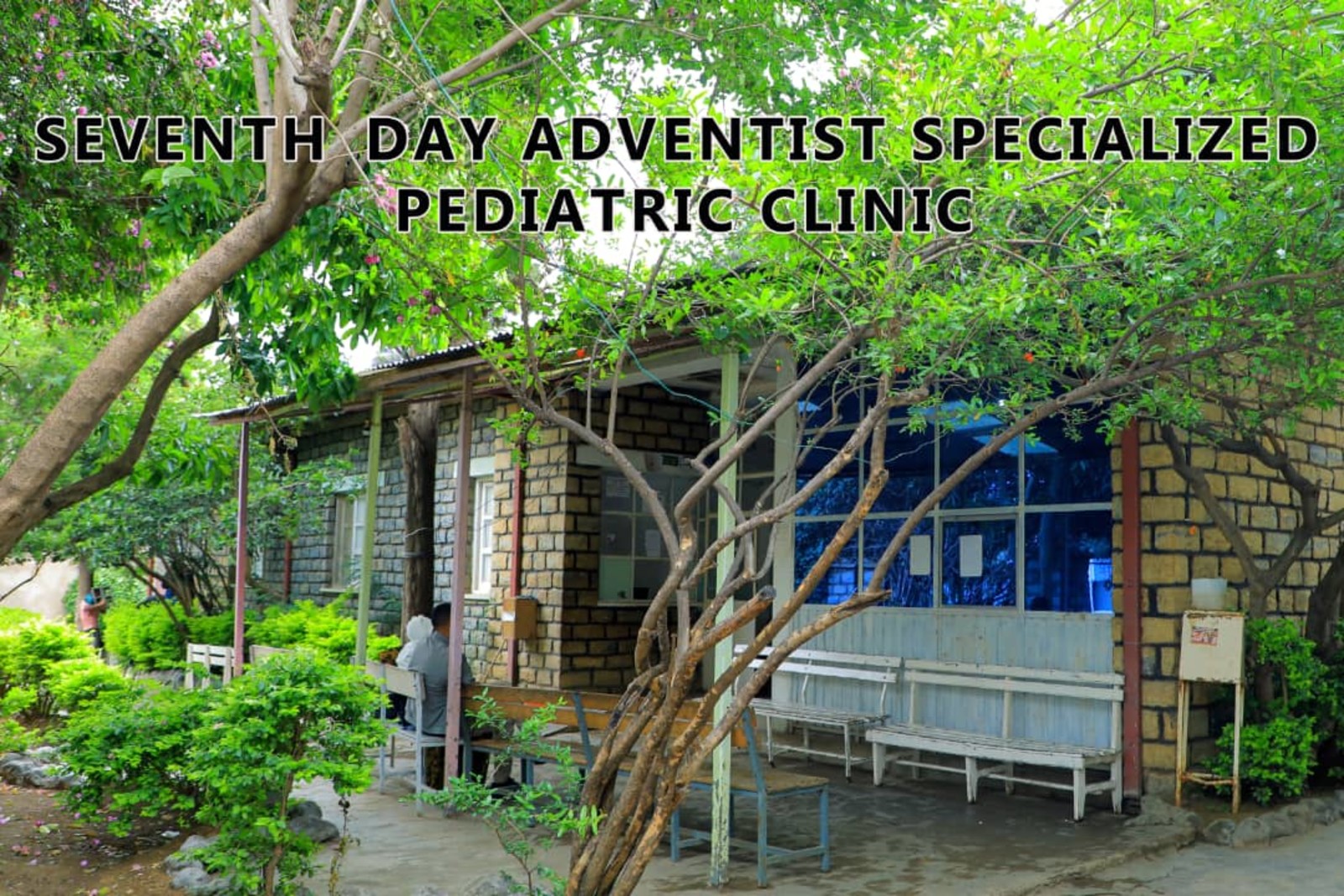
Mekelle Adventist Clinic
Shared by the author.
Mekelle Adventist Clinic
By Solomon Abay
Solomon Abay (B.Sc. in Management Information Systems; B.A. in Management; Diploma in Accounting; Certificate in Leadership Training) serves as Executive Secretary of the North Ethiopia Field of Seventh-day Adventists. He has more than 30 years of professional experience in human resources and administration across faith-based organizations, international NGOs, humanitarian agencies, and private-sector institutions. He is currently pursuing a master’s degree in Counseling Psychology.
First Published: November 9, 2026
Mekelle Adventist Clinic is a Seventh-day Adventist medical institution in Mekelle, the capital of the Tigray Region of northern Ethiopia. Established in 1966 after the acquisition of property for medical work in 1964, the clinic developed from the early Adventist missionary presence in Tigray and became one of the denomination’s enduring institutions of community service in the region.1 Over the decades, its work has included outpatient medical care, pediatric services, humanitarian relief, health education, and cooperation with governmental and other agencies.
Today the clinic remains part of the Seventh-day Adventist medical presence in Ethiopia and serves a region whose health system has experienced severe pressures from recurrent drought, socioeconomic hardship, and, more recently, armed conflict.2
Developments Leading to the Establishment of the Clinic
The origins of Mekelle Adventist Clinic are closely connected with the beginnings of organized Seventh-day Adventist work in Tigray. Adventism developed in Mekelle during the early 1960s through the activities of Ethiopian believers led by Haleka Hailu, later Pastor Hailu Tesema, and associates who studied the Bible and subsequently came into contact with established Seventh-day Adventists.3 These early believers faced religious and social challenges, yet they sought to establish an enduring Adventist presence through congregational life and institutions that would serve the wider community.
Education and healthcare soon became central elements in this vision. The establishment of schools and medical facilities was consistent with the long-standing Adventist understanding of mission, in which preaching and teaching were accompanied by practical ministries addressing physical, intellectual, and social needs. In Mekelle, the emerging Adventist community therefore envisaged not only a permanent place of worship, but also educational and medical institutions.4
According to oral historical accounts preserved by the clinic and the North Ethiopia Field, the early believers demonstrated their commitment to medical ministry through a significant financial sacrifice. A parcel of property that had temporarily been used for worship was sold, and the proceeds contributed toward the purchase of a larger and more suitable property where the clinic could be developed.5 The account illustrates the extent to which the medical institution was regarded not merely as an auxiliary enterprise, but as part of the long-term Adventist mission in Mekelle.
Land for a medical clinic was acquired in 1964. The development of the clinic happened alongside two other important Adventist initiatives in Mekelle: the establishment of an elementary school and the construction of a permanent church building.6 The Seventh-day Adventist Yearbook gives 1966 as the establishment date of Mekelle Adventist Clinic.7
Founding and Early Development
The establishment of the clinic involved cooperation between local believers, the Ethiopian Adventist organization, and international missionaries. Oral accounts identify Tesfamariam, an Adventist architect, and Keshi Belai, a local contractor, were among those associated with the construction process. They also recall the assistance of a missionary remembered as Ms. Stevenson.8 These accounts require further archival corroboration, but they preserve an important local memory of cooperation between Ethiopian professionals and overseas supporters in bringing the medical institution into operation.
The wider Church also contributed financially. Local recollections state that the Ethiopian Union provided support for construction and development, supplementing the resources generated locally. The founding of the clinic thus represented a combination of local sacrifice and denominational assistance.9
Among the early medical personnel remembered by local families was Margaret Johnson, an American missionary nurse. Although the precise date of her first arrival requires additional documentation, denominational records independently confirm her later association with Makale Clinic. General Conference Committee records in 1978 refer to Margaret Johnson returning from Makale Clinic, Ethiopia, while a subsequent Adventist Review report stated that she was replaced there by Filipino nurse Mila Calupiano.10
Further documentary evidence establishes that the clinic was already an active denominational medical facility by the early 1970s. Minutes of the Afro-Mideast Division officers dated May 1, 1972, discussed the possibility of Dr. and Mrs. Johnson serving at Makale Clinic, with the Ethiopian Union providing them a living allowance.11 This reference confirms both the clinic’s existence and the denomination’s effort to strengthen its professional medical staff during that period.
During the institution’s early years, its facilities also served the needs of the growing Adventist congregation. According to oral recollections, two rooms in the clinic building were temporarily used for Sabbath worship and youth meetings because the congregation’s available meeting place was inadequate. Once a separate Church building was completed, the rooms could be devoted fully to medical work.12 The shared use of the building illustrates the interrelated development of the Adventist congregation, school, Church, and clinic in Mekelle.
Growth During the 1970s
By the middle of the 1970s, denominational statistics demonstrate that the clinic was providing substantial outpatient service despite operating with a small staff. The 1976 General Conference statistical report listed the institution as “Mekala Clinic” in Mekele, Tigré, Ethiopia. During that reporting year, the clinic recorded 4,550 outpatient visits. It reported one nurse and three other employees, giving a total staff of four.13
These figures are significant because they provide one of the earliest quantitative pictures of the institution’s activity. A small team was caring for several thousand patients annually, indicating that the clinic had become an established point of healthcare access within the city and surrounding area.
Missionary nurses played an especially important role during this period. In 1978, denominational records noted the permanent return of Margaret Johnson from Makale Clinic. Early the following year, the ARH announced that Mila Calupiano, a nurse from the Philippines, had been welcomed to Makale Clinic in the North Ethiopia Field and had replaced Johnson.14
Calupiano—whose surname appears in later sources in variant forms, including Columpiano—became one of the clinic’s most memorable workers. A later Adventist mission report described her as spending approximately six years in Makale and identified her as the only foreign Seventh-day Adventist missionary serving in the region during part of that period.15 Her responsibilities extended beyond ordinary nursing. She participated in congregational life, assisted Church and school activities, and, when famine struck northern Ethiopia, assumed a major humanitarian role.
The presence of personnel from Ethiopia, the United States, the Philippines, and other countries during different periods reflected the international character of Adventist medical mission. Oral accounts also preserve the names of a number of Ethiopian employees who contributed to the clinic’s continuity. Because many of these recollections contain only first names or incomplete service dates, fuller identification through payroll records, Yearbooks, personnel files, or interviews should precede publication of a comprehensive staff chronology.
The 1984–1985 Famine and Humanitarian Relief
One of the most significant chapters in the history of Mekelle Adventist Clinic occurred during the catastrophic Ethiopian famine of 1984–1985. Northern Ethiopia was among the areas most seriously affected, and Mekelle became an important center for humanitarian relief.
Contemporary Adventist publications show that the Adventist Development and Relief Agency (ADRA) mounted an extensive response in Ethiopia. In December 1984, the Canadian Adventist Messenger reported that ADRA International and Adventist organizations had allocated hundreds of thousands of dollars to an emergency program providing food, shelter, medicine, drinking water, clothing, and logistical assistance. The report specifically stated that thousands of people in Mekelle were receiving food supplements and would benefit from feeding operations there.16
The clinic and its personnel were directly involved. Later Adventist mission reports described Mila Calupiano as operating the Makale clinic while simultaneously helping famine victims. She reportedly provided food to approximately 100 families twice daily during an early stage of the relief effort. When ADRA relief supplies began arriving, a warehouse and relief kitchen were constructed rapidly to facilitate distribution.17
The clinic compound consequently functioned as more than a medical facility. It became a point at which healthcare, food assistance, logistics, and Christian humanitarian ministry converged. Contemporary accounts portrayed Calupiano’s service as particularly influential, with local people giving her an affectionate name meaning “blessed.”18
Another important medical worker connected with the Ethiopian famine response was Dr. Byron E. Conner, an American Adventist physician who served in Ethiopia from 1984 to 1987. Conner later recalled spending approximately six months in Mekelle during the famine, providing medical treatment and participating in relief work.19 His memoir, The Face of Hunger: Reflections on a Famine in Ethiopia, preserves firsthand recollections of malnourished patients who came to the clinic compound for medical care and food assistance.20
The famine period constitutes one of the clearest demonstrations of the clinic’s broader social role. Its significance was not limited to the routine treatment of illness. In a regional emergency, its facilities and personnel formed part of a much larger humanitarian network responding to hunger, displacement, disease, and malnutrition.
Cooperation with Government Health Authorities
Another important aspect of the clinic’s history has been cooperation with public health authorities. Oral historical testimony preserved by the North Ethiopia Field recalls a particularly difficult period when shortage of qualified personnel and medical supplies threatened continued operation of the institution.
According to this account, Araya Kahsu, who was then serving as deputy head of the Regional Health Bureau, intervened to assist the clinic. The Bureau reportedly arranged for a nurse and a laboratory technician from a government health center to work at the Adventist facility and provided medicines and laboratory reagents.21
Because documentary records from the Regional Health Bureau have not yet been located for this period, the precise date and administrative details should be further investigated. Nevertheless, the testimony is historically important. It reflects a relationship in which a faith-based medical institution and a government health agency cooperated to maintain services needed by the community.
This also suggests that the clinic had achieved a measure of public value beyond the Adventist community. Government officials would have had little incentive to prevent its closure unless its services were considered beneficial to residents of Mekelle and its surrounding communities. The assistance therefore constitutes an example of public-faith partnership in healthcare provision.
Institutional Continuity and Name Changes
The institution remained part of the Adventist medical network in Ethiopia through subsequent political and denominational reorganizations. The 1989 Seventh-day Adventist Yearbook listed “Makale Clinic” at P.O. Box 54, Makale, Tegrai, Ethiopia.22 The address later remained associated with the institution even as the spelling of the city and clinic changed.
By 2005, denominational records used the title “Makale Adventist Clinic.” That name remained in Yearbook listings during the following years.23 In the 2015 Yearbook, the institution appeared as “Mekelle Adventist Clinic,” with the parenthetical explanation “Formerly Makale Adventist Clinic.”24
The changes do not appear to represent the founding of new institutions. Rather, they reflect changes in transliteration and denominational naming conventions. Makale, Mekele, and Mekelle have all been used historically as English spellings of the city’s name.
The current Adventist organizational directory identifies the institution as Mekelle Adventist Clinic, with Entity ID 20533. It gives its address as Romanat, Mekelle, Tigray, Ethiopia, with P.O. Box 54 as its mailing address.25 The current denominational structure lists the clinic among the healthcare institutions administered by the Eastern Ethiopia Union Mission. At the same time, the published ESDA history of the North Ethiopia Field identifies the pediatric clinic as one of the principal Adventist institutions serving the Field’s territory.26
This distinction is useful for historical accuracy. The clinic is geographically and missionally intertwined with North Ethiopia Field and the Adventist community of Tigray while current Yearbook administrative classification places the medical entity within Eastern Ethiopia Union Mission.
Pediatric Care and Community Service
Over time, Mekelle Adventist Clinic became a respected pediatric clinic serving children from Mekelle and surrounding towns.27 The emphasis upon children fits the broader historical pattern of Adventist medical work in Ethiopia, where maternal and child healthcare frequently formed a major component of institutional service.
The clinic has nevertheless served more than pediatric patients. Local accounts describe treatment of adults as well as children, routine outpatient consultations, laboratory services, emergency attention within the limits of the facility, health counseling, and referral of cases requiring more advanced intervention.28
The social significance of such a clinic is especially evident when viewed against the recurring pressures upon healthcare in northern Ethiopia. Even before recent conflicts, the region had experienced periods of drought, food insecurity, inadequate medical infrastructure, and shortages of healthcare personnel. Small faith-based facilities could therefore fill important gaps in outpatient and primary care.
The clinic’s Christian identity has also shaped its institutional ethos. Its history has emphasized compassionate treatment without limiting service to members of the Seventh-day Adventist Church. In this sense, healthcare functioned as a practical expression of the Adventist concept of holistic ministry—addressing physical suffering while affirming the dignity of the patient.
The Tigray Conflict and the Changing Healthcare Environment
The armed conflict that began in Tigray in November 2020 profoundly affected the regional health system. Studies of the health sector documented extensive reductions in functioning hospitals, health centers, health posts, ambulances, personnel, medicines, and routine maternal and child health services during the conflict.29 The World Health Organization subsequently undertook a systematic mapping of health-service availability across hundreds of health facilities in accessible areas of Tigray to identify gaps and reconstruction priorities.30
These regional developments should be distinguished from the institutional history of the Mekelle Adventist Clinic itself. No reliable source located for this article documents that the clinic was destroyed or looted, and such a claim should therefore not be made without institutional records. What can be established is that the clinic serves within a regional healthcare environment that has experienced severe disruption and consequently faces substantial rebuilding and service demands.
The post-conflict environment strengthens the relevance of primary healthcare, maternal and child health services, diagnostic capacity, emergency services, and community-based care. It also provides the immediate context for Adventist plans to enlarge the scope of medical ministry in Mekelle.
For many years, Church leaders in northern Ethiopia have desired to expand Mekelle Adventist Clinic into a more comprehensive medical institution.31 Architectural plans have been developed for a six-floor medical facility and that the design has received approval from the relevant city planning authority.32 The proposed facility is intended to include expanded outpatient departments, inpatient accommodation, emergency services, surgical facilities, diagnostic imaging, laboratory services, maternal care, neonatal and pediatric services, and other functions appropriate to a primary hospital.
The significance of such an expansion is greater than an increase in building size. For the institution, hospital status would mark a transition from a comparatively limited outpatient clinic to a facility capable of providing wider diagnostic, emergency, surgical, maternal, pediatric, and inpatient care. It would also continue a development that began when the Adventist community purchased land in the 1960s for a modest medical mission.
Historical Role of Mekelle Adventist Clinic
The Mekelle Adventist Clinic occupies a significant place in the history of Seventh-day Adventist work in northern Ethiopia. Its importance is evident in at least four interconnected areas.
First, the clinic gave tangible expression to the Adventist philosophy of combining Christian witness with service to human need. At a time when the Adventist community in Tigray was small and socially vulnerable, medical service enabled the Church to interact constructively with a much larger public. Patients who might never have attended an Adventist congregation encountered the denomination through nurses, physicians, laboratory workers, support personnel, and humanitarian programs.
Second, the clinic became one of the institutional anchors of Adventism in Mekelle. Together with the Adventist school and church, it contributed to the transition from a small group of believers meeting under difficult circumstances to a visible and organized Adventist presence in the regional capital.
Third, its history demonstrates the contribution of international missionary personnel working alongside Ethiopian professionals and believers. Margaret Johnson, Mila Calupiano, Dr. Byron Conner, Ethiopian medical workers, Church leaders, contractors, government health personnel, and many others participated at different stages. The institution therefore represents both indigenous Adventist initiative and international mission cooperation.
Fourth, the clinic’s contribution during the 1984–1985 famine expanded its historical significance beyond denominational medical work. Contemporary documentation shows that Makale became an important location for ADRA food relief and that clinic personnel participated directly in feeding and caring for famine victims.33 This experience illustrates the capacity of a permanent medical institution to become an emergency humanitarian platform when extraordinary circumstances arise.
The clinic has therefore served not only as a place of diagnosis and treatment, but also as a bridge between Church and community, between international and Ethiopian personnel, and between routine medical mission and emergency humanitarian intervention.
Outlook
The future of Mekelle Adventist Clinic is closely connected with the health needs of Tigray and with the Church’s ability to build upon the institution’s historical strengths. More than half a century after its establishment, the clinic continues to represent the vision of early Adventists who believed that a medical institution in Mekelle could serve the whole community.
Its history also demonstrates that institutional longevity depends upon more than good will. Periods of shortage, limited personnel, inadequate equipment, humanitarian crisis, and political instability have repeatedly tested the institution. Continued service will require professional staffing, sound administration, modern diagnostic capability, sustainable finance, constructive relationships with governmental health authorities, and integration into the wider Adventist health system.
The proposed development of the clinic into a primary hospital represents the most ambitious extension of the original vision since the property was acquired in 1964. If accomplished and sustainably operated, such an institution would significantly expand the Church’s capacity to provide pediatric, maternal, surgical, emergency, diagnostic, outpatient, and inpatient care in northern Ethiopia.
The historical continuity is notable. The medical ministry began with a small community prepared to sacrifice property and resources so that healthcare could become part of the Adventist witness in Mekelle. During the famine of the 1980s, the same institution became a base for compassionate relief. In subsequent decades, it persisted through administrative transitions and changing political circumstances. Its present challenge is to translate that legacy into a sustainable medical institution capable of addressing the needs of a recovering and growing population.
Official Names
Makale Clinic (documented in denominational records during the 1970s–1980s; also rendered “Mekala Clinic” in some statistical records).
Makale Adventist Clinic (documented in denominational Yearbooks during the 2000s and early 2010s).
Mekelle Adventist Clinic (documented by 2015–present).34
Sources
“A Young Ethiopian Seeks Food from ADRA Representatives.” Missions Quarterly 75, no. 2 (Second Quarter 1986): 18.
Abay, Solomon. “North Ethiopia Field.” Encyclopedia of Seventh-day Adventists. November 19, 2025. Accessed September 24, 2026. https://encyclopedia.adventist.org/article?id=9HUS.
Afro-Mideast Division Officers’ Meeting Minutes. May 1, 1972. General Conference Archives, Silver Spring, Maryland.
Conner, Byron. The Face of Hunger: Reflections on a Famine in Ethiopia. Meadville, PA: Christian Faith Publishing, 2016.
General Conference Committee Minutes. October 5, 1978. General Conference Archives, Silver Spring, Maryland.
“Mekelle Adventist Clinic.” Adventist Organizational Directory. Accessed September 24, 2026. https://www.adventistdirectory.org/.
“News Notes from the World Divisions: Afro-Mideast.” ARH, February 22, 1979.
North Ethiopia Field Office. Administrative and historical records concerning Mekelle Adventist Clinic and proposed primary hospital. Mekelle, Ethiopia, 2026.
Seventh-day Adventist Yearbook. Various years. https://www.adventistyearbook.org/.
Statistical Report for 1976. Washington, D.C.: General Conference of Seventh-day Adventists, 1977.
Visser, Conrad. “Ethiopia Famine Emergency.” Canadian Adventist Messenger 53, no. 12 (December 1984): 4.
WoldeSelassie, Tiruneh. “Adventism in Ethiopia: The Incredible Saga of the Beginning and Progress of the Seventh-day Adventist Work in Ethiopia.” 2005. Unpublished manuscript. Author’s private collection.
World Health Organization. HeRAMS Tigray Baseline Report 2023: Operational Status of the Health System. Geneva: World Health Organization, 2023.
Notes
-
“Mekelle Adventist Clinic,” Seventh-day Adventist Yearbook, accessed September 24, 2026; Solomon Abay, “North Ethiopia Field,” Encyclopedia of Seventh-day Adventists, November 19, 2025, accessed September 24, 2026. The Yearbook gives 1966 as the establishment date while the North Ethiopia Field history records the purchase of clinic land in 1964.↩
-
World Health Organization, HeRAMS Tigray Baseline Report 2023: Operational Status of the Health System (Geneva: World Health Organization, 2023).↩
-
Abay, “North Ethiopia Field.”↩
-
Ibid.; Tiruneh WoldeSelassie, “Adventism in Ethiopia: The Incredible Saga of the Beginning and Progress of the Seventh-day Adventist Work in Ethiopia” (2005), unpublished manuscript, author’s private collection.↩
-
Tesfay Hailu, son of Pastor Hailu Tesema, interview by Solomon Abay, Mekelle, Tigray, June 10, 2026. The supplied clinic history records the sale of property used temporarily for worship and the use of proceeds as seed money for a larger site.↩
-
Abay, “North Ethiopia Field;” WoldeSelassie, Adventism in Ethiopia, 27.↩
-
“Mekelle Adventist Clinic,” Seventh-day Adventist Yearbook.↩
-
Tesfay Hailu, interview by Solomon Abay, June 10, 2026.↩
-
Ibid.↩
-
General Conference Committee Minutes, October 5, 1978, General Conference Archives; “News Notes from the World Divisions: Afro-Mideast,” ARH, February 22, 1979.↩
-
Afro-Mideast Division Officers’ Meeting Minutes, May 1, 1972, “Makale Clinic,” General Conference Archives.↩
-
Tesfay Hailu, interview by Solomon Abay, June 10, 2026.↩
-
General Conference of Seventh-day Adventists, Statistical Report for 1976 (Washington, D.C.: General Conference of Seventh-day Adventists, 1977), section “Clinics and Dispensaries Outside North America.” The report lists “Mekala Clinic,” Mekele, Tigré, with 4,550 outpatient visits, one nurse, three other employees, and four total employees.↩
-
General Conference Committee Minutes, October 5, 1978; “News Notes from the World Divisions,” ARH, February 22, 1979.↩
-
“A Young Ethiopian Seeks Food from ADRA Representatives,” Missions Quarterly 75, no. 2 (Second Quarter 1986): 18. The source renders her surname “Columpiano;” the 1979 ARH gives “Calupiano.”↩
-
Visser, “Ethiopia Famine Emergency,” 4.↩
-
“A Young Ethiopian Seeks Food from ADRA Representatives,” 18.↩
-
Ibid.↩
-
Byron E. Conner’s later biographical account records missionary service in Ethiopia from 1984 to 1987 and approximately six months of medical and famine-relief work in Mekelle. See “Dr. Byron E. Conner,” obituary, Horan & McConaty Funeral Service, 2023.↩
-
Byron Conner, The Face of Hunger: Reflections on a Famine in Ethiopia (Meadville, PA: Christian Faith Publishing, 2016). The book describes famine victims receiving food and medical attention at the clinic.↩
-
Dr. Tesfalem Hagos, current pediatrician of Mekelle Adventist Clinic, eyewitness testimony cited in the author’s clinic-history materials. The account states that Araya Kahsu, then deputy head of the Regional Health Bureau, helped arrange a nurse and laboratory technician and facilitated donations of medicines and laboratory reagents.↩
-
Seventh-day Adventist Yearbook (1989), 77.↩
-
“Ethiopian Union Mission,” Seventh-day Adventist Yearbook (2005); Seventh-day Adventist Yearbook (2008); Seventh-day Adventist Yearbook (2013).↩
-
“Mekelle Adventist Clinic (Formerly Makale Adventist Clinic),” Seventh-day Adventist Yearbook (2015).↩
-
“Mekelle Adventist Clinic,” Adventist Organizational Directory, accessed September 24, 2026.↩
-
“Eastern Ethiopia Union Mission,” Seventh-day Adventist Yearbook, accessed September 24, 2026; Abay, “North Ethiopia Field.”↩
-
Abay, “North Ethiopia Field.”↩
-
Tesfay Hailu and siblings, children of Pastor Hailu Tesema, oral historical information collected by Solomon Abay; North Ethiopia Field office records.↩
-
Hailay Gesesew et al., “The Impact of War on the Health System of the Tigray Region in Ethiopia: An Assessment,” BMJ Global Health 6, no. 11 (2021): e007328.↩
-
World Health Organization, HeRAMS Tigray Baseline Report 2023.↩
-
Abay, “North Ethiopia Field,” “Outlook.”↩
-
North Ethiopia Field Office, “Mekelle Adventist Clinic Development and Proposed Primary Hospital,” unpublished institutional information supplied to Solomon Abay, 2026. The supplied material states that plans for a six-floor primary hospital had been finalized and approved by the city planning agency.↩
-
Visser, “Ethiopia Famine Emergency,” 4; “A Young Ethiopian Seeks Food from ADRA Representatives,” 18.↩
-
Seventh-day Adventist Yearbook (1989); “Ethiopian Union Mission,” Seventh-day Adventist Yearbook (2005); Seventh-day Adventist Yearbook (2015).↩