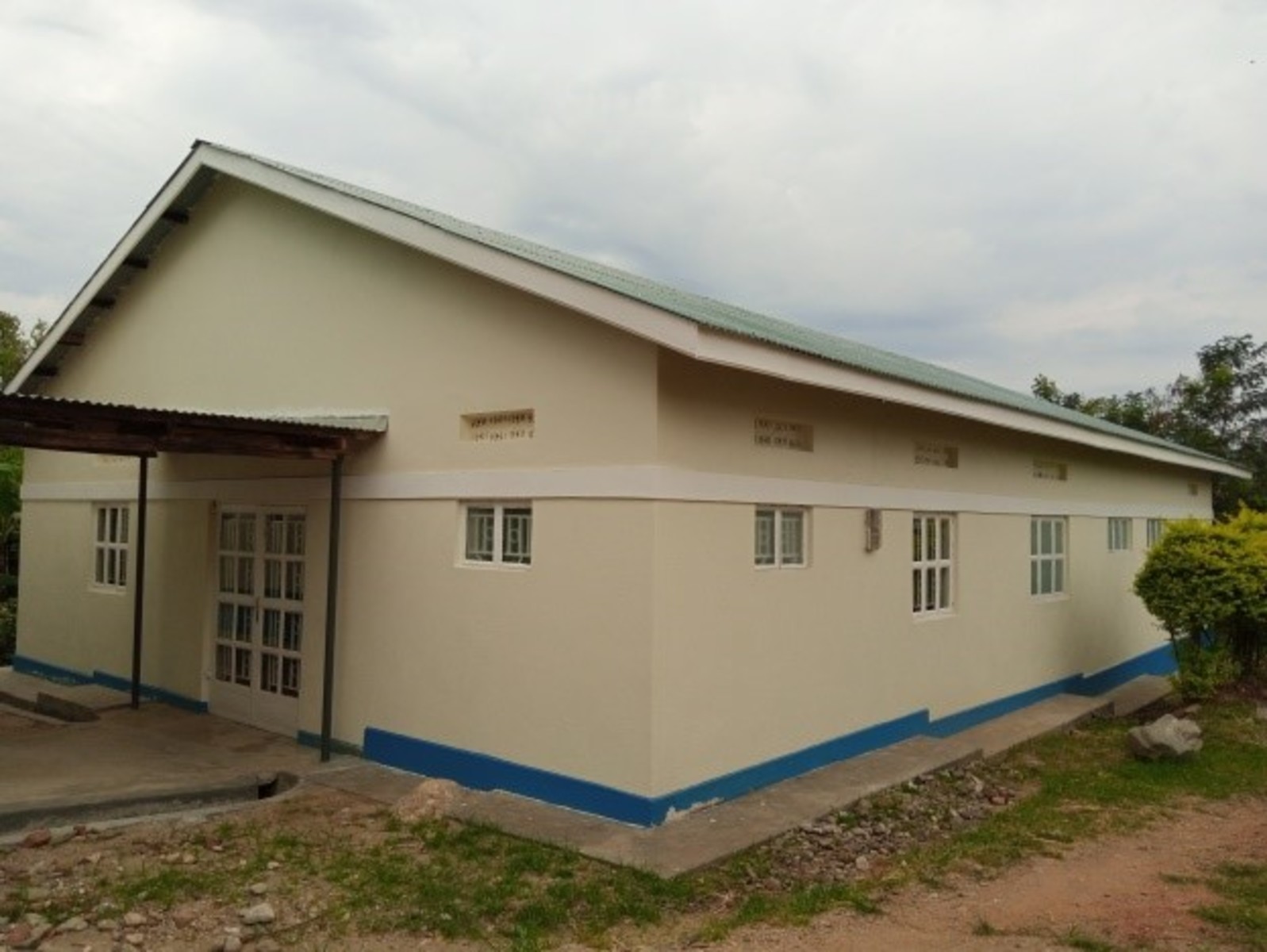
Ebenezer SDA Health Centre operating theatre.
Photo courtesy of Cyrus Jjita.
Ebenezer Seventh-day Adventist Health Centre
By Cyrus Jjita
Cyrus Jjita holds a master’s degree in Counseling from Uganda Martyrs University, a bachelor’s degree in theology from Bugema University, and a teacher’s certificate from Bwera Teachers College. He is the Health Ministries coordinator of the Seventh-day Adventist Church, Rwenzori Field. Cyrus has worked for the Seventh-day Adventist church as a colporteur, chaplain, counselor, and director for Children, Youth, Chaplaincy, and Publishing ministries. He is married to Nabilaha and they have three daughters.
First Published: February 28, 2022
Ebenezer Adventist Health Centre in Ntandi, Uganda, is a Health Centre III medical facility serving the impoverished people of Mabere sub-county.
Introduction
Many rebel groups have operated in the area of the Rwenzori Mountains because of its geographical formations. Among these groups are the Allied Democratic Forces (ADF), who became active in 1996. Armed conflicts between the rebels and government forces caused the displacement of many people, who formed settlement camps. Some people have since returned to their homes, although many remain in these settlements, and have acquired land and built houses. Most of the former settlement camps have become villages or towns with significant populations, one of which is Ntandi, where the Ebenezer Adventist Health Centre is located, on the slopes of Mount Rwenzori within the Bundibugyo District of western Uganda. The health center’s location is embedded deep in the community, making it accessible to the underserved people living in twenty-one villages in isolated areas. They include Mabere sub-county and its villages, Bumbwende, Mbule, Kirambi, Buseya, Makili, Burondo, and Ntandi.1
Adventists first entered the Mount Rwenzori area under the leadership of Elder Thor Pedersen. The choice was to reach Ntandi with the Adventist message. Although at first the native Batwa tribe of Ntandi was resistant to the gospel, with support from ADRA things started to change. An ADRA project was launched to build homes for the Batwa, hoping to provide them with better accommodations than their bush huts. To the surprise of the funders, the Batwa unroofed their new houses and sold off the iron sheets of roofing. Among the many reasons given, the iron sheets made too much noise whenever it rained. Later, it was decided that any new houses should be built closer to Ntandi, where they could be monitored. Accordingly, houses were built in Ntandi, and some of the Batwa agreed to come reside there and benefit from all that the project offered them.2
Mission Activities Start at Ntandi
The ADF war left many orphans and widows in the community. Both refugee children and the local Batwa had been unable to access formal education given that schools were too far away. Awareness of the situation left Pedersen so concerned that he returned home to Australia in order to mobilize resources that led to the establishment of an orphanage. Later, it became necessary to establish a school that offered education to the Batwa, the orphans, and the surrounding community. Between the efforts of Thor Pedersen and assistance from ADRA Uganda, the Ntandi Integrated Seventh-day Adventist Primary School was established conveniently close to the Batwa neighborhood, making it easy for their children to attend. Yokoyasi Kule, a respected and prominent church member from the Ntandi community, assisted in the process of acquiring land. Some of the land that accommodates the institutions was sold to the Church by him.3
The orphanage and school officially opened on January 30, 2005. Pleased by this development, Pedersen stated that mission stations of the Seventh-day Adventist church offered three pillars of mission to every community they enter, namely: education, health, and evangelism.
The Health Center Opens
The community of Ntandi, though in a valley, provides services to the larger population living on the surrounding hills and slopes of the Rwenzori Mountains. The people on the mountain regularly descend to Ntandi in search of merchandise, health care, and other services. Prior to the opening the Ebenezer Adventist Health Centre, death due to delayed medical treatment was common as Ntandi lacked adequate medical services. Thus, the health facility was a welcome service to the community. As he had with the orphanage and school, Pedersen supported the construction of the first few buildings, paid salaries of some medical workers, and helped meet other fiscal needs which enabled the health center to open its doors to patients in 2007. The first director of the health center was Mibiri James, a psychiatric nurse, who was later replaced by other vigilant leaders who have continued to improve the facility.4
After the facility began operation, an increase in the number of pregnant mothers with obstructed labor who could not make it to the health facilities that offer cesarean section and other major surgeries was observed. The facility that offered those specialized services was about twenty kilometers away, and there was no ambulance at the facility to facilitate the transfer of patients; the means of transport available were not conducive to the safety of the mothers and their unborn children. The health center administration proposed creating a surgical theater in order to reduce prenatal and maternal mortality. Although an excellent idea, there was no funding for it. The idea was shared with Pedersen, who later confirmed that he would find funding for the theater. Pedersen’s heart for mission led him to generously support the institution. He eventually sent a donation that covered not only the construction of the theater, but also an entire surgical ward.5
Services Offered
Ebenezer Adventist Health Centre, as a not-for-profit health facility, improved the equity of access to health care in the underserved community of Ntandi. The facility was limited to outpatient services until it was upgraded to a Health Centre III (HC-III) in 2007, which allowed it to add some inpatient services, after having registered with the Uganda Protestant Medical Bureau (UPMB), which governs faith-based health facilities in Uganda. Ebenezer Adventist Health Centre applied for the upgraded status with the assistance of Bundibugyo’s local government and the Uganda Ministry of Health. The facility’s catchment population was over 20,000 people. By 2021, the facility was serving 500 patients in the outpatient department and 320 patients at the inpatient department each month. Among the common health issues afflicting patients were malaria, typhoid, pneumonia, diarrhea, urinary tract infections, hypertension, burns, and other common illnesses.6
Mission and Vision
The vision of the Ebenezer Adventist Health Centre is to provide the highest possible level of health care to people who live in the hard-to-reach areas on the slopes of Rwenzori Mountains. Its vision is a wholistically healthy and productive population that contributes to physical, economic, and national growth and development.
Staffing
The health center serves the community with a team of twenty-six full-time medical and support staff, including two medical officers, two clinical officers, three midwives, five enrolled nurses, two radiographers, two laboratory medical assistants, two accountants, two medical record assistants, two security guards, two groundskeepers, and two janitors.
Services
Ebenezer Adventist Health Centre conducts various community health programs. Its medical services include both outpatient and inpatient, antenatal and postnatal care for pregnant mothers and infants, dental health services, tuberculosis screening and treatment, behavioral and mental health counselling, and HIV/AIDS treatment. Minor surgical procedures are performed by trained medical officers, nurses, and midwives. However, all of these services are offered with the challenge of improvised equipment. Teams of doctors, clinical officers, nurses, and midwives conduct weekly medical and health camps in partnership with local NGOs in nearby villages. The medical and laboratory services are offered free of charge to patients during medical camps.7
In partnership with World Vision, the Uganda Ministry of Health, and UNICEF, Ebenezer Adventist Health Centre participates in immunization programs on a regular basis. Community outreach targeted towards prenatal and antenatal women is undertaken by teams of midwives and nurses to create awareness among expectant mothers of their health needs.
The Impact of Ebenezer Adventist Health Centre in the Community
The joint efforts and services offered by the Adventist schools (primary and secondary), church, and health center in Ntandi have contributed to the growth of the community economically, spiritually, and socially. The Ntandi Adventist church has grown into a church district, and the institutions have established two more churches, in addition to the two school chapels that started shortly after the health center was established. The two schools and the health center together employ about 100 people who reside in the community and utilize other residential services in the community, hence impacting community growth.
The health center has helped reduce the number of deaths caused by delayed emergency treatment. On average, the health facility provides medical services to as many as 500 outpatients and about 350 inpatients per month. The number of delivering mothers averages forty-five per month, of which sixty percent must be referred to distant hospitals, which can provide cesarean sections, until the theater is completed and functional. Ebenezer Adventist Health Centre’s staff believe that the latitude and the longitude of a child’s birth place should not determine whether they live or die, and that every healthy birth benefits the whole world.
Source of Funds for Managing the Operating Expenses
The health center manages its operating expenses by reinvesting small patient fees into services provided. The facility receives conditional funding for specific projects from various sources within the country and from international sources. These projects are often for infrastructure development and system enhancement. The health center is also a member of Result Based Financing (RBF) under the Uganda Reproductive Maternal and Child Health Services Improvement Project (URMCHIP), which provides the facility with funds on an output basis. The health center has received some donated medical equipment from ENABEL, a Belgian organization for development. The health center is a member of the Uganda protestant medical bureau (UPMB), which has supported the facility with scholarships for its staff, providing management and other health systems training programs.8
Challenges
The growing population in the area and district has caused an increased demand for health services. The services required by the community also press the health center to upgrade and expand the health services offered. Although the health center was able to build a surgical theater, as of the time of writing it had been unable to fund the equipment necessary to open the new facility. Other departments also suffer from insufficient equipment and space. A pediatric ward is needed to serve large the number of children in the community who come to the health center in quest for better health care. More employees are needed to staff the increased volume of offered health services. Due to its remote location and impoverished population, the health center’s very small income also fluctuates making budgeting difficult. The facility is situated in a valley, where it experiences floods from the rain water flowing downhill. Protective measures, such as trenches that would prevent erosion and prevent flooding, are very expensive. The health center also lacks an ambulance, emergency and rescue equipment, and adequate supplies of personal protection gear in case of pandemics like Ebola and Covid-19.
Conclusion
Ebenezer Adventist Health Center is known in Ntandi for its wholistic health care services to the community. It holds staff worship every morning and evening, and before every medical intervention a prayer is offered, which reminds the health worker and the patient that healing comes only from God. The facility is a blessing to many people coming from the nearby hills, who are deprived of many resources. Since the establishment of the health center, many diseases that used to claim lives of these people are managed before they cause death.
The facility is still growing, and expanding services to the community around. It is interesting to note that some patients leave the general hospital, offering many specialized health services, in order to come to Ebenezer for the same services. Quality services are the aim and goal of Ebenezer, and its staff hopes many people will continue to find healing and salvation through the services and presence of Ebenezer Adventist Health Centre.
Timeline and Chronology of Leadership
Ebenezer Adventist Health Centre has gone through a number of stages under the leadership of various persons who have made great contributions as the in-charge or director of health services. It has also had a number of staff with whom it has served the community.
Directors: Mibiri James (2007), Bisunga Wisely (2008), Friday Eriya (2009), Godfrey Mumbere (2010), Gertrude Kibalirwandi (2011), Mukokoma Patrick (2012), Baluku Sausi (2016), Muhisya Richard (2017), Thembo Moses (2018-).
It should be noted that the church, schools, and health center were all part of the Ntandi Project, which was led, first, by Balifuha Bernard Masereka, and then by Isebojo Enoch, who later became the head teacher of the primary school. The current project manager is Baluku Anatosi Isemamba. The project manager oversees and implements the decisions of both the sponsor—who at the time of writing was Thor Pedersen—and the Adventist Church, but is employed by the sponsor.9
Notes
-
Moses Thembo, Ebenezer SDA Health Centre director, interview by the author, Ntandi, Uganda, March 19, 2021.↩
-
Enock Isebojo, director of the Ntandi institutions, interview by author, Ntandi, Uganda, March 19, 2021.↩
-
Ibid.↩
-
Sadress, interview by author, Ntandi, Uganda, March 19, 2021.↩
-
Ibid.↩
-
Moses Thembo, interview by the author, Ntandi, Uganda, March 19, 2021.↩
-
Ibid.↩
-
Ibid.↩
-
Ibid.↩