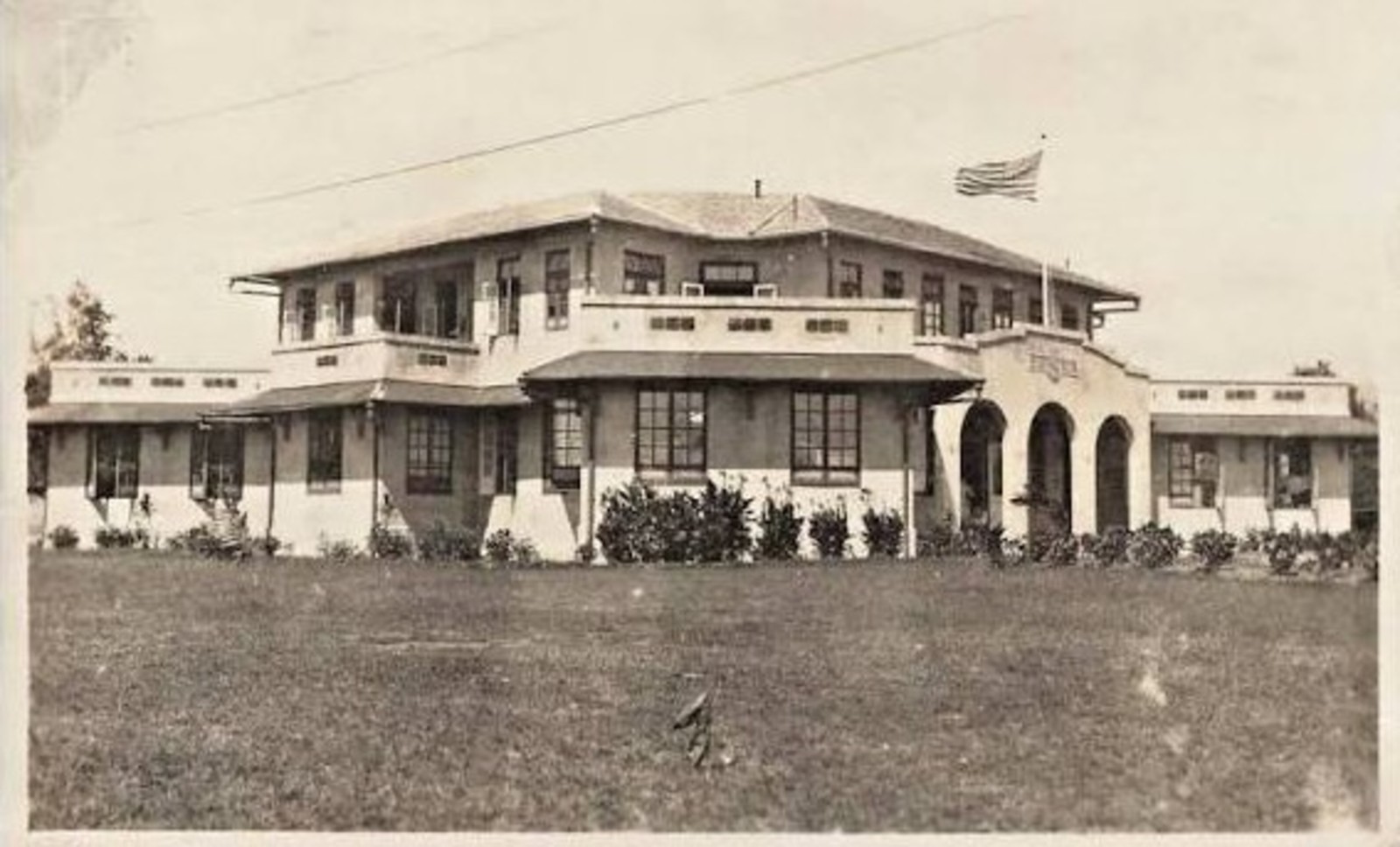
Adventist Hospital Cebu, early history, date unknown.
Shared by the author.
Adventist Hospital Cebu, Inc.
By Osée Kamgang Toho
Osée Kamgang Toho is a passionate scholar in historical theology from Cameroon. He completed his Bachelor of Theology (B.Th.) at Cosendai Adventist University in 2021, earned a Master of Divinity (M.Div.) from AIIAS in 2025, and is currently pursuing a Ph.D. in Religion at AIIAS. He is also an active writer and presenter in academic circles.
First Published: October 27, 2026
The Adventist Hospital Cebu, Inc. is a Seventh-day Adventist medical center in Cebu City, Philippines.1 It began in 1956 as the Miller Sanitarium and Hospital, named for the missionary doctor who helped start it, Harry Willis Miller.2 Over almost 70 years, it grew from a small 20-bed clinic into a 100-bed hospital.3 Today, it still serves the people of Cebu City and the wider Visayan islands, offering both medical care and Christian ministry.
The hospital’s story starts with the earliest Adventist missionary work in Cebu in 1914, moves through the hospital’s founding in the 1950s, and follows its growth across the decades since. It also looks at the hospital’s place within the wider network of Adventist hospitals in the Philippines and Asia, and at the challenges and opportunities it faces today.
Early Developments
Cebu City holds a special place in Philippine history. Just offshore, on Mactan Island, the local chieftain Lapu-Lapu defeated the Spanish explorer Ferdinand Magellan in 1521.4 It was the first recorded case of a Filipino islander driving back a foreign invader. Yet it was in Cebu City itself that Spanish rule and Catholic Christianity first took lasting root in the islands. The city still claims the oldest Catholic cathedral in the Philippines, along with the oldest Catholic university, the University of San Carlos, founded in 1565.5
By the 20th century, Cebu City had become known among Adventists as the “Queen City of Southern Philippines.”6 It was the commercial and religious capital of the central and southern islands. It also served as the natural center for the church's growing work in the region.7
Organized Seventh-day Adventist missionary work reached Cebu in January 1914.8 That month, the self-supporting literature evangelist Robert Stewart and his wife arrived in Cebu City. They sold religious books and studied the local language. They worked mornings, sold books in the afternoons, and gave Bible readings in the evenings. In his first eight weeks, Stewart sold 530 pesos worth of literature. That figure later grew to six thousand pesos.9
The following month, in February 1914, Dr. Ulyssis Charles Fattebert and his wife, Ellen Burril Fattebert, arrived in the small coastal town of Argao. Argao sits 65 kilometers from Cebu City. The Fatteberts were the first Seventh-day Adventist medical missionaries sent to the island of Cebu.10 Dr. Fattebert’s medical work opened doors that preaching alone could not open. He treated the sick in Spanish, a language he had learned as a missionary in Mexico. He won the trust of local residents, and nine of them began keeping the Sabbath. In September 1914, on his second visit to Cebu, Pastor L. V. Finster baptized the first five of these converts. This led to a new ten-member church. Within a few months, a Chinese resident of the town joined the small congregation, a direct result of Dr. Fattebert’s medical work.11
As interest grew, the Mission moved in March 1916 from Argao to Cebu City itself. There, the Fatteberts held a tent evangelistic campaign. Meanwhile, Robert Stewart’s own book ministry had reached as far as Bohol, Negros, Leyte, and Samar.12 The work, known then as the Cebuan Mission, was reorganized and renamed the East Visayan Mission in 1923. Its territory covered the Cebuano-speaking islands of Cebu, Bohol, Leyte, Negros Oriental, Misamis, and Surigao. In 1930, under Mission Director L. O. Pattison, the Mission’s headquarters moved to a parcel on Tres de Abril Street in the San Nicolas district of Cebu City. This was the same property where the future Miller Sanitarium and Hospital, and today’s Adventist Hospital–Cebu, would be built a quarter-century later.13
Over the next four decades, the Adventist community of the central and southern Philippines grew many times over. Membership rose from 79 in 1920 to 3,060 by 1930. On May 4, 1953, the South Philippine Union Mission of Seventh-day Adventists was registered with the Philippine Securities and Exchange Commission. Its headquarters were in Cebu City, and Pastor Gil de Guzman served as its first elected president.14
From the start of organized Adventist work in the Philippines, medical Missions went hand in hand with evangelism. Adventist founders often called medical work the “right arm” of the gospel message, and the Church held to that idea. The Church’s first Philippine hospital, the Manila Sanitarium and Hospital, opened in the north by the late 1920s. In 1952, a young Filipino surgeon, Dr. Francisco Tamayo Geslani, was sent to start a second Adventist hospital, the Mindanao Sanitarium and Hospital, in Iligan City.15 Geslani had graduated in 1946 from the Afable College of Medicine and Surgery in Manila. He trained afterward at the Manila Sanitarium and Hospital and at several Adventist institutions in the United States. He built the Iligan hospital from two small, rented rooms into a full medical center in only a few years. This proved to South Philippine Union leaders that a self-supporting Adventist hospital could succeed even with very little money to start.16
"The China Doctor" Arrives
By the early 1950s, Church leaders saw a problem. Cebu City was already the commercial hub of the central Visayas. A later Far Eastern Division feature called it “the Queen City of Southern Philippines17.” Yet the city had no Adventist hospital of its own, even though the South Philippine Union’s own headquarters stood there. The need grew more urgent because of the visits of Dr. Harry Willis Miller. Miller was a veteran Adventist physician, famous across East Asia as a goiter and thyroid specialist. His colleagues, and later a biographer, called him “the China Doctor.”18
Dr. Miller came to China in 1903 as a 23-year-old medical missionary. Westerners were unwelcome in China at that time, so Miller adopted Chinese dress and customs. He did this so fully that local people called him “the white Chinaman.”19
Over the next half-century, Miller helped start some 26 Adventist medical institutions across Asia. By one later count, this included 16 in China, five in the Philippines, two in Hong Kong, and one each in Japan, Malaysia, and Taiwan. He also invented a widely used method for making soybean milk taste good, an invention that earned him a decoration from the Republic of China in 1956. He developed new paraffin techniques for reconstructive nasal surgery.
Twice, he found himself outside the field of medicine altogether, acting as a go-between in Chinese politics. Once he worked between Generalissimo Chiang Kai-shek and a rival Chinese warlord. Later, he pleaded with Japanese occupation authorities and helped save the lives of thousands of Chinese civilians.20 Miller’s adventures in China went well beyond the operating room. On one occasion, a Chinese general ordered him executed. Miller talked his way to freedom and later helped that same general overcome an opium addiction. His soybean-milk formula is credited with saving countless Chinese children from starving during years of famine and war.21
Mille's first wife, Maude Amelia Thompson Miller, died in China in 1905. His second wife, Marie Elizabeth Iverson Miller, served alongside him for more than four decades before she died in 1950. In 1953, Miller married Mary Elizabeth Greer, was a schoolteacher. Mary traveled with him to Cebu in 1956.22 He succeeded Dr. Ralph F. Waddell, the Far Eastern Division medical secretary. Two years earlier, Waddell had helped direct the division-wide survey that would include the Cebu hospital among its featured institutions.23
By the 1950s, Miller’s medical circuit regularly brought him through the southern Philippines. He had no Adventist hospital of his own to work in there. So, he performed goiter surgery at the government-run Southern Islands Hospital and at the privately owned Velez Clinic in Cebu City.24 These repeated visits convinced both Miller and the union’s leaders that Cebu City could support, and badly needed, a permanent hospital of its own. Appropriately, that hospital would one day bear his name.25 The Republic of China honored Miller with a decoration that Adventist sources describe in different ways, sometimes as the “Brilliant Blue Cross” and sometimes as the “Order of the Brilliant Blue Star,” the country’s highest civilian award. Generalissimo Chiang Kai-shek pinned it on him in 1956 at a farewell luncheon marking Miller’s retirement, at age 76, from the Taiwan Sanitarium he had just finished building. That “retirement” did not last long. A decade later, in 1966, Miller and fellow veteran missionary Ezra L. Longway traveled together to the Philippines to plan more additions to the country’s already crowded Adventist hospitals. They reportedly had the encouragement of Philippine Vice President Fernando Lopez.26
Founding
The institution that became Adventist Hospital – Cebu, Inc. did not open all at once as a full hospital. It grew slowly, over three and a half years, out of a small mission dispensary. On November 27, 1952, “a small beginning was made in the form of a medical unit named Miller Clinic, in the old dispensary of the East Visayan Mission” in Cebu City. The clinic was named for Dr. Miller from the start. Even before the South Philippine Union Mission itself was organized, Miller “prepared for the establishment of a medical institution in the South Philippines” and had already given substantial sums toward it.27
On November 6, 1953, workers signed a construction contract with Engineer H. Rerome of Cebu for the frontage of what would become the hospital’s permanent building. On January 19, 1954, the name of the growing medical unit changed formally from Miller Clinic to Miller Sanitarium and Hospital.28 A second construction contract, again with Engineer Rerome, followed on September 10, 1954, for additional wings.29 Even before construction finished, the South Philippine Union’s own biennial reports tracked the project’s progress. A May 1953 report described “the makings of a second medical institution, the Miller Clinic” at Cebu. It credited the clinic’s start “largely...to the foresight and generosity of Dr. H. W. Miller.” A report from the next biennial period, in April 1956, valued the finished 20-bed hospital at 50,000 pesos.30
Money for the project came from several sources. Dr. Miller gave continuing personal gifts. E. L. Longway, field secretary of the Far Eastern Division, raised more funds. The project also drew on proceeds from the sale of a Division-owned property at the corner of Ramos and Ranudo Streets, Cebu City, plus contributions from each of the four local Mission fields of the South Philippine Union. On February 21, 1955, a gift of 13,900 pesos arrived through the Manila Sanitarium and Hospital, sent from the estate of the late Sir Henry Pollock.31 Two Church bodies stood behind the founding: the South Philippine Union Mission, which owned and ran the project locally, and the Far Eastern Division of the General Conference, which released Dr. Miller from his post with the South China Island Union in Taiwan so he could travel to Cebu to finish the work. The Division approved that release on February 24, 1955.32
The project also had local backing from the East Visayan Mission, the direct successor to the old Cebuan Mission that Adventist work in the region had grown from since 1914. Eugenio Antigua Capobres served as East Visayan Mission president from 1956 to 1958. He led that Mission during the very years the Miller Clinic finished its change into a working hospital, built on the Mission’s own Tres de Abril Street property.33 Cebu City was chosen as the site for two reasons. It already housed the South Philippine Union’s own headquarters. And despite being the commercial and religious capital of the central and southern Philippines, it still had no Adventist hospital of its own. For years, Dr. Miller had traveled through the city performing goiter surgery in borrowed facilities since no Adventist operating room existed there yet.34
A Native Doctor Medical Superintendent
Dr. Geslani took charge locally as the new institution’s medical superintendent. He had already pioneered the Mindanao Sanitarium and Hospital in Iligan City, which opened in 1952 as the small “Lakeside Clinic” before it grew and changed its name. A. D. Lazaro assisted him as business manager.35 From its earliest months, the hospital ran on a self-supporting basis. It met its expenses from patient revenue and continuing donor gifts, not from any standing subsidy out of General Conference or Far Eastern Division funds. This financial model mirrored the one Geslani had already proven at Iligan, and it remained a defining feature of the Cebu institution for decades.36
Dr. Geslani was chosen to lead the new Cebu institution.37 Several factors helped him prepare for this role. First, his Adventist roots. His parents were among the pioneering Adventists in the region.38 Second, Dr. Geslani was passionate about helping people since childhood. When he was six, a younger sibling died from diarrhea and dehydration. The loss left a lasting mark on him and, by his own later account, first turned his mind toward medicine.39 Finally, his education. In 1946, he became the first alumnus of Philippine Union College to complete a doctor of medicine program, at the Afable College of Medicine and Surgery in Manila. He passed the national medical board examination among the top ten in his group that same year.40
Geslani trained further at the Manila Sanitarium and Hospital in 1947. In later years, he pursued more postgraduate surgical training in the United States, at White Memorial Hospital and Paradise Valley Sanitarium and Hospital in California, Glendale Sanitarium and Hospital, Washington Sanitarium and Hospital in Maryland, and New England Memorial Hospital in Massachusetts. There, he received special clinical-observer privileges at Massachusetts General Hospital.41 While serving as a delegate to a Philippine Union Mission meeting at Philippine Union College, Geslani met Esther Arbias Same, a physics and mathematics teacher at the college. The two married on November 14, 1948. They raised three children together: Alexis Alonzo, Ladelle, and Bevan Ali. They named the last child, during the family’s Cebu years, after the Geslanis’ friend Governor Ali Dimaporo of Lanao Province, where the family had lived during the Iligan pioneering period.42 Mrs. Esther Geslani served as her husband’s office manager and receptionist during the Iligan years. She later took on the same role at the Miller Sanitarium and Hospital in Cebu City.43
The hospital opened its doors to patients on April 8, 1956. This date comes from Dr. Geslani’s own report in November 1956. A report he filed only three months after the opening, though, gave the date as April 5. This kind of small gap was common in hastily filed denominational reports of the period. Either way, the opening falls securely in the first week of April 1956.44 The formal dedication followed two days later. It was timed to match a visit to Cebu City by Dr. and Mrs. Miller, who stayed from April 6 to 11, 1956. Cebu was their first stop after Dr. Miller had opened a new medical unit in Taipei. From Cebu they continued on to Djakarta, Indonesia, to visit their son, H. W. Miller, Jr., who was then serving with the United Nations World Health Organization.45 During the Cebu visit, Dr. Miller also traveled to Mountain View College in Malaybalay, Bukidnon, and to Davao, before returning to Cebu City.46
Dr. and Mrs. Miller arrived in Cebu City on April 7. In Dr. Miller’s own account, Dr. Geslani, “the medical superintendent, and the business manager had been very busy the previous three weeks assembling equipment and completing the building.”47 From April 6 to 8, Dr. Miller himself performed goiter operations in the hospital’s newly finished operating room. He noted that the room had “undergone renovations right up to the last hour so that it might be ready for” his use.48 A dedicatory reception program took place on the evening of April 10, 1956. By then, 24 patients were already receiving care in the new building.49
Writing afterward for the Far Eastern Division’s official periodical, Dr. Miller reflected that “for many years Cebu City, the great city of the South Philippine Islands, has waited for the opening of this hospital.” He predicted that its capacity of 30 to 40 patients would soon need to grow.50 At the dedication, Dr. Miller reportedly told the assembled staff that the first requirement for success in the new medical work was “consecration and faithfulness to duty” among everyone who served there.51 Dr. Miller also assured the founders that he and Mrs. Miller “will continually remember this medical institution not only in their prayers but with further financial aid.” He pledged to seek out medical equipment for the new hospital from Adventist medical institutions in the United States.52
The hospital’s original mission fit the wider pattern of Adventist medical work across the Far Eastern Division. It combined skilled, modern medical care with Christian ministry to the whole person, body, mind, and spirit, for the benefit of the people of Cebu City and the surrounding Visayan islands, without regard to religious affiliation.53 Dr. Miller had built his regional reputation mainly through surgery for goiter, a common ailment in the iodine-poor Visayas. So the new hospital's early practice leaned heavily toward general and thyroid surgery, a specialty that stayed one of its hallmarks for years afterward.54 The hospital began with a bed capacity that later denominational accounts usually remember as twenty beds.55 Dr. Miller's own account from the time, though, described a facility able to “accommodate 30 to 40 patients.”56 Within a few years, according to a later summary of Geslani’s career, the young hospital had grown further, into “a sixty-bed healthcare facility with an excellent occupancy rate.” This was well before the 110-bed renovation of the later 1960s.57
Barely three months after opening, Dr. Geslani reported that the hospital had already admitted 62 patients, 41 of them major surgical cases. He noted that, “for the present,” the hospital was deliberately “catering to the low-income group” even though 17 other hospitals operated in Cebu City at the time.58 That same report showed how thinly stretched the young institution’s medical staff still was. Geslani, the hospital’s only physician, appealed publicly for surgical help. He said he had “been doing major surgery alone with only an attendant to help me.” Unable to find a colleague locally, he wrote, “we can only look to the Manila Sanitarium-Hospital for help.”59 Within six months of opening, Dr. Geslani reported for the Outlook that “patronage has been good from the beginning and it is growing steadily.” He added that the institution had proven “entirely self-supporting from the start.”60
The hospital’s earliest recorded staff, beyond Dr. Geslani as medical director, included A. D. Lazaro as business manager and Mrs. R. R. Belonio as out-patient supervisor.61 Physical improvements came quickly from local donors. By November 1956, a car porch and solarium, donated by Gervacio Ornopia of Cebu City, had been added to the building. Dr. Miller himself, through his International Nutrition Research Foundation in Arlington, California, donated a 1956 Chevrolet Suburban Carryall. It could serve either as an ambulance or as a personnel vehicle, the hospital’s first dedicated transport for emergency and outreach work.62
The years right after the 1956 opening brought steady, if modest, growth. By November 1957, a General Conference Medical Department survey of Adventist nursing programs across the Far East found the hospital operating with five graduate nurses and six nurse aides. Every one of them was a Seventh-day Adventist, and the graduate nurses themselves had trained at the nursing school of the Manila Sanitarium and Hospital. Even while competing against 17 other hospitals in Cebu City, the hospital reported “almost continuous capacity patronage.”63 Growth still depended heavily on donor generosity. In 1959, Mr. and Mrs. Gervacio Ornopia, the same Cebu City couple who had funded the hospital’s original car porch, donated a 2,000-peso asphalt driveway. Dr. Miller himself sent a further gift of 20,000 pesos to help pay for a planned addition of private rooms.64
Developments in the 1960s and 1970s
The hospital’s continuing growth was already visible by the start of 1960. That January, from the 5th to the 9th, the South Philippine Union Mission held its fourth biennial session at the newly built Capitol Center in Cebu City. Some 122 delegates attended, and on the closing Sabbath nearly 800 members and lay believers joined them. Visiting Far Eastern Division and General Conference leaders included pastors C. P. Sorensen, A. E. Gibb, W. L. Pascoe, and General Conference Educational Secretary E. E. Cossentine.65 The Union’s own report from that period listed a “Miller Sanitarium Annex” as then “under construction,” alongside new dormitories, faculty homes, and a kitchen at the Union’s training school. This showed the hospital’s physical growth continuing barely four years after its dedication.66 At that same session, Dr. Geslani was formally elected to the Union’s Executive Committee and confirmed as its medical secretary. The delegate program described him as having already given 24 years of denominational service. He had earlier served as medical secretary of the Northern Luzon Mission and on the staff of the Manila Sanitarium and Hospital before his appointment as medical director of the Mindanao Sanitarium and, from 1956, of the Miller Sanitarium and Hospital in Cebu City.67
From 1960 onward, Dr. Geslani held a dual role. He served as both medical director of the Cebu hospital and medical secretary of the South Philippine Union Mission. This position placed him at the center of Adventist medical planning for the entire southern Philippines even as he kept operating on patients in Cebu City. The Union’s own periodical described him at the time simply as “the director of the Miller Sanitarium and Hospital in Cebu City.”68 The hospital’s location placed it in one of the more religiously conservative cities in the Philippines. Cebu City is home to the oldest Catholic cathedral in the country and is sometimes called the birthplace of Philippine Christianity. In that setting, a modern, professionally staffed hospital gave the Adventist Church an unusually visible platform for medical missionary witness.69
The hospital’s nursing leadership grew stronger in March 1962. Ligaya Reyes, formerly dean of the school of nursing at Philippine Union College, was appointed director of the hospital's nursing service.70 By April 1963, a second physician, Dr. Manuel J. Tornilla, Jr., had joined the medical staff. This was nearly a decade before he would become the hospital’s medical director. He lectured on health topics at denominational youth congresses alongside colleagues from the Mindanao Sanitarium and Hospital.71 Tornilla’s early ministry at the hospital went well beyond clinical medicine. In mid-1963, working alongside hospital Chaplain R. B. de Angel and layman A. S. Lim, he helped lead a “Voice of Hope” Bible correspondence course inside the Cebu Provincial Jail. The campaign produced 108 graduation diplomas and left 30 inmates preparing for baptism into the Adventist church.72
On January 1, 1964, the South Philippine Union Mission split formally into two new administrative units. One was the Central Philippine Union Mission, made up of the East Visayan, West Visayan, and Negros Missions, keeping its headquarters in Cebu City. The other was a new South Philippine Union Mission, made up of the three Mindanao Missions and based in Davao City.73 This Division traced back to the Philippine Union Mission organized in 1917, which had itself split in 1951 into North and South Philippine Unions. At that time, total Adventist Church membership in the Philippines stood at 33,728. By the 1964 reorganization, the Church in the Philippines, now split into three Unions, had grown to more than 80,000 members. The new Central Philippine Union alone reported just over 25,000.74 Mountain View College in Bukidnon kept serving as the joint training school for both the Central and South Philippine Unions. This reflected the close ties the two territories kept even after they separated administratively.75
Dr. Geslani was named medical secretary of the new Central Philippine Union Mission. He stayed based at the Miller Sanitarium and Hospital. The reorganization announcement noted that “major expansion programs are planned for both the Miller Sanitarium and Hospital and the Mindanao Sanitarium and Hospital,” alongside plans for an entirely new 50-bed hospital to open at Bacolod later that year.76 That expansion was already underway. In mid-1964, E. L. Longway, field secretary of the Far Eastern Division, along with Mrs. L. L. Quirante and Dr. Miller himself, traveled to Manila. They asked Dr. Miller’s former surgical patients for gifts, specifically “toward enlarging the bed capacity of the Miller Sanitarium-Hospital in Cebu, Central Philippines.”77
After several calls yielded only modest results, Dr. Miller remembered the owner of a large shoe factory. He had operated on the man’s two sons more than 30 years earlier. Mrs. Quirante identified him as Don Toribio Teodoro, owner of the Angtibay Shoe Factory. The party traveled several miles to call on him in person.78 According to Longway’s own account, Don Toribio “listened with deep interest to Dr. Miller’s appeal for help to enlarge the Cebu Miller Sanitarium-Hospital.” The visitors had hoped for a gift of perhaps a thousand pesos. Instead, he replied simply, “Yes, I'll give you 10,000 pesos,” before inviting them to tour his shoe factory.79
By the mid-1960s, the General Conference’s own Medical Department was citing the Miller Sanitarium and Hospital, alongside the Tokyo Sanitarium and Hospital, as one of the Far Eastern Division’s institutions then “in the process of making substantial additions and/or improvements.” This was happening even as entirely new Adventist hospitals rose in Hong Kong, Bandung, and Bacolod.80 By then, the hospital’s presence had also reshaped local Church life nearby. A dedicated Seventh-day Adventist congregation at Cogon, about three miles from central Cebu City, drew roughly 200 members, mostly from the hospital’s doctors, nurses, and other employees. The Church filled “to capacity every Sabbath.”81
By May 1966, the Miller Sanitarium and Hospital had become well enough established to be featured in a division-wide photographic survey. The survey, titled “Medical Institutions of the Far East,” covered 18 general hospitals of the Far Eastern Division. Division Ppresident C. P. Sorensen and Division Medical Secretary R. F. Waddell, M.D., produced it.82 That year, the Far Eastern Division as a whole operated 42 hospitals and clinics. They stretched from Japan and Korea in the north to Indonesia in the south, and from Guam in the east to Thailand in the west. Eighteen of them were general hospitals with a combined bed capacity of 1,394. Together they employed 189 physicians, 16 dentists, 629 nurses, and some 16,000 other medical workers, who saw more than one million patient visits in 1965 alone.83 The feature traced this network back to the Church”s earliest health reform emphasis in 1863, the 1866 opening of its first medical institution at Battle Creek, Michigan, and the founding of the American Medical Missionary College there in 1895. It also noted the transfer of Adventist medical education to Loma Linda, California, where the College of Medical Evangelists, founded in 1909, had become Loma Linda University by 1961.84
Within this network, the Cebu institution appeared simply as “Miller Sanitarium and Hospital, located in Cebu City, the Queen City of Southern Philippines.” It stood alongside sister institutions such as the Manila Sanitarium and Hospital, the recently opened Bacolod Sanitarium and Hospital, the Mindanao Sanitarium and Hospital in Iligan City, and the newer Cagayan Valley Sanitarium and Hospital in Santiago, Isabela.85 The same feature laid out the shared philosophy behind these institutions: “to make man whole” through a “team concept” that united physician, nurse, and chaplain at every patient’s bedside, on the belief that “trust in God and true religion go hand in hand with the laws of health.”86
Two years later, in June 1968, the Far Eastern Division Outlook reported that “expansion is planned at the Miller Sanitarium and Hospital in Cebu City, Central Philippines.” The report explained that “to meet the increasing need for more private rooms the left wing of the hospital is now being renovated to match the right wing.” This renovation would expand the hospital “into a 110-bed institution,” more than five times its original capacity 12 years earlier, served by a staff of 85 workers.87
That same issue carried a division tribute marking Dr. Miller’s selection, at age 89, as Loma Linda University’s “Alumnus of the Year.” The school announced the honor at its 36th annual Alumni Postgraduate Convention in Los Angeles. Miller himself cabled the news to the banquet audience of 1,000 from Hong Kong, where he was then raising funds for a second Hong Kong hospital.88 The tribute recalled that “as a specialist in thyroid surgery, Dr. Miller made significant discoveries in the treatment of postoperative thyroid cases and in dermatology.” These discoveries continued to shape practice at the hospital that bore his name. By then, admirers classed Miller alongside David Livingstone, Adoniram Judson, and Albert Schweitzer as one of the great modern missionaries. The tribute noted that presidents Woodrow Wilson and Herbert Hoover of the United States had both decorated him, and that he had served the Church’s medical mission in six countries beyond China: Trinidad, the Philippines, Manchuria, Libya, Malaysia, and Japan.89
Outreach Beyond Cebu
That same year, the hospital’s outreach extended beyond Cebu City’s own streets. In 1968, a team from the Miller Sanitarium and Hospital, led by Dr. Loreto Garcia, Jr., traveled by boat to conduct a medical Mission on Sta. Rosa Island, off the coast of Cebu. They treated roughly 300 islanders who otherwise had no ready access to a physician.90
The following decade brought more recognition, this time for the hospital’s surgical staff. In January 1971, the Far Eastern Division Outlook reported that Dr. Loreto Garcia, Jr., cchief surgeon of Miller Sanitarium and Hospital in Cebu City and also director of the Cebu Jaycees,” had received five separate awards for humanitarian service. These included the Most Outstanding Jaycee Award for Humanitarian Endeavors, the Spoke Award, the Merit Award, the Attendance Award, and an international award from the Japan Junior Chamber. The awards recognized his leadership of the Cebu Jaycees’ “Operation Harelip” project, which in 1969 alone provided free reconstructive surgery to 128 mostly poor patients with cleft lip and cleft palate. About half were children with combined cleft lip and palate; the other half had cleft lip only.91 The Outlook observed that, thanks to Dr. Garcia’s charitable surgical work, “doors otherwise closed are now wide open for his medical ministry” in the wider Cebu community.92
A few weeks later, on February 14, 1971, the hospital brought the same charitable model to the town of Alcantara on Cebu’s western coast. Hospital personnel ran a free clinic there that served roughly 150 residents. The good will it created reportedly helped draw some 250 townspeople to evangelistic meetings held in Alcantara shortly afterward.93
Later in 1971, though, the hospital saw its first major change in medical leadership since its founding. That September, the board of directors of the Bacolod Sanitarium and Hospital announced the appointment of Dr. Geslani, by then described as “former medical director of Miller Sanitarium and Hospital in Cebu City,” as that institution’s new medical director. He succeeded Dr. Willis G. Dick, who transferred to lead the 100-bed Adventist hospital in Iligan City.94 Geslani was a general surgeon and specialist in neck and thyroid surgery who had just returned from advanced training in the United States. By then he was also a Rotarian, a fellow of the Philippine College of Surgeons, a former assistant professor of surgery at Southwestern University in Cebu City, and vice-chairman of the Cebu YMCA.95
Geslani went on to lead the Bacolod hospital for a combined 18 years, first as its medical director from 1971 until December 1984, then as its president from 1985 to 1986. During his tenure, the hospital opened a new wing on November 30, 1975, expanding its bed capacity from 50 to 100. It also won national accreditation for its surgical residency and, later, its internal-medicine residency training programs.96 Geslani formally retired from denominational service in December 1989, after 42 years of service. He was recognized in the 1989–1990 edition of Who’s Who in the World and became an honorary alumnus of the Loma Linda University School of Medicine, then the only Adventist physician from the Philippines on that school’s alumni roster.97 He was also the first Filipino physician ordained as a Seventh-day Adventist minister, and he was often asked to officiate weddings. He held fellowships in the Philippine College of Surgeons and the International College of Surgeons, and he served on the boards of the Rotary Clubs of Cebu West and Bacolod and the Cebu YMCA.98 He died in Bacolod of lung cancer on December 10, 1995, a little over a month before what would have been his 76th birthday.99
Geslani’s departure from Cebu closed the chapter of the hospital’s founding medical administration. Even Mrs. Esther Geslani, who had managed patient admissions and discharges at the Miller Sanitarium and Hospital, transferred with her husband to take up the same role in Bacolod.100 By September 1972, medical leadership at Cebu had passed to Dr. Manuel J. Tornilla, Jr., described that month as “medical director of the Miller Sanitarium and Hospital.” By then he was also active in the Division’s public evangelistic campaigns, providing the health-education part of citywide crusades held across the Central Philippine Union.101
The hospital’s cumulative reach became public record on its 17th anniversary, observed on May 13, 1973. Denominational reports revealed that the institution had served 20,580 inpatients and 122,778 outpatients since it opened in 1956.102 The anniversary was marked with a day of public outreach, fitting for a hospital that still saw itself as a community institution and not merely a private clinic. The day included free consultations for the first 50 patients who came in, free physiotherapy treatments, discounted health-food purchases and laboratory fees, cooking demonstrations, and film showings on temperance and family planning.103 The same 1973 report noted that the hospital ran a standing free clinic every Sunday afternoon for the poor of Cebu City. In just the six months between December 1972 and May 1973, the hospital gave out 4,647 pesos' worth of free medicine to 1,869 patients.104
That same year, 27 of the 46 members of a newly organized Adventist youth leadership club in Cebu City were hospital employees. This showed how deeply the institution’s workforce had become woven into the life of the local Adventist community.105 Two years later, in January 1975, the remodeled Cebu City Seventh-day Adventist Church was rededicated. By then, it counted 675 members, roughly a tenth of them hospital workers, a further sign of how closely the congregation and the hospital’s own workforce had become linked by the mid-1970s.106
That same year, Dr. Tornilla, then the hospital’s medical director, joined a temperance official from the Central Visayan Mission to address about 600 high school and college students and faculty at Cebu Normal College on the dangers of drug and alcohol abuse. He offered the hospital’s services free of charge to anyone seeking help overcoming addiction. Around the same time, the hospital’s surgical staff, again led by Dr. Tornilla, performed free thyroidectomies for three patients from the Manobo tribe of Bukidnon. This continued the institution’s founding-era specialty in thyroid surgery even as its patient base had grown well beyond Cebu City itself.107
A group of the hospital’s own female employees, singing under the hospital’s name, placed second that year in a musical contest sponsored by the Cebu Medical Society. They donated their 600-peso prize to the hospital’s Ladies Auxiliary Fund. The hospital’s director of nursing service, Lucresia Pefanco, remarked that the singers had performed “to rightly represent the institution.”108 The hospital also held a public “Hospital Day“ in 1975, offering free consultations to more than 200 people and free medicines through the Seventh-day Adventist Welfare Service. Local Cebu City newspapers and a television program publicized the event in advance.109
By the following year, the hospital’s continuing importance to the region’s health care was being measured against newer, smaller Adventist facilities. A 1974 report on a new mission clinic in Calbayog, Samar, noted with some surprise that the new clinic’s outpatient volume already exceeded that of “either the Miller Sanitarium or the Bacolod Sanitarium.” Whatever this said about the new clinic’s vigor, it also confirmed that, in denominational eyes, the two established Visayan hospitals remained the natural benchmark for smaller Adventist medical works.110
Through the 1970s, the hospital continued to combine clinical medicine with public health education, a hallmark of Adventist medical Missions throughout the Far East. By November 1980, the institution, by then generally known by its fuller official name, the H. W. Miller Memorial Sanitarium and Hospital, had launched Focus on Healthful Living. This was a daily five-minute health-education program broadcast over Cebu City radio station DYLA. According to hospital chaplain Archie P. Tupas, one of Cebu City’s leading newspapers began publishing the Focus on Healthful Living material as a daily column, too, carrying the hospital’s health message far beyond its own patients to the general public of the city.111 Denominational sources of the period noted that this radio ministry was “enthusiastically received by listeners.” This showed how deeply the hospital’s reputation for both medical excellence and Christian compassion had woven into the civic life of Cebu City by its 25th year of operation.112
The denomination’s periodical record contains less documentation of the hospital’s history through the 1980s and 1990s than of its founding decades. Even so, institutional continuity through this period is well established. Church directory and statistical records consistently list the institution among the medical institutions of the Central Philippine Union Conference. By the early 21st century, it was one of only a few Adventist medical institutions operating continuously in Central Visayas.113 According to later denominational accounts, the original clinic-scale operation “gradually expanded its facilities and services, eventually becoming a full-fledged hospital“ by around 1962. This milestone roughly matches the bed-capacity expansions already documented in the Far Eastern Division Outlook of the 1960s.114
More Recent Developments
In 2013, the Adventist Healthcare Systems–Philippines network, which by then included hospitals in Manila, Bacolod, Iligan, Santiago, and elsewhere, carried out a system-wide rebranding. Each member hospital’s name was reordered to place the word “Adventist” first, “to establish the Seventh-day Adventist presence in the community and promote that the hospitals belong to one system.”115 Under this same policy, the Cebu institution, still legally the H. W. Miller Memorial Sanitarium and Hospital, came to be known publicly as Adventist Hospital-Cebu. Locally, though, people have long remembered it simply as “Miller Hospital.”116
The hospital’s Seventh-day Adventist Yearbook entries trace its bed capacity and administrative leadership across the early 21st century with unusual precision. Yearbook editions list the institution’s patient-bed capacity as 60, continuously, from 2002 through 2014. That figure rose to 100 beginning with the 2015 edition, and it has stayed there through at least 2026.117 Administrative leadership over the same span passed through three long presidencies. Dr. Lourdes G. Gestupa served as president, and in the earliest Yearbook editions concurrently as medical director, from 2002 through 2007. Dr. Evelyn S. Pepito served under her as vice president for medical affairs and chief of staff from 2002 to 2005, before Dr. Leslie Adlaon briefly held that same post in 2006 and 2007.118 Fredelito N. Castillo succeeded Gestupa as president in 2008 and held the office through 2016. Medical-affairs leadership during his presidency passed from Dr. Melody P. Vilches (2008–2009) to Dr. Charlie B. Avila (2010–2011) and then back to Dr. Pepito (2012–2016).119
Dr. Pepito became president in 2017 and has held that office through at least 2026. Dr. Leslie P. Adlaon has served continuously as vice president for medical affairs since 2017.120 The hospital’s board of directors was chaired in turn by Alberto C. Gulfan Jr. (2002–2003), Jemuel M. Toledanes (2004–2006), Rufo G. Gasapo (2007–2009 and again in 2017), Agapito J. Catane Jr. (2010–2016 and 2018–2022), and Eliezer T. Barlizo Jr. (2023–2026). Barlizo also served concurrently as president of the Central Philippine Union Conference.121
The Central Philippine Union Mission itself kept growing alongside the hospital it hosted. When it organized in January 1965, the Union comprised four constituent Missions, Central Visayan, East Visayan, West Visayan, and Negros, along with 285 churches and 28,869 members. By 1975, those figures had risen to 339 churches and 49,404 members, and by 1985 to 460 churches and 79,302 members.122 In May 1996, the Union gained full conference status, becoming the Central Philippine Union Conference under the presidency of Pastor Alberto C. Gulfan. By 2021, it counted 1,359 churches and more than 202,000 members across a territory of seven constituent missions and conferences.123
Within this steadily expanding Union, one of the largest Adventist administrative territories in the Philippines by the early 21st century, the Cebu hospital continued its own institutional life. By the early 2020s, the hospital, registered with the Philippine Securities and Exchange Commission as Adventist Hospital – Cebu, Inc., operated 100 patient beds, a capacity it first reached in 2015, according to its Yearbook entry. It sat at its long-standing campus on Tres de Abril Street in the San Nicolas district of Cebu City. By then, its denominational directory entry listed its administrative affiliation as the East Central Philippine Union Conference, a further administrative division of the historic Central Philippine Union territory first organized in 1964–65.124 Its mission statement, “Touch lives through the healing ministry of Christ,” and its stated institutional values, summarized in the acronym DESIRE for Dedication, Enthusiasm, Social Responsibility, Integrity, Resourcefulness, and Excellence, continue to echo the self-supporting, community-oriented medical missionary spirit of its 1956 founding.125
In 2023, the hospital marked its 67th founding anniversary jointly with the Seventh-day Adventist Church’s global 160th anniversary, under the theme “Fulfilled in Time.” At that observance, physician Dr. Michelle Napigkit, an internal-medicine specialist and pulmonologist, reflected that “the progress and success we are experiencing today are the fruits of our former and present leadership.” Pastor Eliezer “Joer” T. Barlizo, Jr., president of the Central Philippine Union Conference and, by 2023, chairman of the hospital’s board of directors, recalled that he was born at “Miller Hospital” in 1967 and had remained a patient there ever since. He called the institution “an instrument of God in sharing the healing ministry of Christ and bringing many souls to the feet of Jesus.”126
The following year, in September 2024, the hospital again mobilized its staff, including more than ten volunteer physicians, for a large-scale free medical Mission in Lagtang, Talisay, Cebu. The Mission marked the Church’s 150th anniversary of organized overseas missionary sending. It offered free medical and pediatric consultations, eye examinations and eyeglasses, dental extractions, minor surgery such as cyst removal, blood-glucose testing, and 12-lead ECG tracing for nearly 1,000 residents of a neighboring community along with spiritual counseling and children’s classes. Dr. Leslie P. Adlaon, the hospital’s vice president for medical affairs, and Dr. Evelyn S. Pepito, its president, directed the effort.127
The hospital’s history in the 21st century has not been without setbacks. On October 15, 2013, a magnitude-7.2 earthquake centered on neighboring Bohol Island struck Cebu as well. It damaged the upper floors of the Adventist hospital’s building and forced the temporary relocation of patients while repairs were made, part of a broader pattern of damage the earthquake caused to Adventist churches and institutions throughout the central Visayas.128 A decade later, the hospital again opened its doors to an international medical Mission. In February 2023, a Rotaplast International surgical team visited Cebu City to screen and treat patients born with cleft lip and cleft palate. The team based its mission at what the visiting organization described as “Adventist Hospital, which was established in 1956 as H. W. Miller Memorial Sanitarium and Hospital,” continuing, nearly seven decades later, the same charitable surgical tradition that Dr. Loreto Garcia, Jr.‘s Operation Harelip project had begun at the hospital in the late 1960s. A further Rotaplast Mission to the same hospital was scheduled for March 2026.129 The hospital has also continued to expand its institutional partnerships in recent years. On June 4, 2026, representatives of the Adventist University of the Philippines and Adventist Hospital–Cebu, Inc. signed a memorandum of agreement at the hospital’s own conference hall in the San Nicolas district of Cebu City. The agreement launched an offsite Master of Business Administration program for hospital staff and other professionals in the Cebu area, meant to strengthen administrative and managerial skills within the hospital’s own workforce.130
Historical Role
From its founding, Adventist Hospital–Cebu has held a distinctive place within the worldwide network of Seventh-day Adventist medical institutions. In the mid-1950s, it was one link in a rapidly multiplying chain of Adventist hospitals across East and Southeast Asia. That chain included Shanghai, Taipei, Tokyo, Seoul, Pusan, Hong Kong, Bangkok, Penang, Singapore, Bandung, Manila, and Iligan. Through this network, the Church sought to show, in the words of one Far Eastern Division medical secretary, that “to make man whole” was the guiding purpose of Adventist medicine.131 Within that network, the Cebu institution’s tie to Dr. H. W. Miller connected it directly to one of Adventist medicine's most celebrated pioneers. Miller’s career spanned decades of medical missionary service in China, and in his later years, he founded or strengthened hospitals from Hong Kong to Taiwan to Cebu. The Church itself came to see his personal history as inseparable from the institutional history of the hospitals that carried his name.132
In Cebu City, the hospital filled a gap that had persisted even after four decades of Adventist evangelistic and educational work in the region. Before 1956, Adventists in the city could point to churches and a growing membership, but no medical institution of their own, despite Cebu City’s status as the commercial and religious capital of the southern Philippines.133 The hospital’s early reputation for thyroid and goiter surgery, built directly on Dr. Miller’s surgical specialty, gave it medical credibility among Cebu’s professional and civic class. Decades later, the hospital’s physicians came to see this credibility as inseparable from its evangelistic purpose.134
In later decades, the hospital’s medical staff extended that civic role directly. Dr. Loreto Garcia, Jr.’s leadership of the Cebu Jaycees and its charitable Operation Harelip program brought free reconstructive surgery to more than a hundred of the city’s poorest children. It placed the hospital’s medical mission squarely within the wider civic and humanitarian life of Cebu City. Decades later, the hospital’s Focus on Healthful Living radio and newspaper program carried its health message into homes across the city that no hospital patient would ever visit.135
Regionally, the hospital has worked since the 1960s as one part of a small network of Adventist hospitals serving the central Visayas and the wider Central Philippine Union territory. Sister institutions stood in Bacolod, Iligan, and Santiago, all founded within a few years of one another. Dr. Geslani provided shared medical leadership for Cebu and Bacolod. After leaving Cebu in 1971, he spent 18 years in Bacolod, turning that sister hospital into one of the best-documented Adventist medical institutions in the Philippines, even as Cebu’s own institutional archive remained comparatively modest.136
The comparison is worth drawing out. The Bacolod Sanitarium and Hospital was not inaugurated until December 8, 1966, a full decade after the Miller Sanitarium and Hospital had already opened in Cebu City. It began with 50 beds and did not reach its own 100-bed capacity until a new wing opened on November 30, 1975, several years after Cebu’s comparable 1968 expansion.137 By comparison, Bacolod’s founding was a far more improvised affair. Its groundbreaking on August 29, 1962, drew Dr. and Mrs. Ralph F. Waddell, the Far Eastern Division’s medical secretary, along with local civic officials. But after 18 months, construction stalled for lack of funds. The future hospital treated its first patient, an infant dying of diarrhea, inside an unfinished building without an occupancy permit, four years before the facility was properly inaugurated.138
Cebu’s hospital, by contrast, had been open, self-supporting, and serving patients for a full decade by the time Bacolod’s doors opened. That maturity made it a natural training ground for the physicians, nurses, and administrators who would go on to staff its newer sister institution.139 Cebu’s hospital was thus, within the Central Philippine Union, very much the senior institution. It was the proving ground where Dr. Geslani first demonstrated, and the Union’s leadership first came to trust, the self-supporting model later replicated at Bacolod under his own direction.140 Geslani’s later reputation within Adventist medical circles, described in one denominational tribute as “a dynamic builder of Adventist leaders who are now serving in different parts of the world,” had its roots in these same Cebu years. There, he trained and mentored junior physicians, nurses, and administrators who would go on to staff not only the Miller Sanitarium and Hospital but also sister institutions across the southern Philippines.141
Nationally, the hospital’s history is closely tied to the broader story of Adventist medical Missions in the Philippines, which by the mid-1960s had grown within the still-larger Far Eastern Division to include 18 general hospitals from Korea to Indonesia and beyond.142 Its place within the denomination’s worldwide mission was reaffirmed as recently as 2024, when hospital leadership organized a large community medical Mission explicitly framed as a contribution to the Church’s global 150th anniversary of organized missionary sending. That mission connected a single Cebu City hospital’s daily clinical work to the entire denomination’s founding story of medical missionary service, a story that had first brought Dr. and Mrs. Fattebert to Argao, Cebu, more than a century earlier.143
From its earliest years, the hospital also served as a training ground within the denomination’s broader medical missionary work. Far Eastern Division medical leadership in the 1960s described a “team concept” that united physician, nurse, and chaplain at every patient’s bedside. This was not just a slogan. It described how institutions like the Miller Sanitarium and Hospital actually staffed themselves. Young Filipino physicians, nurses, and administrators who began their careers under Dr. Geslani’s supervision in Cebu City went on to staff sister hospitals throughout the southern Philippines. They carried with them both clinical skills and the self-supporting institutional approach in which they had trained.144 In this way, the hospital’s influence on Adventist medical Missions in the Philippines reached well beyond the patients it treated in Cebu City itself. It spread outward through the physicians and administrators who passed through its wards during the founding generation’s years.
The hospital’s impact on Cebu City has grown over time, touching many parts of life there. Medically, the hospital has provided more than six and a half decades of surgical and general medical care. Much of that care in the hospital’s founding years was self-supporting, without denominational subsidy.145 Spiritually, the hospital has worked through chaplaincy, patient ministry, and public health broadcasting. This work carried the Adventist health message into the homes of Cebu City residents who never set foot in the hospital itself.146 Economically, the hospital has employed physicians, nurses, and support staff drawn largely from the local community and from Adventist nursing and medical training programs elsewhere in the Philippines.147 Socially, the hospital has run decades of charity medical Missions, humanitarian surgical projects, and public health campaigns. These efforts have repeatedly brought the institution into partnership with city government, civic clubs such as the Cebu Jaycees, and other churches.148
Outlook
More than six decades after Dr. and Mrs. H. W. Miller traveled from Taipei to dedicate a 20-bed clinic in Cebu City, Adventist Hospital–Cebu, Inc. still describes its purpose in words that echo its founding: to “touch lives through the healing ministry of Christ.”149
Measured against that mission, the hospital’s record shows an institution that has generally balanced clinical growth with its original self-supporting, community-oriented character. It expanded from twenty beds in 1956 to a projected 30 or 40 within its first year, to 110 beds by 1968, and settled at roughly 100 beds by the early 21st century. As recently as 2024, it was still organizing free medical missions for Cebu Province's urban and rural poor.150
At the same time, the hospital’s history points to challenges it must keep working through to fulfill that mission in the years ahead. The hospital has always operated without direct subsidy from the wider Church. This places steady pressure on the institution to balance financial sustainability against its charitable and evangelistic obligations. That tension already showed in the earliest fundraising campaigns of the 1950s and 1960s, when the hospital’s very construction depended on one aging physician personally asking his former surgical patients for help.151
The hospital’s long memory of specific medical distinction, first in goiter and thyroid surgery, later in humanitarian reconstructive surgery for the poor, points to a lesson from its own history. By maintaining clear centers of clinical excellence, rather than trying to be all things to all patients, it has historically built both its community reputation and its reach for evangelism. Current leadership appears to recognize this lesson. It keeps investing in physician recruitment and specialty services, even as larger secular hospitals have multiplied in Cebu City.152
Finally, the hospital is moving further from the living memory of its founders. The last of them, Dr. Geslani, died in 1995, 24 years after leaving Cebu for Bacolod.153 Much of the hospital’s own history survives only in scattered issues of Church periodicals, not in a single consolidated archive of the kind that has let sister institutions such as Bacolod document their history in far greater detail. Preserving and making these records accessible will matter for the future. Only then can Adventist Hospital–Cebu pass on to a new generation of Cebuano patients and staff the same “genuine expression of gratitude” for God’s providence that its physicians voiced at its 67th anniversary in 2023.154
The hospital’s continued part in denomination-wide observances offers one sign that this work of institutional memory is already underway. Its leadership chose to mark the hospital’s 67th anniversary alongside the Church’s global sesquicentennial observances. It organized another community medical mission in 2024, explicitly tied to the 150th anniversary of organized Adventist overseas missionary sending. These choices suggest an institution that consciously places its own local story within the much larger story of Adventist medical missions that produced it.155
If that self-understanding continues, the hospital’s second century will likely be defined less by the specific clinical distinctions of its founding era, the goiter and thyroid surgery Dr. Miller brought to Cebu City, the reconstructive surgery for the poor that Dr. Garcia’s generation championed, than by its ability to keep pairing modern medical skill with the same visible community service and Christian ministry that first won the hospital its place in Cebu City’s civic life in 1956.156
Official Names
Miller Clinic (1952–1954); Miller Sanitarium and Hospital (1954–ca. 1970s); H. W. Miller Memorial Sanitarium and Hospital (ca. 1970s–2013); Adventist Hospital – Cebu, Inc. (2013–present)
List of Leaders
Early Medical directors / superintendents/chaplains: Francisco T. Geslani, M.D. (1956–1971); Manuel J. Tornilla, Jr., M.D. (on staff 1956–1963; medical director in 1972); Loreto Garcia, Jr., M.D. (chief of surgery, 1956–1971); A. D. Lazaro (founding business manager, 1956); Gerry Macaya (treasurer, 1956–1973); Ligaya Reyes (director of nursing, 1962–1974); Lucresia Pefanco (director of nursing, 1975); R. B. de Angel (chaplain, 1956–1963); C. C. La Villa (chaplain, 1964–1973); Archie P. Tupas (chaplain, 1974–1980).
Contemporary administrative structure
Presidents: Lourdes G. Gestupa, M.D. (2002–2007); Fredelito N. Castillo (2008–2016); Evelyn S. Pepito, M.D. (2017–present).
Vice Presidents for Medical Affairs: Evelyn S. Pepito, M.D. (2002–2005); Leslie Adlaon, M.D. (2006–2007); Melody P. Vilches, M.D. (2008–2009); Charlie B. Avila, M.D. (2010–2011); Evelyn S. Pepito, M.D. (2012–2016); Leslie P. Adlaon, M.D. (2017– ).
Board of Directors/Chairmen: Alberto C. Gulfan Jr. (2002–2003); Jemuel M. Toledanes (2004–2006); Rufo G. Gasapo (2007–2009); Agapito J. Catane Jr. (2010–2016); Rufo G. Gasapo (2017); Agapito J. Catane Jr. (2018–2022); Eliezer T. Barlizo Jr. (2023–present)
Address and Geographic Coordinates
400 Tres de Abril Street, San Nicolas, Cebu City 6000, Philippines. Mailing address: P.O. Box 306, Cebu City 6000, Philippines.157
Sources
Adventist Hospital Cebu Marks 150 Years of Sending Missionaries: Serves Thousand in Medical Mission. Central Philippine Union Conference, September 2024. Accessed July 10, 2026. https://cpucsda.org/adventist-hospital-cebu-marks-150-years-of-sending-missionaries-serves-thousand-in-medical-mission/.
Adventist University of the Philippines. AUP and Adventist Hospital Cebu Launch Historic MBA Offsite Program Through MOA Signing. June 2026. Accessed July 09, 2026. https://www.aup.edu.ph/?p=10772.
Burnett, D. Lois. “Schools of Nursing Visited.” Far Eastern Division Outlook, November 1957.
“‘China Doctor’ Honored by Loma Linda Alumni.” Far Eastern Division Outlook, June 1968.
Claveria, M. M. [South Philippine Union biennial report]. Far Eastern Division Outlook, April 1956.
Crocombe, Ruth, Dionisio Valdez Tuapin, and Bruce W. Lo. Miller, Harry Willis (1879–1977) and Marie Elizabeth (Iverson) (1884–1950); later Mary Elizabeth (Greer) (1919–1994). Encyclopedia of Seventh-day Adventists. April 6, 2023. Accessed July 11, 2026. https://encyclopedia.adventist.org/article?id=48JQ.
de Angel, R. B. “Voice of Hope Enters Jail.” Far Eastern Division Outlook, August 1963.
“Division Men Participate in MISSION '72 Evangelism,” Far Eastern Division Outlook, September 1972.
“Eleven Set Apart for the Ministry [A. Z. Roda].” Far Eastern Division Outlook, February 1960.
Flaiz, T. R. “Medical Council Reports.” Far Eastern Division Outlook, March 1965.
Gayares, Hector V. “Bacolod Has New Medical Director.” Far Eastern Division Outlook, September 1971.
Geslani F. T, “Miller Sanitarium and Hospital” (photo caption), Far Eastern Division Outlook 42, no. 11 (November 1, 1956): 8, Adventist Digital Library, item adl:343945, https://adventistdigitallibrary.org/islandora/object/adl%3A343945.
Geslani, F. T. “Another Generous Gift.” Far Eastern Division Outlook, April 1959.
Geslani, F. T. “Hospital Makes Progress.” Far Eastern Division Outlook, July 1956.
Gibb, A. E. “A Forward Move.” Far Eastern Division Outlook, January 1964.
L. E. Montana, “Victories in 1973,” Far Eastern Division Outlook, April 1, 1974, 9–10.
A. Z. Roda, “A Baptism Every Month,” Far Eastern Division Outlook 51, no. 8 (August 1965).
A. Tupas, “News from Miller San,” Far Eastern Division Outlook (October 1975).
Llaguno, Mrs. C. C. “We Are on Fire With Enthusiasm.” Far Eastern Division Outlook, April 1963.
Longway, E. L. “After Many Days.” Far Eastern Division Outlook, August 1964.
“Medical Institutions of the Far East.” Far Eastern Division Outlook, May 1966.
“Miller Sanitarium Plans Expansion Program.” Far Eastern Division Outlook, June 1968.
Miller, H. W. “New Medical Institutions.” Far Eastern Division Outlook, May 1956.
Montalban, V. M. “The Miller Sanitarium and Hospital.” Far Eastern Division Outlook, May 1956.
Musico, Moises, and Gay Deles. “In the Philippines, Major Earthquake Damages Adventist Property.” Adventist News Network, October 23, 2013. Accessed July 14, 2026. https://adventist.news/news/in-the-philippines-major-earthquake-damages-adventist-property.
“News from Here and There,” Far Eastern Division Outlook 48, no. 3 (March 1962).
“News Notes from the World Divisions,” Far Eastern Adventist Review, November 13, 1980.
Niere, D. M. “Medical Aid Brought to Islands in a Boat.” Far Eastern Division Outlook, January 1970.
Nogra, Charles L., and Jobe Grace P. Hallasgo. “Central Visayan Conference.” Encyclopedia of Seventh-day Adventists. April 26, 2022. Accessed July 14, 2026. https://encyclopedia.adventist.org/article?id=DAPL.
Obregon, J. R. “Evangelists Plan for Church in Alcantara Town.” Far Eastern Division Outlook, May 1971.
Penola, F. P. “Remodeled Church Dedicated Again,” Far Eastern Division Outlook, April 1975.
Quinto, Nadeth. “Adventist Hospital in Cebu Celebrates 67 Years of Dedicated Service.” Adventist News Network. 2023. Accessed July 14, 2026. https://adventist.news/news/adventist-hospital-in-cebu-celebrates-67-years-of-dedicated-service.
Rotaplast International. “Day Three: More Patients to Meet.” February 23, 2023. Accessed July 14, 2026. https://rotaplast.org/2023/02/day-three-more-patients-to-meet/.
Rubrico, James B. “Central Philippine Union Conference.” Encyclopedia of Seventh-day Adventists. April 19, 2022. Accessed July 14, 2026. https://encyclopedia.adventist.org/article?id=8API.
Santos, R. T. “Medical.” Far Eastern Division Outlook, May 1953.
Seventh-day Adventist Yearbook. Washington, D.C.: Review and Herald Publishing Association, Various years. https://www.adventistyearbook.org/.
Tornalejo, Ingrid Idyll M. “Geslani, Francisco Tamayo (1920–1995).” Encyclopedia of Seventh-day Adventists. January 11, 2021. Accessed July 12, 2026. https://encyclopedia.adventist.org/article?id=9CIW.
Tupas, A. “Hospital Day.” Far Eastern Division Outlook, October 1975.
Ylaya, Loren Penaflorida. “Bacolod Adventist Medical Center.” Encyclopedia of Seventh-day Adventists. October 14, 2021. Accessed July 14, 2026. https://encyclopedia.adventist.org/article?id=HIA9.
Notes
-
“Adventist Hospital - Cebu, Inc.,” Adventist Directory, accessed July 14, 2026, https://www.adventistdirectory.org/viewEntity.aspx?EntityID=13383; “Adventist Hospital-Cebu, Inc.,” Seventh-day Adventist Yearbook, accessed July 14, 2026, https://www.adventistyearbook.org/entity?EntityID=13383; “List of Seventh‑day Adventist hospitals,” Wikipedia, https://en.wikipedia.org/wiki/List_of_Seventh-day_Adventist_hospitals.↩
-
V. M. Montalban, “The Miller Sanitarium and Hospital,” Far Eastern Division Outlook 42, no. 5 (May 1956): 9; “Geslani, Francisco Tamayo (1920–1995),” Adventist Encyclopedia, accessed July 10, 2026, https://encyclopedia.adventist.org/article?id=9CIW; “Miller, Harry Willis (1879–1977) and Marie Elizabeth (Iverson) (1884–1950); later Mary Elizabeth (Greer) (1919–1994),” Adventist Encyclopedia, accessed July 14, 2026, https://encyclopedia.adventist.org/article?id=48JQ.↩
-
V. M. Montalban, “The Miller Sanitarium and Hospital,” Far Eastern Division Outlook 42, no. 5 (May 1956): 9; Central Philippine Union Conference, “Adventist Hospital Cebu Marks 150 Years of Sending Missionaries, Serves Thousand in Medical Mission,” CPUC SDA, September 14, 2024, https://cpucsda.org/adventist-hospital-cebu-marks-150-years-of-sending-missionaries-serves-thousand-in-medical-mission/; “Adventist Hospital-Cebu, Inc.,” Seventh-day Adventist Yearbook, accessed July 14, 2026, https://www.adventistyearbook.org/entity?EntityID=13383.↩
-
“Battle of Mactan,” Simple English Wikipedia, https://simple.wikipedia.org/wiki/Battle_of_Mactan; “Battle of Mactan,” Google Arts & Culture, https://artsandculture.google.com/entity/battle-of-mactan/m016bvl; “Battle of Mactan,” Wikipedia, https://en.wikipedia.org/wiki/Battle_of_Mactan.↩
-
James B. Rubrico, “Central Philippine Union Conference,” Encyclopedia of Seventh-day Adventists, April 19, 2022, accessed July 14, 2026, https://encyclopedia.adventist.org/article?id=8API.↩
-
“Cebu City–The Queen City of the South,” Happy Learning Academy, November 22, 2022, https://hla.asia/cebu-city/; Fernando Mendoza, “Cebu City–The Queen City of the South,” Fernando Mendoza Blog, June 2007, http://fernandomendoza.blogspot.com/2007/06/cebu-city-queen-city-of-south.html; Central Philippine Union Conference, “History,” CPUC SDA, December 31, 2021, https://cpucsda.org/history/.↩
-
“Medical Institutions of the Far East,” Far Eastern Division Outlook, May 1966, 10–24.↩
-
Charles L. Nogra and Jobe Grace P. Hallasgo, “Central Visayan Conference,” Encyclopedia of Seventh-day Adventists, 2022, 1–2.↩
-
Charles L. Nogra and Jobe Grace P. Hallasgo, “Central Visayan Conference,” Encyclopedia of Seventh-day Adventists, 2022, 1–2.↩
-
Rubrico, “Central Philippine Union Conference.”↩
-
Rubrico, “Central Philippine Union Conference.”↩
-
Rubrico, “Central Philippine Union Conference.”↩
-
Nogra and Hallasgo, “Central Visayan Conference.”↩
-
Rubrico, “Central Philippine Union Conference.”↩
-
Ingrid Idyll M. Tornalejo, “Geslani, Francisco Tamayo (1920–1995),” Encyclopedia of Seventh-day Adventists, January 11, 2021, accessed July 14, 2026, https://encyclopedia.adventist.org/article?id=9CIW.↩
-
Tornalejo, “Geslani, Francisco Tamayo.”↩
-
“Medical Institutions of the Far East” 10–24.↩
-
Tornalejo, “Geslani, Francisco Tamayo.”↩
-
“‘China Doctor’ Honored by Loma Linda Alumni,” Far Eastern Division Outlook, June 1968, 3.↩
-
Ibid.↩
-
Ibid.↩
-
Ruth Crocombe, Dionisio Valdez Tuapin, and Bruce W. Lo, “Miller, Harry Willis (1879–1977) and Marie Elizabeth (Iverson) (1884–1950); later Mary Elizabeth (Greer) (1919–1994),” Encyclopedia of Seventh-day Adventists, April 6, 2023, accessed July 14, 2026, https://encyclopedia.adventist.org/article?id=48JQ.↩
-
“‘China Doctor’ Honored by Loma Linda Alumni,” 3.↩
-
V. M. Montalban, “The Miller Sanitarium and Hospital,” Far Eastern Division Outlook, May 1956, 9.↩
-
Montalban, “The Miller Sanitarium and Hospital,” 9.↩
-
Crocombe, Tuapin, and Lo, “Miller, Harry Willis.”↩
-
Montalban, “The Miller Sanitarium and Hospital,” 9–10.↩
-
Montalban, “The Miller Sanitarium and Hospital,” 9–10.↩
-
Montalban, “The Miller Sanitarium and Hospital,” 9–10.↩
-
R. T. Santos, “Medical,” Far Eastern Division Outlook, May 1953, 6; M. M. Claveria, [South Philippine Union biennial report], Far Eastern Division Outlook, April 1956, 4.↩
-
Montalban, “The Miller Sanitarium and Hospital,” 9–10.↩
-
Ibid.↩
-
Nogra and Hallasgo, “Central Visayan Conference.” Capobres’s East Visayan Mission presidency (1956–1958) is dated from this source; no separate denominational periodical report of his tenure has been independently located.↩
-
Montalban, “The Miller Sanitarium and Hospital,” 9.↩
-
F. T. Geslani, “South Philippine Union Mission,” Far Eastern Division Outlook, November 1956, 8; Tornalejo, “Geslani, Francisco Tamayo.”↩
-
Geslani, “South Philippine Union Mission,” 8; Tornalejo, “Geslani, Francisco Tamayo.”↩
-
Tornalejo, “Geslani, Francisco Tamayo.”↩
-
Ibid.↩
-
Ibid.↩
-
Ibid.↩
-
Ibid.↩
-
Ibid.↩
-
Geslani, “South Philippine Union Mission,”, 8; Tornalejo, “Geslani, Francisco Tamayo.”↩
-
Geslani, “South Philippine Union Mission,” 8; F. T. Geslani, “Hospital Makes Progress,” Far Eastern Division Outlook, July 1956, 10–11.↩
-
Montalban, “The Miller Sanitarium and Hospital,” 9.↩
-
Ibid.↩
-
H. W. Miller, “New Medical Institutions,” Far Eastern Division Outlook, May 1956, 2.↩
-
Montalban, “The Miller Sanitarium and Hospital,” 9–10.↩
-
Montalban, “The Miller Sanitarium and Hospital,” 9.↩
-
Miller, “New Medical Institutions,” 2.↩
-
Montalban, “The Miller Sanitarium and Hospital,” 9.↩
-
Montalban, “The Miller Sanitarium and Hospital,” 9–10.↩
-
“Medical Institutions of the Far East,” 1–24.↩
-
Tornalejo, “Geslani, Francisco Tamayo.”↩
-
Tornalejo, “Geslani, Francisco Tamayo.”↩
-
Miller, “New Medical Institutions,” 2.↩
-
Tornalejo, “Geslani, Francisco Tamayo.”↩
-
Geslani, “Hospital Makes Progress,” 10–11.↩
-
Ibid.↩
-
Geslani, “South Philippine Union Mission,” 8.↩
-
Geslani, “South Philippine Union Mission,” 8.↩
-
Ibid.↩
-
D. Lois Burnett, “Schools of Nursing Visited,” Far Eastern Division Outlook, November 1957, 4–5.↩
-
F. T. Geslani, “Another Generous Gift,” Far Eastern Division Outlook, April 1959, 9–10.↩
-
“Eleven Set Apart for the Ministry” [A. Z. Roda], Far Eastern Division Outlook, February 1960, 12.↩
-
“Eleven Set Apart for the Ministry,” 13.↩
-
“Eleven Set Apart for the Ministry,” 12.↩
-
“Eleven Set Apart for the Ministry,” 12.↩
-
Rubrico, “Central Philippine Union Conference.”↩
-
“News from Here and There,” Far Eastern Division Outlook, March 1962, 12.↩
-
Mrs. C. C. Llaguno, “We Are on Fire With Enthusiasm,” Far Eastern Division Outlook, April 1963, 8–9.↩
-
R. B. de Angel, “Voice of Hope Enters Jail,” Far Eastern Division Outlook, August 1963, 11–12.↩
-
A. E. Gibb, “A Forward Move,” Far Eastern Division Outlook, January 1964, 5–6.↩
-
Ibid.↩
-
Ibid.↩
-
Ibid.↩
-
E. L. Longway, “After Many Days,” Far Eastern Division Outlook, August 1964, 2.↩
-
Ibid.↩
-
Ibid.↩
-
T. R. Flaiz, “Medical Council Reports,” Far Eastern Division Outlook, March 1965, 3.↩
-
A. Z. Roda, “A Baptism Every Month,” Far Eastern Division Outlook 51, no. 8 (1965): 7–8.↩
-
“Medical Institutions of the Far East,” 10–24.↩
-
Ibid.↩
-
Ibid.↩
-
Ibid.↩
-
Ibid.↩
-
“Miller Sanitarium Plans Expansion Program,” Far Eastern Division Outlook, June 1968, 8.↩
-
“‘China Doctor’ Honored by Loma Linda Alumni,” 3.↩
-
Ibid.↩
-
D. M. Niere, “Medical Aid Brought to Islands in a Boat,” Far Eastern Division Outlook, January 1970.↩
-
“Adventist Doctor Receives Plaques for Outstanding Endeavor,” Far Eastern Division Outlook, January 1971, 13.↩
-
Ibid.↩
-
J. R. Obregon, “Evangelists Plan for Church in Alcantara Town,” Far Eastern Division Outlook, May 1971.↩
-
Hector V. Gayares, “Bacolod Has New Medical Director,” Far Eastern Division Outlook, September 1971, 5.↩
-
Gayares, “Bacolod Has New Medical Director,” 5; Tornalejo, “Geslani, Francisco Tamayo.”↩
-
Tornalejo, “Geslani, Francisco Tamayo;” Loren Penaflorida Ylaya, “Bacolod Adventist Medical Center,” Encyclopedia of Seventh-day Adventists, October 14, 2021, accessed July 14, 2026, https://encyclopedia.adventist.org/article?id=HIA9.↩
-
Tornalejo, “Geslani, Francisco Tamayo.”↩
-
Ibid.↩
-
Ibid.↩
-
Gayares, “Bacolod Has New Medical Director,” 5.↩
-
“Division Men Participate in MISSION ’72 Evangelism,” Far Eastern Division Outlook, September 1972, 4.↩
-
“Anniversary,” Far Eastern Division Outlook, October 1973, 9.↩
-
Ibid.↩
-
Ibid.↩
-
Ibid.↩
-
F. P. Penola, [item on Cebu City church rededication], Far Eastern Division Outlook, April 1975, 9.↩
-
Ely M. Barreta, “Doctor and Pastor Discuss Drug Problems,” Far Eastern Division Outlook, October 1975, 8–9.↩
-
A. Tupas, “News from Miller San,” Far Eastern Division Outlook (October 1975): 8–9.↩
-
A. Tupas, “Hospital Day,” Far Eastern Division Outlook, October 1975, 9.↩
-
L. E. Montana, “Victories in 1973,” Far Eastern Division Outlook, April 1974, 9–10.↩
-
“News Notes from the World Divisions: Far Eastern,” ARH, November 13, 1980, 18.↩
-
Ibid.↩
-
Seventh-day Adventist Online Yearbook, “Adventist Hospital-Cebu, Inc.,” accessed July 14, 2026, https://www.adventistyearbook.org/entity?EntityID=13383.↩
-
“Adventist Hospital Cebu Marks 150 Years of Sending Missionaries: Serves Thousand in Medical Mission,” Central Philippine Union Conference, September 2024, accessed July 14, 2026, https://cpucsda.org/adventist-hospital-cebu-marks-150-years-of-sending-missionaries-serves-thousand-in-medical-mission/.↩
-
Ylaya, “Bacolod Adventist Medical Center.”↩
-
“Adventist Hospital Cebu Marks 150 Years of Sending Missionaries.”↩
-
Seventh-day Adventist Online Yearbook, “Adventist Hospital-Cebu, Inc.,” entries for 2002–2015.↩
-
Seventh-day Adventist Online Yearbook, “Adventist Hospital-Cebu, Inc.,” entries for 2002–2007.↩
-
Seventh-day Adventist Online Yearbook, “Adventist Hospital-Cebu, Inc.,” entries for 2008–2016.↩
-
Seventh-day Adventist Online Yearbook, “Adventist Hospital-Cebu, Inc.,” entries for 2017–2026.↩
-
Seventh-day Adventist Online Yearbook, “Adventist Hospital-Cebu, Inc.,” entries for 2002–2026.↩
-
Rubrico, “Central Philippine Union Conference.”↩
-
Rubrico, “Central Philippine Union Conference.”↩
-
Seventh-day Adventist Online Yearbook, “Adventist Hospital-Cebu, Inc.”↩
-
Nadeth Quinto, “Adventist Hospital in Cebu Celebrates 67 Years of Dedicated Service,” Adventist News Network, 2023, accessed July 14, 2026, https://adventist.news/news/adventist-hospital-in-cebu-celebrates-67-years-of-dedicated-service.↩
-
Quinto, "Adventist Hospital in Cebu Celebrates 67 Years of Dedicated Service."↩
-
“Adventist Hospital Cebu Marks 150 Years of Sending Missionaries.”↩
-
Moises Musico and Gay Deles, “In the Philippines, Major Earthquake Damages Adventist Property,” Adventist News Network, October 23, 2013, accessed July 14, 2026, https://adventist.news/news/in-the-philippines-major-earthquake-damages-adventist-property.↩
-
Rotaplast International, “Day Three: More Patients to Meet,” February 23, 2023, accessed July 14, 2026, https://rotaplast.org/2023/02/day-three-more-patients-to-meet/; the March 2026 continuation mission is noted on the same organization’s mission-schedule page as of this writing.↩
-
Adventist University of the Philippines, AUP and Adventist Hospital Cebu Launch Historic MBA Offsite Program Through MOA Signing," June 2026, accessed July 14, 2026, https://www.aup.edu.ph/?p=10772.↩
-
“Medical Institutions of the Far East,” 1–24 (Cebu reference at 10).↩
-
“‘China Doctor’ Honored by Loma Linda Alumni,” 3.↩
-
“Medical Institutions of the Far East,” 1–24 (Cebu reference at 10).↩
-
Tornalejo, “Geslani, Francisco Tamayo.”↩
-
“Adventist Doctor Receives Plaques for Outstanding Endeavor,” 13; “News Notes from the World Divisions: Far Eastern,” 18.↩
-
Gayares, “Bacolod Has New Medical Director,” 5; Tornalejo, “Geslani, Francisco Tamayo.”↩
-
Ylaya, “Bacolod Adventist Medical Center.”↩
-
Ibid.↩
-
Ibid.↩
-
Ylaya, “Bacolod Adventist Medical Center;” Tornalejo, “Geslani, Francisco Tamayo.”↩
-
Tornalejo, “Geslani, Francisco Tamayo.”↩
-
“Medical Institutions of the Far East,” 1–24 (Cebu reference at 10).↩
-
“Adventist Hospital Cebu Marks 150 Years of Sending Missionaries;” Rubrico, “Central Philippine Union Conference.”↩
-
“Medical Institutions of the Far East,” 1–24 (Cebu reference at 10); Tornalejo, “Geslani, Francisco Tamayo.”↩
-
Geslani, “South Philippine Union Mission,” 8.↩
-
“News Notes from the World Divisions: Far Eastern,” 18.↩
-
Montalban, “The Miller Sanitarium and Hospital,” 9.↩
-
“Adventist Doctor Receives Plaques for Outstanding Endeavor,” 13; “Adventist Hospital Cebu Marks 150 Years of Sending Missionaries.”↩
-
Quinto, “Adventist Hospital in Cebu Celebrates 67 Years of Dedicated Service.”↩
-
Miller, “New Medical Institutions,” 2; “Miller Sanitarium Plans Expansion Program,” 8; “Adventist Hospital Cebu Marks 150 Years of Sending Missionaries;” Seventh-day Adventist Online Yearbook, “Adventist Hospital - Cebu, Inc.”↩
-
Geslani, “South Philippine Union Mission,” 88; Longway, “After Many Days,” 2.↩
-
Quinto, “Adventist Hospital in Cebu Celebrates 67 Years of Dedicated Service.”↩
-
Tornalejo, “Geslani, Francisco Tamayo.”↩
-
Quinto, "Adventist Hospital in Cebu Celebrates 67 Years of Dedicated Service."↩
-
Quinto, “Adventist Hospital in Cebu Celebrates 67 Years of Dedicated Service;” “Adventist Hospital Cebu Marks 150 Years of Sending Missionaries.”↩
-
“‘China Doctor’ Honored by Loma Linda Alumni,” 3; “Adventist Doctor Receives Plaques for Outstanding Endeavor,” 13.↩
-
Seventh-day Adventist Online Yearbook, “Adventist Hospital-Cebu, Inc.;” “Medical Institutions of the Far East,” 23.↩